Shahdol maternal deaths fall 52.8% amid AI monitoring push

Synopsis
Shahdol has reported a 52.8% fall in maternal deaths this year, and Madhya Pradesh is highlighting an AI caller, Matru Saathi, as part of the story. The data shows the bot reached only 1,669 of 3,649 high-risk women in its first 17 days. That makes the human follow-up by frontline workers just as important as the software.
Key Takeaways
Shahdol recorded a 52.8% fall in maternal deaths and a 35.8% fall in infant deaths in January-November , year-on-year.
Deputy CM Rajendra Shukla credited high-risk pregnancy monitoring and the AI-based 'Matru Saathi' system.
From 9-25 November , the system monitored 3,649 women, flagged 978 cases and resolved 885 .
It made 8,707 call attempts and reached 1,669 women in 17 days .
Health workers contacted all 10,690 high-risk pregnant women this year; 8,936 received treatment.
The software was built with NITI Aayog funding in collaboration with the Shahdol district administration.
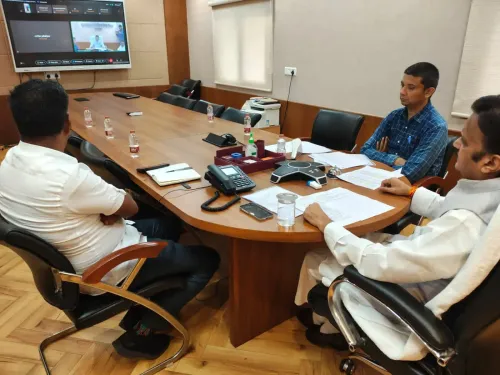
Madhya Pradesh's Shahdol district has recorded a 52.8 per cent decline in maternal deaths and a 35.8 per cent drop in infant deaths between January and November this year, compared with the same period last year. Deputy Chief Minister Rajendra Shukla announced the figures on Saturday, 28 November 2026. He credited closer monitoring of high-risk pregnancies and an artificial intelligence (AI)-based calling system called 'Matru Saathi'.
Shukla holds the state's Health and Medical Education portfolios. In a statement, he said regular tracking of high-risk pregnancies, nutritional counselling, timely referrals and treatment contributed to the improvement in the tribal-majority district.
How the Matru Saathi System Works
The 'Matru Saathi' software automatically calls pregnant women classified as high-risk and collects information about their health. If a woman reports a complication, the system sends an alert to the relevant block medical officer.
Frontline health workers then follow up with the woman and arrange medical examinations, treatment or hospital referrals as needed. The tool was developed with financial assistance under a NITI Aayog programme, in collaboration with the Shahdol district administration.
Key Numbers from the 17-Day Window
Between 9 November and 25 November, the system monitored 3,649 high-risk pregnant women and identified 978 health-related cases. Of these, 885 were resolved through treatment and medical management. Action was still underway in the remaining 93 cases.
Over the 17-day period, the system made 8,707 call attempts and reached 1,669 women. Notably, this means direct contact was made with fewer than half of the women being monitored during the window.
Cases That Received Timely Care
Officials pointed to several women who received timely medical attention through the system. Savita Singh Gaur, a 26-year-old woman from Beohari, was found to have sickle cell disease. She was admitted to a medical college, where she received a blood transfusion and other treatment.
Two other pregnant women, from Gohparu and Beohari, also received blood transfusions. A woman from Sohagpur was referred from the district hospital to a medical college, where she delivered safely.
What the Deputy CM Said
“Reducing maternal and infant mortality and ensuring timely access to quality healthcare for every pregnant woman are among the state government's top priorities. The implementation of AI-based 'Matru Saathi' in Shahdol is a commendable initiative,” Shukla said.
He added that early identification of high-risk pregnancies, regular monitoring, necessary referrals and appropriate treatment could reduce maternal and infant deaths further. “Effective use of technology, combined with coordinated efforts by frontline health workers, will help achieve the goal of safe motherhood and healthy childhood,” he said.
Building on Earlier Phone-Based Tracking
The AI system was not the district's first effort to track high-risk pregnancies. Shahdol had already been monitoring these cases through telephone calls before the system was introduced.
Between January and November this year, health workers contacted all 10,690 identified high-risk pregnant women. Of these, 8,936 received treatment and medical management. This suggests the year's decline reflects a broader monitoring effort and not only the recently launched AI tool.
The next test is whether Shahdol can sustain these gains and whether the state extends the model to other districts with similar health challenges.
Point of View
Since the only Matru Saathi data released covers a 17-day window in November. The real work over the year was done by frontline workers who reached all 10,690 high-risk women by phone. The percentages also lack absolute death counts, and in a single district a small base can make modest changes look dramatic. If Madhya Pradesh wants this to be a scalable model, it should publish raw mortality numbers and show that the bot's 46% contact rate improves before taking it statewide.
NationPress
28 Nov 2026
Frequently Asked Questions
How much have maternal and infant deaths fallen in Shahdol?
Maternal deaths in Shahdol fell by 52.8% and infant deaths by 35.8% during January-November this year, compared with the same period last year. Deputy CM Rajendra Shukla announced the figures on 28 November 2026.
What is the Matru Saathi AI system?
Matru Saathi is an AI-based calling system that automatically phones high-risk pregnant women in Shahdol to collect health information. If a complication is reported, it alerts the block medical officer, and frontline workers then arrange treatment or referrals.
How many women has Matru Saathi monitored so far?
Between 9 and 25 November, the system monitored 3,649 high-risk pregnant women and identified 978 health cases, 885 of which were resolved. It made 8,707 call attempts and reached 1,669 women.
Who developed the Matru Saathi software?
The software was developed with financial assistance under a NITI Aayog programme, in collaboration with the Shahdol district administration.
Did Shahdol monitor high-risk pregnancies before the AI system?
Yes, the district was already monitoring high-risk pregnancies through telephone calls before the AI system was introduced. Between January and November, health workers contacted all 10,690 identified high-risk women, and 8,936 of them received treatment.