Is the CAQM's Approach to Air Pollution in Delhi-NCR Truly Serious?
Click to start listening
Synopsis
The Supreme Court has taken a firm stance against the CAQM's handling of air pollution in Delhi-NCR, demanding immediate actions and accountability. With the air quality worsening, the court insists on a comprehensive approach that includes expert collaboration and public transparency.
Key Takeaways
- The Supreme Court has criticized the CAQM's handling of air pollution.
- There is a call for expert collaboration to tackle pollution sources.
- Public transparency in pollution management is essential.
- Long-term solutions need to be developed and implemented.
- The court will monitor the situation closely.
New Delhi, Jan 6 (NationPress) The Supreme Court expressed strong criticism towards the Commission for Air Quality Management (CAQM), labeling its handling of the escalating air pollution crisis in Delhi-NCR as "unserious".
A bench, led by Chief Justice of India (CJI) Surya Kant and Justice Joymalya Bagchi, noted a significant division among expert institutions regarding the identification of pollution sources and their respective impacts on the deteriorating Air Quality Index (AQI) in the national capital and its neighboring areas.
The CJI-led Bench remarked that even esteemed technical institutions, such as the Indian Institutes of Technology, have reported varying percentages concerning emission sectors.
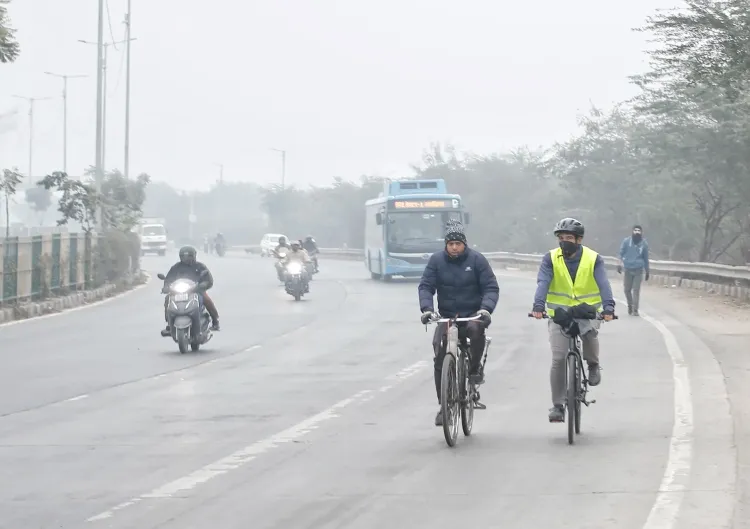
Despite numerous measures implemented over several years, the Supreme Court observed that the air quality in the region remains persistently poor, if not worsened.
The Supreme Court pointed out that it had been compelled to address this issue multiple times over an extended period, seeking insights from experts and amici curiae, yet the situation on the ground has shown minimal improvement.
In its directive, the CJI-led Bench noted that the CAQM seemed to be in "no hurry" to accurately identify the causes behind the deteriorating AQI or to devise long-term solutions.
Considering the suggestions from amicus curiae and senior advocate Aparajita Singh regarding vehicular pollution, industrial emissions, construction dust, power plant compliance, and firecrackers, the apex court emphasized that CAQM is obligated to unify all relevant experts and achieve a data-driven identification of pollution sources.
The Supreme Court instructed the CAQM to organize a meeting of selected domain experts within two weeks and, based on their discussions, submit a report identifying the key contributors to AQI decline.
Furthermore, the report must be made publicly available to guarantee transparency and encourage public participation.
The bench also urged the CAQM to concurrently begin assessing long-term solutions and strategize their phased implementation.
The apex court clarified that it would not permit long adjournments in this matter and will continue to oversee the issue regularly.
Point of View
It's crucial to recognize that the Supreme Court's scrutiny of the CAQM reflects a broader concern over air quality management in urban areas. The persistent pollution crisis demands immediate, data-driven solutions, ensuring accountability and responsiveness from governing bodies.
NationPress
08/01/2026
Frequently Asked Questions
What is the CAQM?
The CAQM, or Commission for Air Quality Management, is a regulatory body established to address air pollution in the Delhi-NCR region.
Why is the Supreme Court critical of CAQM?
The Supreme Court criticized CAQM for its inadequate response to the escalating air pollution crisis, labeling its approach as 'unserious.'
What actions did the Supreme Court order CAQM to take?
The Supreme Court ordered CAQM to convene a meeting of experts to identify pollution sources and to prepare a report for public transparency.
How does air pollution affect health?
Air pollution can lead to serious health issues, including respiratory diseases, cardiovascular problems, and other long-term health conditions.
What can citizens do about air pollution?
Citizens can contribute by reducing vehicular emissions, using public transport, and advocating for cleaner energy sources.