What Measures Should We Take on World AIDS Day?
Synopsis
On World AIDS Day, Union Health Minister JP Nadda calls for urgent action on preventive measures and early testing to combat HIV/AIDS. With millions affected globally, the need to dispel stigma and misconceptions is crucial for a healthier future. Learn about India's significant progress in the fight against HIV.
Key Takeaways
Preventive measures and early testing are essential in the fight against HIV/AIDS.
World AIDS Day raises awareness of the challenges faced by vulnerable populations.
Stigma and misconceptions about HIV must be actively challenged.
India has made significant progress in reducing HIV infections and improving treatment access.
Continued efforts are needed to reach the global '95-95-95' goals.
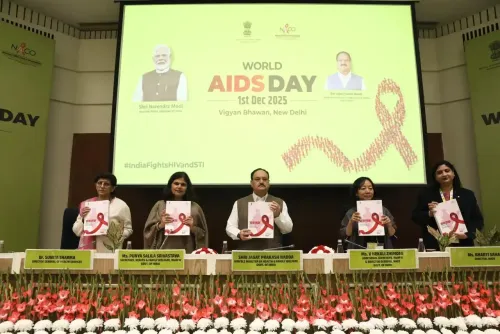
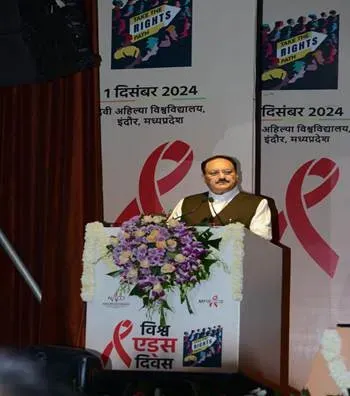
New Delhi, Dec 1 (NationPress) Preventive measures and early testing play a crucial role in combating HIV/AIDS, emphasized Union Health Minister JP Nadda on this World AIDS Day.
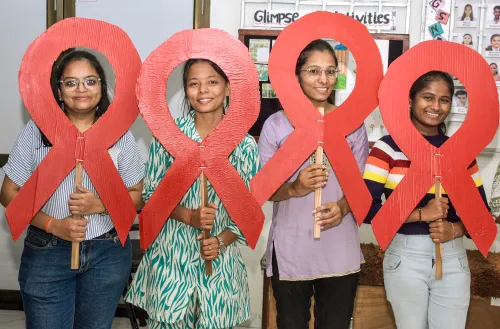
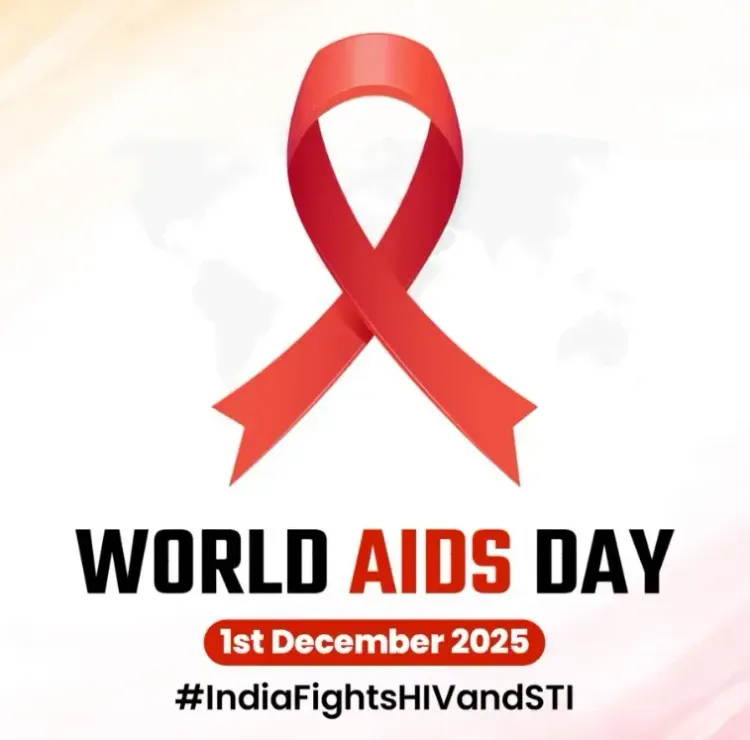
Every year, December 1 is dedicated to raising awareness about the epidemic and the challenges faced by children, adolescent girls, and young women, while also addressing the stigma surrounding the disease. The theme for this year is "Overcoming disruption, transforming the AIDS response".
Nadda highlighted the importance of combating misconceptions and stigma faced by individuals living with HIV.
“World AIDS Day serves as a reminder of the need to understand HIV/AIDS, adopt preventive measures, and promote early testing. It is also a moment to show our support for those impacted by HIV and to debunk myths around its transmission,” the Health Minister stated on social media platform X.
“As a society, we must elevate awareness, challenge the stigma and discrimination linked to HIV/AIDS, and guarantee equal access to healthcare for everyone. Together, let’s strive for a healthier and more inclusive future,” he added.
According to the World Health Organization (WHO), around 40.8 million individuals were living with HIV worldwide in 2024. While approximately 630,000 people succumbed to HIV-related causes in 2024, an estimated 1.3 million individuals were newly infected last year.
Significantly, between 2010 and 2024, India has seen a 48.7% decrease in annual new HIV infections, an 81.4% drop in AIDS-related fatalities, and a 74.6% reduction in mother-to-child HIV transmission, according to the Health Ministry’s data.
India continues to show remarkable progress under the current phase of the National AIDS Control Programme.
“HIV testing escalated from 4.13 crore (2020-21) to 6.62 crore (2024-25); access to antiretroviral treatment increased from 14.94 lakh to 18.60 lakh PLHIV; and viral load testing nearly doubled from 8.90 lakh to 15.98 lakh during the same timeframe,” stated the Ministry.
Meanwhile, Dr. Catharina Boehme, Officer-in-Charge, WHO South-East Asia, noted that the WHO South-East Asia Region, including India, has made significant strides in recent years.
Access and coverage of antiretroviral therapy have decreased mortality by 62% from 2015 to 2024, and new infections have fallen by 32% during the same period.
About 85% of individuals with HIV are aware of their status, with 74% of those—approximately 2.7 million people—receiving treatment, and 72% achieving viral suppression. Although these numbers are promising, they still fall short of the global ‘95-95-95’ objective to end AIDS by 2030, indicating that the HIV burden remains significant in the region.
Last year, 88,000 individuals were newly infected, and around 50,000 individuals died due to HIV-related causes.
Currently, about 3.5 million people in the region live with HIV. These challenges are compounded by 42 million individuals living with hepatitis B, 7 million with hepatitis C, and 60 million with sexually transmitted infections (STIs),” Boehme concluded in a statement.
Point of View
It's vital to recognize the ongoing challenges and achievements in the fight against HIV/AIDS. The government’s commitment to awareness and access to treatment is commendable, yet we must continue to advocate for those affected, ensuring they receive the necessary support and care. This is a national priority that demands our collective efforts.
NationPress
21 Sept 2026
Frequently Asked Questions
What is World AIDS Day?
World AIDS Day is observed on December 1 every year to raise awareness about HIV/AIDS and the challenges faced by those affected by the disease.
Why is early testing important?
Early testing is crucial as it enables timely diagnosis and treatment, which can significantly improve the quality of life for individuals living with HIV.
How can we combat stigma surrounding HIV?
Combating stigma requires education, awareness campaigns, and open discussions about HIV/AIDS to dispel myths and foster understanding.
What progress has India made in reducing HIV infections?
India has achieved a 48.7% decline in new HIV infections from 2010 to 2024, along with significant reductions in AIDS-related deaths and mother-to-child transmission.
What is the global goal for ending AIDS?
The global goal '95-95-95' aims to ensure that by 2030, 95% of people living with HIV know their status, 95% of those diagnosed receive sustained antiretroviral therapy, and 95% of those on treatment achieve viral suppression.