How Did SpaceX Return 4 NASA Astronauts to Earth in a Historic Medical Evacuation?
Synopsis
In a groundbreaking event, SpaceX successfully executed the first-ever medical evacuation from the ISS, bringing four NASA astronauts back to Earth. This achievement not only showcases the resilience of the U.S. space program but also highlights the importance of swift medical responses in space exploration.
Key Takeaways
SpaceX's successful medical evacuation highlights advancements in astronaut safety.
The Crew-11 mission involved over 140 scientific experiments .
This return emphasizes the strength of the U.S. space program .
The astronauts traveled 71 million miles and completed 2,670 orbits .
Fincke’s total time in space is 549 days , ranking him fourth among NASA astronauts.
New Delhi, Jan 15 (NationPress) Led by Elon Musk, SpaceX achieved a significant milestone on Thursday by successfully returning four NASA astronauts to Earth in what marks the first-ever medical evacuation from the International Space Station (ISS).
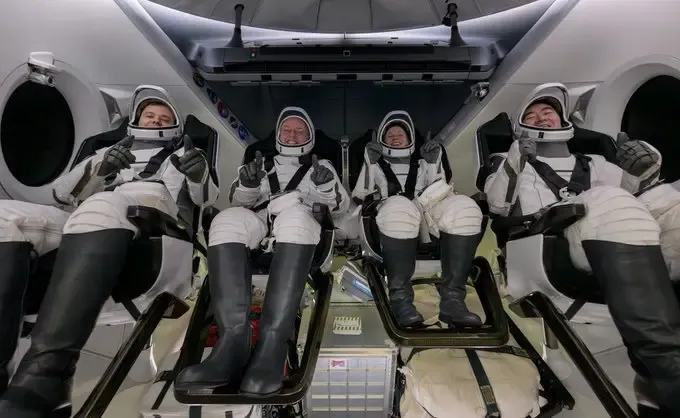
The astronauts included NASA's Zena Cardman and Mike Fincke, along with JAXA's Kimiya Yui and Roscosmos’ Oleg Platonov. They returned safely aboard SpaceX’s Dragon capsule at 12:41 a.m. PST (2:11 p.m. IST).
“Welcome home, Crew-11! At 3:41 a.m. ET (0841 UTC), the SpaceX Dragon spacecraft made a splashdown off the coast of San Diego, California,” stated NASA in a social media update.
“Dragon and NASA’s Crew-11 are back on Earth, splashing down off the coast of California,” added SpaceX.
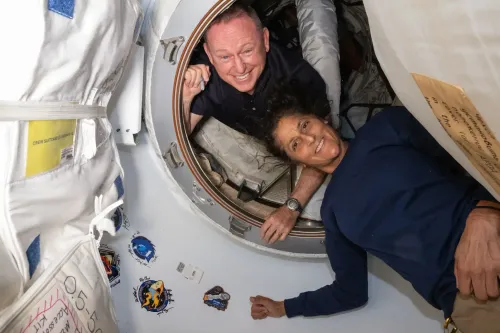
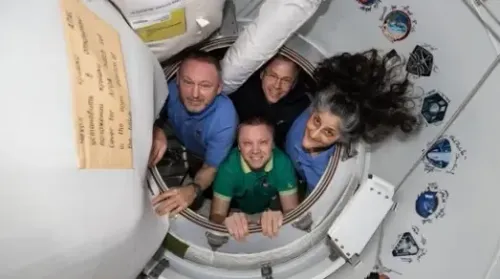
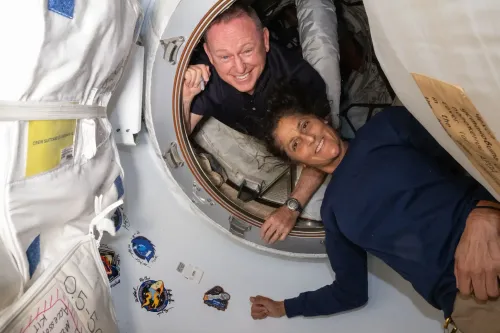
The astronauts completed a mission lasting over five months aboard the ISS, leaving behind three crew members: NASA's Chris Williams, and cosmonauts Sergey Kud-Sverchkov and Sergei Mikaev. Another crew of four is scheduled to arrive next month.
“All four crew members will be taken to a local hospital for further evaluation, utilizing medical resources on Earth for optimal care,” NASA informed via X.
On January 8, NASA had postponed its first scheduled spacewalk of 2026, which involved Mike Fincke and Zena Cardman, due to a medical concern regarding one of the astronauts.
However, NASA has not disclosed details about the medical issue or the astronaut's identity.
“Given the medical privacy of the individual, NASA will not reveal further details about the crew member. The situation is currently stable,” NASA noted in a blog post.
In the meantime, NASA Administrator Jared Isaacman emphasized that Crew-11's return highlights the strength and capabilities of the U.S. space program in ensuring the safe return of astronauts. He applauded the Crew-11 teams for their accomplishments.
“Crew-11 executed over 140 scientific experiments that further human exploration. Missions such as Crew-11 exemplify the inherent capabilities of America’s space program — our ability to return astronauts safely, quickly launch new crews, and maintain progress in human spaceflight as we prepare for the historic Artemis II mission, from low Earth orbit to the Moon and eventually Mars,” remarked Isaacman.
During their 167-day mission, the four crew members traveled nearly 71 million miles and completed over 2,670 orbits around Earth.
This mission marked Fincke’s fourth spaceflight, Yui’s second, and the inaugural flights for Cardman and Platonov. Fincke has accumulated 549 days in space, positioning him fourth among all NASA astronauts for total days spent in space.
Point of View
The successful return of the Crew-11 astronauts by SpaceX marks a significant achievement in space exploration. This event not only illustrates the capabilities of private space travel but also emphasizes the critical importance of maintaining astronaut health and safety in challenging environments. As the U.S. continues to lead in space endeavors, such milestones enhance our understanding and investment in the future of human exploration.
NationPress
26 Sept 2026
Frequently Asked Questions
What was the purpose of the Crew-11 mission?
The Crew-11 mission aimed to conduct over 140 scientific experiments that advance human exploration.
Why was the return considered a medical evacuation?
The return was classified as a medical evacuation due to concerns regarding the health of one of the crew members.
How long did the astronauts spend in space?
The astronauts completed a mission lasting 167 days aboard the ISS.
What does this event signify for the U.S. space program?
This event demonstrates the resilience and capabilities of the U.S. space program in ensuring astronaut safety and advancing human exploration.
When is the next crew scheduled to arrive at the ISS?
Another crew of four is expected to arrive next month.