Rijiju flags tribal Cabinet representation, urges more SC/ST judges
Synopsis
Union Minister Kiren Rijiju has argued that pre-2014 governments offered tribals only token Cabinet representation, while the Modi government is actively pressing the collegium to recommend more SC/ST and OBC candidates for High Court and Supreme Court appointments — raising live questions about judicial diversity and independence.
Key Takeaways
Rijiju claims that before 2014 , only one tribal politician held a Cabinet post — framed as symbolic rather than substantive inclusion.
The minister says the Modi government has been urging the collegium to recommend more SC/ST and OBC candidates for High Court and Supreme Court appointments.
The collegium controls judicial appointments through a mechanism established by Supreme Court judgments; the government can return recommendations once but cannot appoint unilaterally.
Specific government communications to the collegium on SC/ST/OBC diversity have not been independently verified from public records.
The post is part of a broader BJP political frame contrasting pre- and post-2014 tribal inclusion, aimed partly at tribal voters in the Northeast and central India.
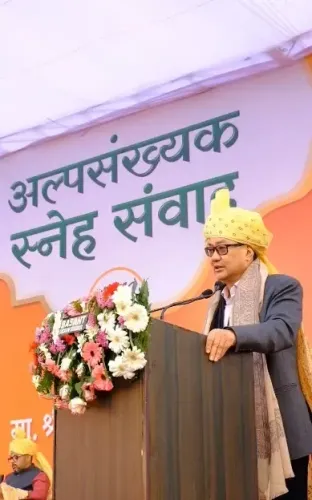
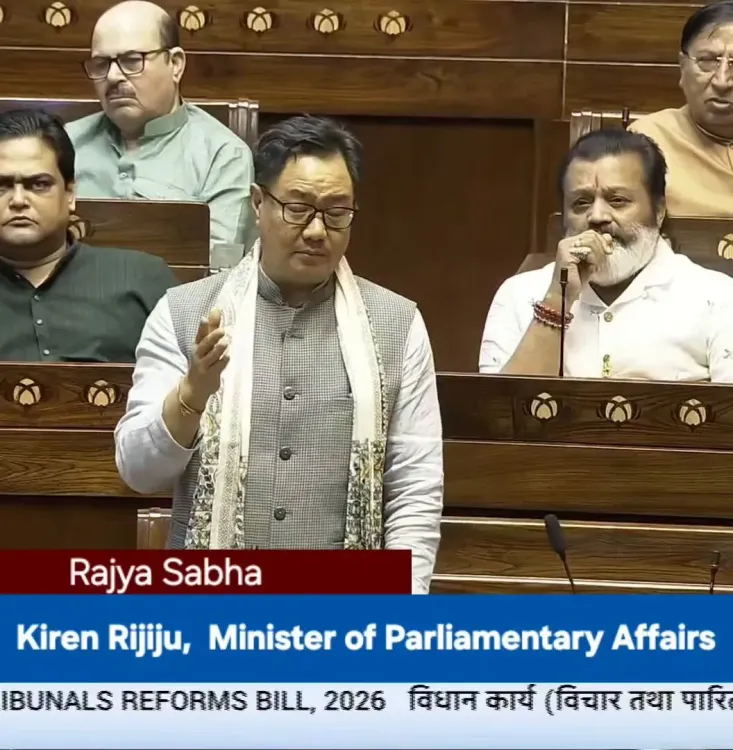
A decade after Narendra Modi first took office, Union Parliamentary Affairs and Minority Affairs Minister Kiren Rijiju is drawing a sharp line between what he calls token inclusion and real power — pointing to tribal representation in the Cabinet and the higher judiciary as the clearest proof of the difference. On Tuesday, 11 August 2026, Rijiju took to X to argue that before 2014, a single tribal face in the Union Cabinet was considered sufficient — a symbolic gesture dressed up as representation.
From one symbolic seat to a structural argument
Rijiju's post states plainly: 'Before 2014, only one Tribal used to be a symbolic Minister in the Cabinet.' The claim — that tribal inclusion was decorative rather than substantive in earlier governments — is a recurring BJP political frame, and Rijiju, himself from Arunachal Pradesh and one of the Northeast's most prominent voices in the national government, is its most consistent articulator. He added in Hindi: 'आदरणीय नरेंद्र मोदी जी ने भारत के आदिवासियों को वास्तविक सम्मान दिया' — 'Respected Narendra Modi ji has given real respect to the tribals of India.'
The second strand of his post moves the argument into constitutional territory: the Modi government, he says, has been urging the collegium — the body of senior Supreme Court judges that controls judicial appointments — to recommend more SC/ST and OBC candidates for positions in the High Courts and the Supreme Court. That is a more consequential claim. The collegium system has long faced criticism for producing a judiciary that does not reflect India's social diversity, and any government push to change that composition touches the live wire of judicial independence versus executive influence.
The collegium question: diversity versus independence
India's collegium — a mechanism established through Supreme Court judgments rather than legislation — gives senior judges near-exclusive authority over who joins the higher judiciary. The government receives collegium recommendations and can return them once for reconsideration, but cannot unilaterally appoint. Rijiju's assertion that the NDA government has been communicating its preference for greater SC/ST and OBC representation to the collegium sits at the intersection of two legitimate public interests: the democratic demand for a judiciary that looks like the country it serves, and the constitutional principle that judicial appointments remain insulated from political pressure.
The research background notes that specific recent communications from the government to the collegium on this question cannot be independently verified from established public records — a caveat worth keeping in mind. What is documented is the political posture: since 2014, the NDA has consistently framed its governance record on this axis of moving marginalised communities from the margins of institutions to their centres.
Why tribal voters and the Northeast are watching
Rijiju is not a neutral messenger here. As a tribal leader from the Northeast, his voice on representation carries biographical weight that a statement from a non-tribal minister would not. The BJP has invested heavily in tribal outreach across the Northeast and central Indian states — Jharkhand, Chhattisgarh, Madhya Pradesh, Odisha — where Scheduled Tribe voters are numerically decisive. Framing the judiciary diversity push as part of the same arc as Cabinet inclusion is a way of telling those voters that the party's commitment runs deeper than election cycles.
The next concrete test of that commitment will come with the next round of collegium recommendations for High Court and Supreme Court vacancies — and whether the composition of those appointees shifts in any measurable direction. Until then, Rijiju's post is a political marker: a minister staking his government's legacy on a promise of structural change, not symbolism.
Point of View
Which is politically potent but analytically worth separating. The collegium push, if substantiated, would represent a genuine pressure point on one of India's most opaque appointment systems. The broader pattern suggests the BJP is converting its tribal governance record into a durable electoral asset ahead of state elections in tribal-heavy constituencies, with Rijiju as the most credible face of that message given his own identity and constituency.
NationPress
26 Sept 2026
Frequently Asked Questions
What did Kiren Rijiju say about tribal representation in the Cabinet before 2014?
Rijiju stated that before 2014, only one tribal politician was given a Cabinet post, which he described as a symbolic gesture rather than genuine inclusion.
Is the Modi government pushing for more SC/ST judges in the Supreme Court and High Courts?
Rijiju has claimed the government has been urging the collegium to recommend more SC/ST and OBC candidates for judicial appointments, though specific communications to the collegium have not been independently verified from public records.
How does the collegium system work for appointing judges in India?
The collegium — comprising senior Supreme Court judges — recommends appointments and transfers to the High Courts and Supreme Court. The government can return a recommendation once for reconsideration but cannot make appointments on its own.
Why is Kiren Rijiju significant in the debate on tribal representation?
Rijiju is himself from Arunachal Pradesh and belongs to a tribal community, giving him biographical credibility as a spokesperson on tribal inclusion that other ministers may lack.
Which states have large tribal voter populations that the BJP is targeting?
The BJP's tribal outreach focuses on the Northeast as well as central Indian states including Jharkhand, Chhattisgarh, Madhya Pradesh, and Odisha, where Scheduled Tribe voters are numerically significant.