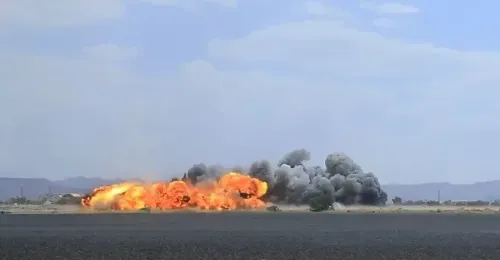
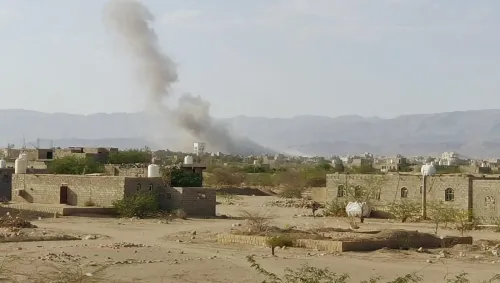
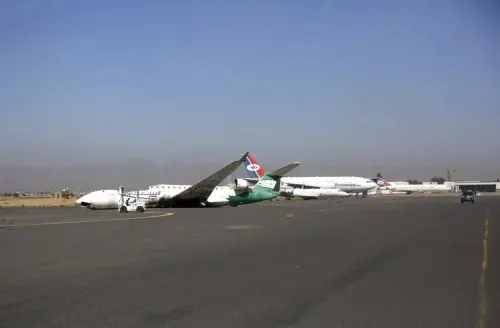
Riyadh airport attack kills 12, injures 309 as Houthi-Saudi strikes escalate
Synopsis
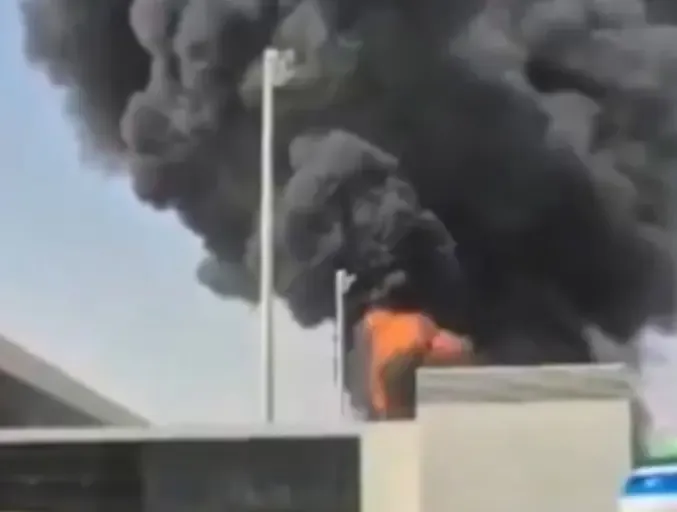
A strike on Riyadh's King Khalid International Airport killed 12 people — including a US national and citizens from seven other countries — and wounded 309 others, marking one of the deadliest single attacks on Saudi civilian infrastructure since Yemen's war reignited. With airports on both sides now in the crosshairs, the conflict is entering a dangerous new phase that directly threatens civilian aviation and global shipping lanes.
Key Takeaways
An attack on King Khalid International Airport , Riyadh , on 11 October killed 12 people and injured 309 others .
The dead included four Saudi citizens and eight foreign nationals from the US , Bangladesh , Egypt , Jordan , Syria , Palestine , and Sudan .
Airport operations were temporarily suspended for damage assessment and safety checks.
Saudi Arabia launched retaliatory strikes on Sanaa International Airport and areas near the Bab al-Mandab Strait on the same day.
Yemen's government forces claimed over 1,150 Houthi fighters neutralised and 180+ vehicles destroyed in 1,900+ strikes in 24 hours — figures that could not be independently verified.
The escalation follows a breakdown of the UN-brokered 2022 truce that had largely halted major hostilities.
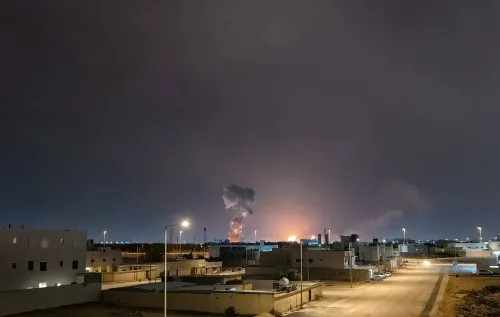
An attack on King Khalid International Airport in the Saudi capital Riyadh on Saturday, 11 October killed 12 people and injured 309 others, according to the Saudi General Authority of Civil Aviation. The strike is the latest in an intensifying exchange of attacks on major airports between Yemen's Houthi group and Saudi Arabia.
Casualties and Nationalities
The aviation authority confirmed in a statement early Sunday that the dead included four Saudi citizens and eight foreign nationals — comprising two Bangladeshis and one each from the United States, Egypt, Jordan, Syria, Palestine, and Sudan. The 309 injured are being treated across several hospitals, with some reported to be in serious condition. Airport operations were temporarily suspended pending damage assessments and safety checks, the authority said.
Houthi Statement and Saudi Counterstrikes
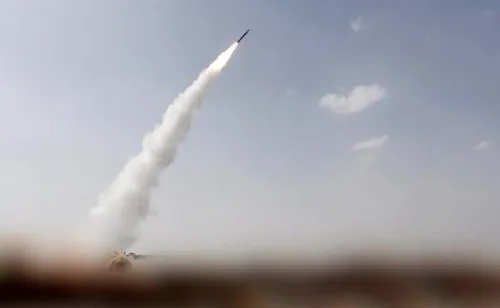
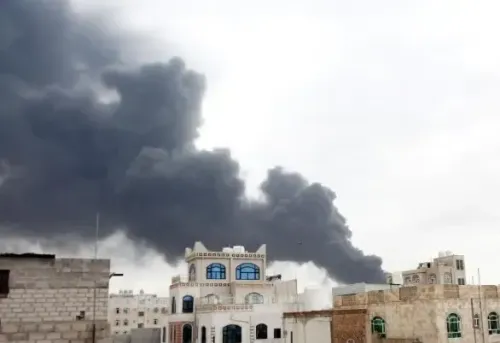
Following the Riyadh attack, the Houthi group issued a statement saying it was prepared for reciprocal arrangements with Saudi Arabia to keep airports, seaports, and other facilities serving humanitarian functions outside the military confrontation. Separately, Houthi-run al-Masirah TV reported that Saudi Arabia launched a fresh wave of air and missile strikes across Houthi-held areas in Yemen on the same day, targeting Sanaa International Airport, areas near the strategic Bab al-Mandab Strait, and several northern provinces.
Ground Offensive and Battlefield Claims
Also on Saturday, Yemen's government forces claimed that more than 1,150 Houthi fighters had been 'neutralised' and over 180 military and logistical vehicles destroyed or damaged in more than 1,900 strikes across multiple fronts in the past 24 hours. These figures could not be independently verified. Around the southwestern city of Taiz, Houthi advances have reportedly placed increasing pressure on government forces and disrupted key roads connecting the city with government-held areas in southern Yemen, with fierce clashes underway south of the city, according to government military sources.
Wider Offensive and Strategic Context
Backed by Saudi airstrikes, Yemeni government forces launched a large-scale offensive on the preceding Monday, aiming to retake Houthi-held territory. Some of the fiercest fighting has been concentrated around the strategic Bab al-Mandab Strait, a critical global shipping lane. The renewed hostilities represent a significant escalation following a UN-brokered truce in 2022 that had largely halted major fighting.
Background: A Decade of Conflict
Yemen has been engulfed in civil war since late 2014, when the Houthis seized the capital Sanaa and large swathes of the country's north. A Saudi-led coalition intervened in 2015 in support of the internationally recognised Yemeni government, now based in the southern port city of Aden. The current escalation marks one of the most severe breakdowns since the 2022 ceasefire, raising fresh concerns about civilian infrastructure being drawn into the conflict.
Point of View
Coming after the strike rather than before it. With the Bab al-Mandab Strait — through which roughly 10% of global trade passes — now an active conflict zone, the war's consequences are no longer confined to Yemen. The unverified battlefield casualty figures from Yemeni government sources deserve scrutiny; in this conflict, both sides have a history of inflated claims that later reporting has not sustained.
NationPress
11 Oct 2026
Frequently Asked Questions
What happened at Riyadh's King Khalid International Airport?
An attack on King Khalid International Airport in Riyadh on Saturday, 11 October, killed 12 people and injured 309 others, according to the Saudi General Authority of Civil Aviation. Airport operations were temporarily suspended for damage assessment and safety checks.
Who were the victims of the Riyadh airport attack?
The 12 fatalities included four Saudi citizens and eight foreign nationals — two Bangladeshis and one each from the United States, Egypt, Jordan, Syria, Palestine, and Sudan. The 309 injured are receiving treatment at multiple hospitals, with some in serious condition.
Did the Houthis claim responsibility for the Riyadh airport attack?
The source does not explicitly state a Houthi claim of responsibility for the Riyadh strike. However, the attack occurred in the context of ongoing Houthi-Saudi exchanges targeting major airports; the Houthi group subsequently issued a statement offering reciprocal arrangements to keep airports and humanitarian facilities out of the conflict.
How did Saudi Arabia respond to the airport attack?
Saudi Arabia launched a new wave of air and missile strikes on Houthi-held areas in Yemen on the same day, targeting Sanaa International Airport, areas near the Bab al-Mandab Strait, and several northern provinces, according to Houthi-run al-Masirah TV.
What is the broader context of the Yemen conflict?
Yemen has been in civil war since late 2014, when the Houthis seized Sanaa. A Saudi-led coalition intervened in 2015 in support of the internationally recognised Yemeni government, now based in Aden. A UN-brokered truce in 2022 had largely halted major fighting, but the current escalation marks one of the most serious breakdowns of that ceasefire.