Over 164,000 Pakistanis deported from Gulf nations in five years: Official data
Synopsis
Pakistan's own National Assembly data reveals over 164,000 of its nationals were deported from Gulf countries in five years — with Saudi Arabia alone accounting for 108,029 cases. The figures come as Defence Minister Khawaja Asif publicly blamed organised begging networks, alleged airport staff complicity, and police protection for a crisis now threatening Pakistan's critical Gulf remittance lifeline.
Key Takeaways
Over 164,000 Pakistani nationals were deported from Gulf nations in the past five years , per Pakistan's Ministry of Interior data tabled in the National Assembly .
Saudi Arabia topped the list with 108,029 deportations; the UAE followed with 40,497 .
Oman ( 9,814 ), Qatar ( 2,971 ), and Bahrain ( 2,779 ) accounted for the remaining cases.
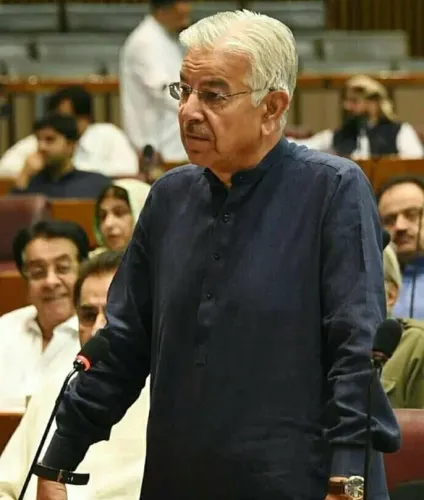
Defence Minister Khawaja Asif admitted in February that Gulf nations stopped issuing visas to Pakistanis over organised begging networks.
Asif alleged Pakistani airport staff , local administration, and police were complicit in facilitating these networks.
A sustained Gulf visa freeze risks disrupting Pakistan's remittance inflows , a key source of foreign exchange.
More than 164,000 Pakistani nationals have been deported from Gulf countries over the past five years, according to official data tabled in Pakistan's National Assembly. The figures, presented by the Ministry of Interior, lay bare the scale of a migration crisis that has drawn sharp criticism from Gulf governments and prompted visa restrictions against Pakistani nationals.
Country-wise Deportation Numbers
Saudi Arabia recorded the highest number of deportations at 108,029, accounting for the bulk of all cases. The United Arab Emirates (UAE) followed with 40,497 deportations, while Oman reported 9,814, Qatar accounted for 2,971, and Bahrain recorded 2,779 cases, according to the data cited in reports from Pakistani daily The Express Tribune.
Context: The Begging Mafia Link
The assembly session during which the data was presented was itself disrupted by opposition protests over denied access to former Prime Minister Imran Khan and alleged restrictions on his medical treatment. Nevertheless, the deportation figures drew significant attention.
The numbers align with an admission made in February by Pakistan's Defence Minister Khawaja Asif, who publicly acknowledged that Gulf nations had halted visa issuance to Pakistanis due to organised networks exporting beggars to these countries. Asif shared a video on social media in which a child beggar described his earnings and revealed that his family — including a sibling who feigns disability — had collectively purchased a house in Faisalabad. The child stated that he and his three brothers earn an average of PKR 12,000 on a typical day.
Asif also cited a report by UAE's Khaleej Times, noting that begging in Pakistan has evolved into a formally organised profession. 'There are formal contractors who recruit children, women, and fake disabled people and earn billions. This same mafia exports these beggars to Gulf countries in the thousands,' Asif said, according to reports.
Institutional Complicity Alleged
Asif went further, alleging that Pakistani airport staff were involved in facilitating these networks. He stated that such operations could not function in any city without the active support of local administration and police — a pointed indictment of systemic complicity at multiple levels of the state apparatus.
Impact and What Comes Next
The Gulf region remains one of Pakistan's most critical labour corridors, with remittances from these countries forming a substantial pillar of Pakistan's foreign exchange earnings. A sustained visa freeze — particularly from Saudi Arabia and the UAE — could have significant macroeconomic consequences for Pakistan, whose economy is already under severe stress. Analysts warn that without credible enforcement action against the begging mafia and corrupt officials, the diplomatic fallout with Gulf partners is unlikely to ease.
Point of View
000 deportation figure is striking, but the more consequential detail is what Pakistan's own Defence Minister said alongside it — that airport staff, police, and local administration are all allegedly enabling the begging mafia. That is not a migration problem; it is a governance failure with diplomatic consequences. Pakistan's Gulf remittances are a macroeconomic lifeline, and a prolonged visa freeze from Saudi Arabia and the UAE would compound an already fragile balance-of-payments position. The real accountability question is whether Islamabad acts on Asif's own admission, or whether the statement was political theatre without follow-through.
NationPress
19 Sept 2026
Frequently Asked Questions
How many Pakistani nationals have been deported from Gulf countries?
Over 164,000 Pakistani nationals were deported from Gulf nations over the past five years, according to official data presented by Pakistan's Ministry of Interior in the National Assembly. Saudi Arabia alone accounted for 108,029 of those deportations.
Which Gulf country deported the most Pakistanis?
Saudi Arabia recorded the highest number with 108,029 deportations, followed by the UAE at 40,497, Oman at 9,814, Qatar at 2,971, and Bahrain at 2,779.
Why have Gulf countries stopped issuing visas to Pakistanis?
Pakistan's Defence Minister Khawaja Asif stated in February that Gulf nations halted visa issuance due to organised networks that export beggars to these countries. He described a structured mafia that recruits children, women, and individuals feigning disabilities, and alleged complicity among Pakistani airport staff, police, and local administration.
What is the economic impact of Gulf deportations on Pakistan?
The Gulf region is one of Pakistan's most important sources of remittances and a primary labour corridor. A sustained visa freeze from major Gulf states — particularly Saudi Arabia and the UAE — could significantly reduce foreign exchange inflows at a time when Pakistan's economy is already under severe strain.
Was the deportation data linked to any political event in Pakistan?
The data was presented during a National Assembly session that was also marked by opposition protests over denied access to former Prime Minister Imran Khan and alleged restrictions on his medical treatment, though the deportation figures were drawn from Ministry of Interior records independent of those protests.