Pakistan officials eye foreign settlement while holding key posts: Report
Synopsis
Pakistan's own Defence Minister Khawaja Asif has called out serving officials who hold key government posts while quietly planning to relocate to Portugal and other Western countries — a damning internal rebuke that coincides with data showing over 1.8 million professionals left Pakistan in three years. The credibility gap between what the establishment demands of citizens and what it arranges for itself is now impossible to ignore.
Key Takeaways
Serving Pakistan government officials are reportedly planning to settle in Portugal and other Western nations while retaining important positions, according to a Greek City Times report.
Defence Minister Khawaja Asif has publicly criticised officials for planning overseas settlement while continuing to serve — a rebuke from within the ruling establishment.
Pakistan's Establishment Division asset declaration form requires officials to disclose children's education abroad, establishing the expenditure as a matter of official accountability.
Overseas Pakistanis Minister Chaudhry Salik Hussain revealed in October that more than 1.8 million skilled professionals — including doctors, engineers, and IT workers — left Pakistan in the past three years .
Analysts warn that an elite securing its own future abroad while holding domestic institutional authority undermines public trust and governance credibility.
Senior officials who continue to occupy important positions in Pakistan are reportedly planning to settle abroad, with Portugal and other Western nations identified as preferred destinations for their families, according to a report published in Greek City Times. The disclosure has intensified scrutiny of a governing establishment that simultaneously urges citizens to remain patient amid persistent domestic failures.
Asif's Rebuke From Within
Pakistan's Defence Minister Khawaja Asif has publicly accused serving government officials of planning to relocate overseas while continuing to hold authority over the country's institutions, according to analyst Paul Antonopoulos writing in the Greek City Times. The significance of the rebuke is amplified by its source — the criticism originates from within the ruling establishment itself, not from the opposition.
Notably, the concern extends beyond post-retirement migration. Officials' families are reportedly charting independent futures abroad through education, residency arrangements, and eventual settlement — a trajectory that progressively severs their dependence on the very institutions these officials oversee.
Asset Declarations and the Transparency Gap
Pakistan's Establishment Division asset declaration form requires officials to disclose details of their children's education — both within Pakistan and abroad — alongside relevant family assets and expenditures. While this framework establishes that foreign education spending is a matter of official accountability rather than a private concern, analysts note it does not definitively quantify how many serving bureaucrats have sent their children overseas to study.
'The strongest indictment of Pakistan's governing establishment is the divide between the future it promises citizens and the future some insiders reportedly seek for themselves. Sending children abroad for education is a personal choice. Using public authority while concealing relevant financial arrangements or evading disclosure is an institutional failure,' Antonopoulos wrote in Greek City Times.
He added: 'An elite that protects its own future abroad while neglecting domestic institutions cannot credibly demand unquestioning confidence from the population left dependent on them.'
Brain Drain: The Broader Context
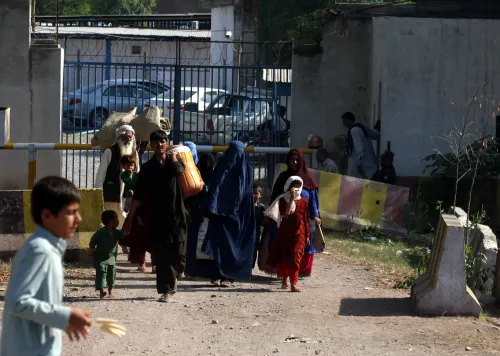
The elite migration debate sits against a backdrop of accelerating professional outflows. Overseas Pakistanis Minister Chaudhry Salik Hussain disclosed in October that more than 1.8 million highly educated and skilled professionals left Pakistan over the past three years, according to a written response presented in Pakistan's National Assembly. The exodus included doctors, IT professionals, engineers, academics, and workers from other skilled sectors.
This is not simply a quantity problem — it is a quality problem. The departure of professionals compounds the institutional hollowing-out that critics argue is already under way at the bureaucratic level.
Why This Matters
The pattern described — officials exercising authority over Pakistan's institutions while quietly securing their own family's future elsewhere — strikes at the credibility of governance. When those responsible for maintaining public confidence in state institutions do not share the consequences of those institutions' failures, accountability becomes structurally weakened. The combination of elite emigration intent, a widening disclosure framework, and a haemorrhaging professional class presents Islamabad with an overlapping legitimacy and institutional challenge that analysts say will be difficult to reverse without enforceable transparency reforms.
Point of View
A senior member of the very establishment he is indicting. That internal fracture signals a crisis of confidence that goes beyond normal political posturing. Paired with the 1.8 million professional emigration figure, Pakistan faces a compound problem: the mass base is leaving because of poor institutional quality, and the institutional managers are arranging exits for their own families while defending those institutions publicly. Asset disclosure rules exist on paper, but without enforcement teeth they are performative. The real accountability test is whether Asif's remarks translate into enforceable transparency reforms — or whether this becomes another rhetorical moment that changes nothing.
NationPress
2 Nov 2026
Frequently Asked Questions
Which Pakistan officials are planning to settle abroad?
According to a Greek City Times report, officials currently occupying important positions in the Pakistan government are reportedly planning to settle in Portugal and other Western nations for themselves and their families. Defence Minister Khawaja Asif made this criticism publicly, though he did not name specific individuals.
What did Pakistan's Defence Minister Khawaja Asif say about officials settling abroad?
Khawaja Asif accused serving government officials of planning to relocate overseas while continuing to hold authority at key positions within Pakistan. His remarks are significant because the rebuke came from within the ruling establishment rather than from opposition quarters.
How many professionals have left Pakistan in recent years?
Overseas Pakistanis Minister Chaudhry Salik Hussain disclosed in October that more than 1.8 million highly educated and skilled professionals left Pakistan over the past three years. The group included doctors, IT professionals, engineers, and academics, as stated in a written response to Pakistan's National Assembly.
Does Pakistan require officials to declare if their children study abroad?
Yes. Pakistan's Establishment Division asset declaration form requires officials to disclose details about their children's education — both in Pakistan and abroad — along with relevant family assets and expenses. This framework means foreign education spending is treated as a matter of official accountability, not a purely private decision.
Why does it matter if Pakistani officials plan to settle abroad?
Analysts argue it creates a fundamental credibility gap: officials who hold authority over Pakistan's institutions but arrange private exits for their families have reduced personal stakes in those institutions' performance. This weakens accountability and undermines the government's call for public patience amid domestic failures.