Escalating Tensions: Pakistan's Airstrikes in Afghanistan Follow Defence Minister's Warning
Synopsis
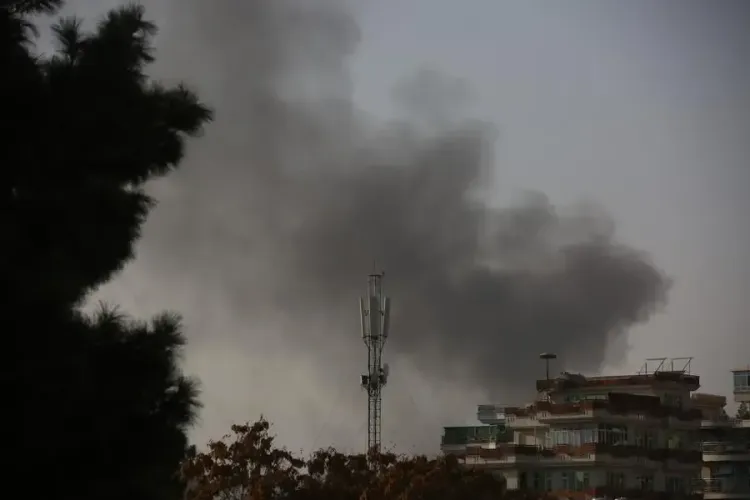
The recent airstrikes by Islamabad in Afghanistan come on the heels of Pakistan's Defence Minister Khawaja Asif stating his country's readiness to conduct military operations within Afghanistan. This development raises questions about the escalating tensions and the complex geopolitical dynamics in the region.
Key Takeaways
Pakistan's airstrikes in Afghanistan follow a direct warning from Defence Minister Khawaja Asif.
The military's influence in Pakistan's governance is significant, particularly in national security matters.
Accusations of Indian support for the Taliban have been made by Pakistan.
Afghanistan has condemned the airstrikes as violations of sovereignty and human rights.
Recent amendments to military command have increased the power of the Army Chief in Pakistan.
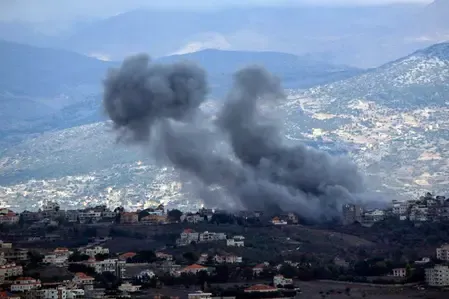
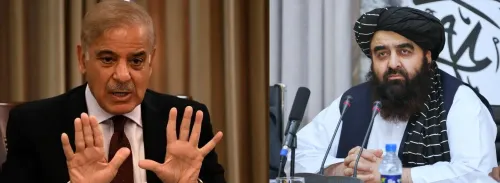
New Delhi, Feb 23 (NationPress) Islamabad's recent airstrikes within Afghanistan occurred less than four days after reports emerged quoting Pakistan's Defence Minister Khawaja Asif in an interview, where he asserted that the nation would not shy away from initiating air operations in its neighboring country.
This significant development appears more than coincidental, especially considering it originated from a high-ranking Defence Minister. However, it's crucial to acknowledge that in matters of national security, it is the military headquarters in Rawalpindi that predominantly influences the civilian government in Islamabad.
Asif alleged during his interview with France 24 that the attacks occurring within Pakistan stem from a proxy conflict driven by Delhi and Kabul, highlighting that proscribed terrorist factions are allegedly operating from Afghan soil, as reported by Pakistan’s Dunya News last week.
Such claims are not unprecedented; in a past interview, he stated that India had “infiltrated” the leadership of the Afghan Taliban. He insisted that this infiltration was a key factor escalating tensions between Pakistan and Afghanistan, according to reports.
Recalling that assertion, an Al Jazeera article from last year noted, “On October 28, after negotiators from Pakistan and Afghanistan encountered obstacles in extending their fragile ceasefire following deadly border clashes, Pakistani Defence Minister Khawaja Asif accused a third country, which was not even part of the dialogue: India.”
This highlighted that Pakistan's Defence Minister “failed to provide any evidence backing his assertion that India was supporting the Taliban to challenge Pakistan. Yet, his remarks reflect a growing effort by Pakistan to depict its tensions with Afghanistan as a result of a burgeoning alliance between the Taliban and India,” the article elaborated.
Islamabad has persistently targeted Afghan territories, claiming these actions are aimed at terror organizations allegedly responsible for attacks on Pakistan. This has prompted retaliation from the Taliban, resulting in fierce confrontations at the borders and leading to closures spanning approximately four months.
While Pakistan's stance towards its historically amicable neighbor has turned increasingly aggressive, India has adopted a cautious yet strategic diplomatic approach towards Kabul. This pivot has unsettled Islamabad, particularly as its border regions face civil and political strife.
In Afghanistan, a growing public sentiment against Islamabad’s hegemonic behaviors is emerging. “Several analysts contend that the Pakistani military's assaults on Afghanistan and the targeting of civilians amount to war crimes,” noted Kabul’s Tolo News on Monday.
“By attacking civilians in Nangarhar and Paktika, Pakistan’s military regime has again breached Afghanistan’s national sovereignty,” it declared.
The Ministry of Defence in Afghanistan labeled the latest assaults as a continuation of “previous acts of aggression,” according to the Pajhwok news site. “Once more, Pakistan’s military regime conducted airstrikes in various civilian areas of Nangarhar and Paktika provinces—including a religious institution and numerous residential homes—resulting in the deaths and injuries of many innocent civilians, including women and children,” it stated, quoting an official declaration in which the ministry condemned the attacks as a blatant violation of Afghanistan's sovereignty and a crime.
The assertive role of Rawalpindi in Pakistan’s governance was further solidified last year when the National Assembly passed the 27th Amendment, which conferred extensive powers to the Army Chief. General Asim Munir was elevated to the position of Chief of Defence Forces (CDF), granting him command over the army, navy, and air force. Munir now holds the lifetime rank of Field Marshal, along with legal immunity for any actions taken while in uniform by him and other five-star generals.
This amendment to Article 243 of Pakistan’s Constitution significantly altered the command structure of the armed forces. Key changes included the replacement of the Chairman of the Joint Chiefs of Staff Committee with the new CDF, consolidating the powers of the army chief and modifying the fiscal and administrative autonomy of the provinces.
Point of View
It is crucial to recognize the heightened tensions between Pakistan and Afghanistan, especially following the recent airstrikes. The situation underscores the intricate balance of power in the region and the role of military influence in governance. It is imperative for both nations to pursue dialogue over conflict to ensure stability.
NationPress
24 Sept 2026
Frequently Asked Questions
What prompted Pakistan's airstrikes in Afghanistan?
The airstrikes were initiated shortly after Defence Minister Khawaja Asif's statements indicating Pakistan's readiness to conduct operations within Afghanistan due to alleged threats from terrorist groups operating across the border.
How has Afghanistan responded to these airstrikes?
Afghanistan's Ministry of Defence condemned the airstrikes, labeling them as violations of national sovereignty and a continuation of aggression against Afghan civilians.
What role does the military play in Pakistan's decision-making?
The military, particularly the headquarters in Rawalpindi, exerts significant influence over Pakistan's civilian government, especially in matters of national security.
What are the allegations made by Pakistan against India regarding Afghanistan?
Pakistan has alleged that India is supporting terrorist groups operating in Afghanistan, claiming that India has infiltrated the Afghan Taliban leadership to escalate tensions between Pakistan and Afghanistan.
What changes were made in Pakistan's military command structure recently?
The National Assembly passed the 27th Amendment, which granted extensive powers to the Army Chief, consolidating military authority and changing the command structure of the armed forces.