CM Sukhu: HP economy stable despite RDG cuts

Synopsis
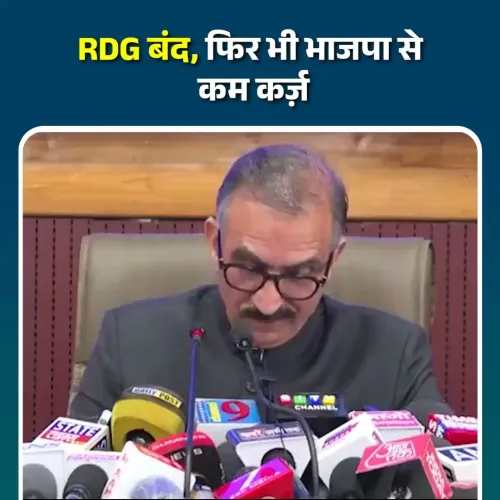
CM Sukhvinder Singh Sukhu says his government kept Himachal Pradesh's development on track and granted employees a 5% DA hike despite the Centre allegedly stopping ₹8,000–10,000 crore in Revenue Deficit Grants, vowing to protect the state's natural wealth.
Key Takeaways
CM Sukhu alleges the Central Government stopped ₹8,000–10,000 crore in Revenue Deficit Grants to Himachal Pradesh .
Despite the fiscal pressure, the state government claims it has maintained the pace of development and economic stability.
State employees received a 5% Dearness Allowance hike under the Sukhu government.
The 15th Finance Commission had recommended Revenue Deficit Grants to qualifying states, including Himachal Pradesh, for 2021–2026.
CM Sukhu pledged that Himachal Pradesh's natural resources and wealth will not be 'plundered,' signalling a broader assertion of fiscal and resource autonomy.
The statement intensifies the ongoing centre-state fiscal dispute narrative ahead of the next state budget cycle.
Even as the Centre slashed what Himachal Pradesh describes as ₹8,000–10,000 crore in Revenue Deficit Grants, Chief Minister Sukhvinder Singh Sukhu declared on Monday, 2 November 2026 that the state has held its fiscal ground — and kept development moving. The assertion, posted on X, carries a pointed edge: Himachal's resources will not be 'looted.'
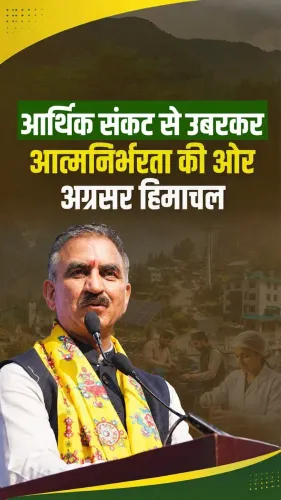
Posting in Hindi, CM Sukhu said: 'केंद्र सरकार के 8 से 10 हजार करोड़ रुपये RDG के बंद करने के बावजूद, हमारी सरकार ने प्रदेश की आर्थिक व्यवस्था को संभालते हुए विकास की गति बनाए रखी है।' ['Despite the Central Government stopping ₹8,000–10,000 crore in RDG, our government has maintained the pace of development while stabilising the state's economic system.'] He added that the government has delivered a 5% Dearness Allowance hike to employees and is moving fast toward making Himachal Pradesh self-reliant (aatmnirbhar).The RDG flashpoint: what Sukhu is contesting
Revenue Deficit Grants are Central transfers recommended by the Finance Commission to bridge the gap between a state's revenue expenditure and its revenue receipts. The 15th Finance Commission, whose recommendations cover the period 2021–2026, included such grants for qualifying states — with Himachal Pradesh among the beneficiaries. When those transfers shrink or stop, a hill state already carrying high debt and limited own-revenue sources feels the pressure almost immediately.
Sukhu's government, which took office in December 2022, has repeatedly flagged fiscal stress inherited alongside power. The claim of an ₹8,000–10,000 crore shortfall in central grants is the sharpest number the Chief Minister has publicly attached to that grievance yet — framing it as a deliberate squeeze rather than a routine revision.
5% DA and the politics of paying state employees
In a state where government employment is a major economic lifeline, the announcement of a 5% DA increment carries weight beyond the payslip. Himachal Pradesh's economy runs substantially on public-sector wages flowing into local markets — tourism, horticulture, and hydropower form the commercial base, but the salaried class underpins everyday commerce across hill towns.
Delivering DA in a period of alleged central fund denial is the political argument Sukhu is making: that his administration absorbed the shock without passing it on to employees. It is a direct counter-narrative to any opposition claim of fiscal mismanagement.
Sukhu's 'Himachal ki sampada' vow
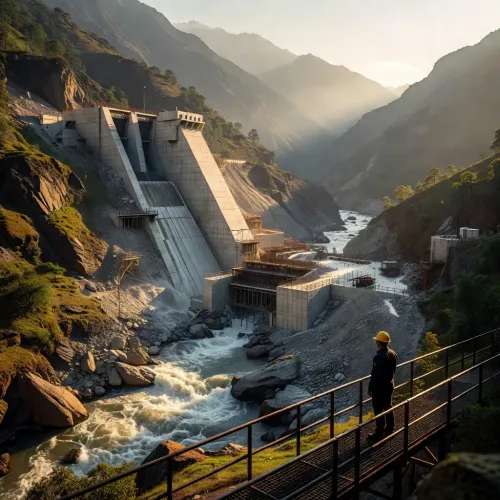
The closing line of the post — 'हमारा संकल्प है कि हिमाचल की संपदा को लुटने नहीं देंगे' ['Our resolve is that we will not let Himachal's wealth be plundered'] — signals something broader than a budget dispute. Himachal Pradesh sits on significant hydropower potential, and debates over royalties, revenue sharing, and resource control between the state and the Centre (or private operators) have a long, live history.
The language of 'protecting resources' taps into a well of sentiment in hill states — the sense that natural wealth flows out while fiscal dependency remains. Whether Sukhu converts that sentiment into concrete policy moves on resource royalties or budget negotiations will be the test to watch when the next state budget arrives.
Point of View
And reassures the state's large public-sector workforce that their DA is secure regardless. The 'aatmnirbhar Himachal' framing borrows from a vocabulary the Centre itself popularised, turning it against the Centre — a rhetorical judo that Congress-ruled states have increasingly deployed. The 'sampada' pledge adds a resource-sovereignty undercurrent that could be setting the table for a harder line on hydropower royalties or grant negotiations. The real test of whether this is positioning or policy will come at the state budget.
NationPress
2 Nov 2026
Frequently Asked Questions
What is a Revenue Deficit Grant and why does Himachal Pradesh receive it?
A Revenue Deficit Grant is a Central transfer recommended by the Finance Commission to cover the gap between a state's revenue expenditure and its own revenue receipts. The 15th Finance Commission recommended such grants to qualifying states, including Himachal Pradesh, for the period 2021–2026, given the state's limited own-revenue base and high debt.
How much money does CM Sukhu claim the Centre has withheld from Himachal Pradesh?
CM Sukhu has claimed the Central Government stopped Revenue Deficit Grants worth ₹8,000–10,000 crore to Himachal Pradesh, though this figure has not been independently verified from official public records.
What DA hike did Himachal Pradesh government employees get under CM Sukhu?
CM Sukhu announced a 5% Dearness Allowance increase for Himachal Pradesh government employees as part of his government's commitment to staff welfare despite the alleged central grant shortfall.
When did Sukhvinder Singh Sukhu become Chief Minister of Himachal Pradesh?
Sukhvinder Singh Sukhu, the Indian National Congress leader, took office as Chief Minister of Himachal Pradesh in December 2022 after the Congress party won the state assembly elections.
What did CM Sukhu mean by saying Himachal's 'sampada' will not be looted?
The term 'sampada' means wealth or natural resources. CM Sukhu's pledge appears to refer to protecting Himachal Pradesh's natural assets — including its significant hydropower resources — from what he frames as unfair extraction or under-compensation by the Centre or private parties.