Odisha CMO puts Koraput on full cyclone alert
Synopsis
The Chief Minister's Office of Odisha confirmed a large-scale cyclone-preparedness operation in Koraput district on 2 November 2026, with 500 evacuated, 506 shelters activated, 94 pregnant women shifted to Ma Griha facilities, and 64 JCBs deployed across 14 blocks.
Key Takeaways
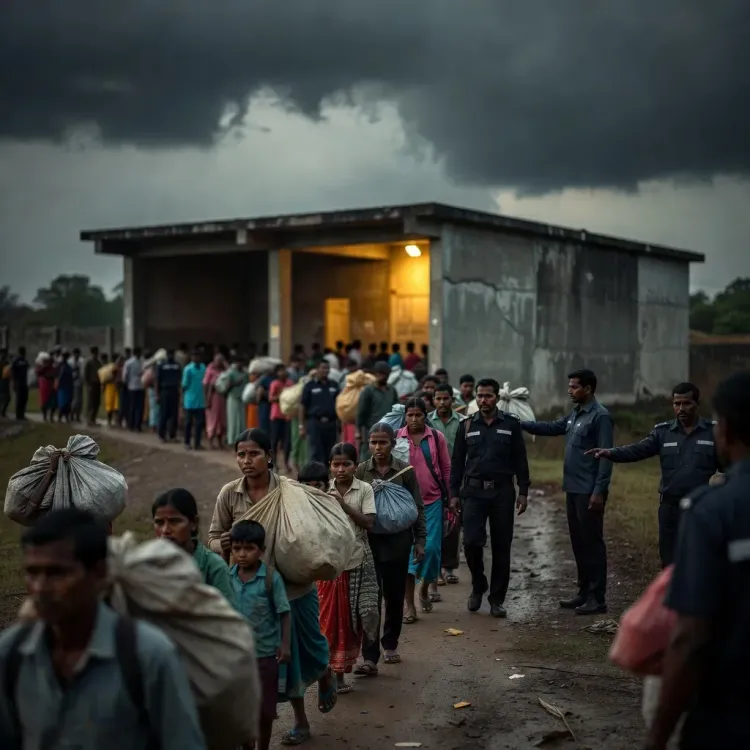
500 people have been evacuated to safe pucca shelters; 506 shelters are ready and 3 are already operational in Koraput district.
94 pregnant women have been shifted to Ma Griha shelter-and-medical-support facilities.
120 vulnerable villages across 62 gram panchayats are under active evacuation and protection measures.
14 fire-response teams are deployed — one per block — alongside public-address awareness drives across all 14 blocks .
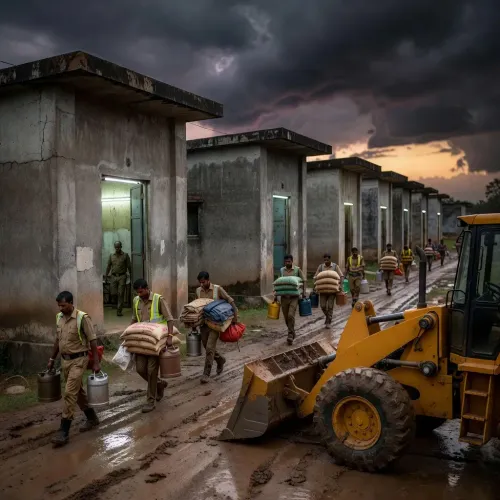
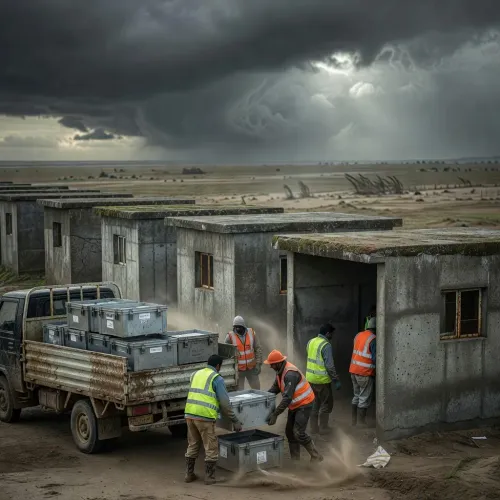
64 JCB machines are pre-positioned for road clearance; shelters are stocked with medicines, electricity, drinking water, toilets, and free cooked meals.
The district control room is live, with senior officers stationed at block and gram panchayat levels.
With a potential cyclone bearing down on southern Odisha, the Chief Minister's Office of Odisha on Monday, 2 November 2026 announced a sweeping emergency response across Koraput district — evacuating hundreds, activating hundreds of shelters, and deploying dozens of heavy machines to keep roads passable.
The CMO's post, written in Odia, confirmed that 500 people have already been shifted to safe pucca shelters, with 506 shelter facilities made ready and 3 already operational. In a measure that underscores the administration's focus on the most vulnerable, 94 pregnant women have been moved to Ma Griha facilities — the state's dedicated shelter-cum-medical-support programme for expectant mothers in rural and disaster-prone areas.
Koraput's 120 at-risk villages under active watch
The response blankets 120 vulnerable villages and habitations spread across 62 gram panchayats, a geography that reflects Koraput's particular exposure — a largely tribal, hilly district in southern Odisha that sits in the path of Bay of Bengal weather systems. Each of the district's 14 blocks now has a dedicated fire-response team deployed, and public-address systems are running continuous awareness drives across all 14 blocks.
Shelters have been stocked with medicines, electricity, clean drinking water, toilets, and free cooked meals — a logistics chain that shows how far Odisha has come since the 1999 Super Cyclone forced the state to rebuild its entire disaster-management architecture from scratch.
64 JCBs and a live district control room
64 JCB machines have been pre-positioned for road clearance and restoration of normal movement once the storm passes. The district control room is fully operational, and senior officers have been deployed at both block and gram panchayat levels — ensuring the chain of command reaches the last mile before the first strong winds do.
Odisha has long been regarded as a benchmark for state-level disaster response in India. The early-evacuation doctrine, multipurpose cyclone shelters, and inter-departmental coordination protocols that the state refined after successive Bay of Bengal cyclones are on full display in Koraput's preparations. The explicit attention to pregnant women through the Ma Griha scheme and the pre-deployment of fire teams in every block are markers of a response that has institutionalised lessons rather than merely improvised them.
The intensity and exact track of the system have not been specified in official communications yet — further updates from the district control room and possible deployment of state or national disaster response forces will depend on how the cyclone develops. What is already clear: Koraput is not waiting to find out.
Point of View
Shelter readiness, and vulnerable-group prioritisation long before landfall. The explicit deployment of Ma Griha facilities for pregnant women signals that the state's framework has moved well beyond generic crowd management toward targeted social protection. For a BJP-led state government under Chief Minister Mohan Majhi, projecting administrative efficiency during a climate emergency also carries political weight in a region with strong tribal constituencies. The scale of block-level officer deployment suggests the administration is treating this as a credible high-impact event, not a precautionary drill.
NationPress
2 Nov 2026
Frequently Asked Questions
How many people have been evacuated in Koraput ahead of the cyclone?
500 people have been moved to safe pucca shelters as of 2 November 2026 , according to the Chief Minister's Office of Odisha.
What is Ma Griha and why were pregnant women sent there?
Ma Griha is an Odisha government scheme that provides temporary shelter and medical support to pregnant women in rural and disaster-prone areas. 94 pregnant women from Koraput were shifted there to ensure they receive care during the cyclone threat.
How many cyclone shelters are ready in Koraput district?
506 shelter facilities have been made ready across Koraput, with 3 already operational. Each is stocked with medicines, clean water, electricity, toilets, and free cooked meals.
Which villages in Koraput are at risk from the cyclone?
120 vulnerable villages and habitations across 62 gram panchayats in Koraput district are under active evacuation and protection measures.
How is Odisha coordinating the disaster response at the local level?
The district control room is fully operational, 14 fire teams are deployed across all 14 blocks , 64 JCBs are stationed for road clearance, and senior officers are placed at both block and gram panchayat levels.