Nadda Flags Advanced Radiotherapy Launch at AIIMS Rajkot
Synopsis
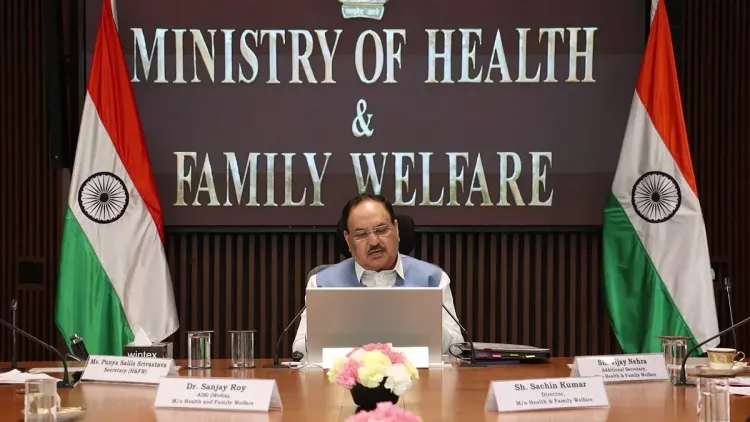
Union Health Minister J. P. Nadda on November 2, 2026, welcomed the launch of advanced radiotherapy at AIIMS Rajkot, calling it a major step in India's healthcare expansion and reaffirming the government's commitment to quality cancer care in western India.
Key Takeaways
Union Health Minister J.
Nadda announced the launch of advanced radiotherapy services at AIIMS Rajkot , Gujarat.
The development is framed as a major milestone in expanding high-quality oncology care in western India .
AIIMS Rajkot was established under the Pradhan Mantri Swasthya Suraksha Yojana (PMSSY) , first launched in 2006 .
Advanced radiotherapy units require expensive equipment and specialist staff, making their addition at a new public AIIMS a significant operational threshold.
The move aims to reduce dependence on distant metros for cancer treatment among patients in Gujarat and neighbouring states.
The rollout is part of a broader phased expansion of super-speciality services at India's newer AIIMS campuses.
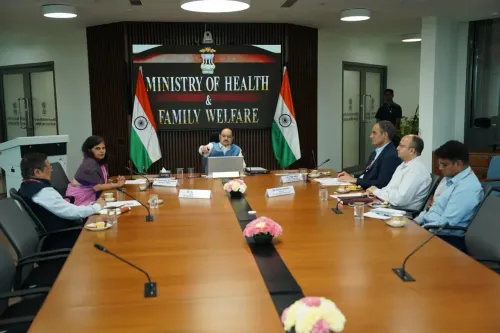
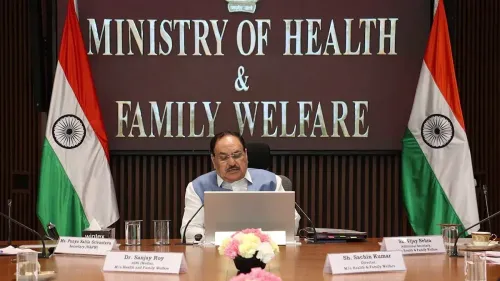
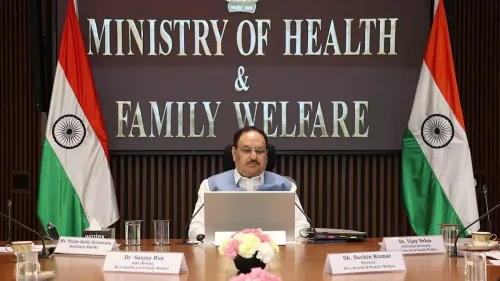
Western India's cancer patients just gained a powerful new ally. Union Health Minister J. P. Nadda on Monday, November 2, 2026, hailed the launch of advanced radiotherapy services at AIIMS Rajkot in Gujarat as a landmark step in India's public healthcare journey, reaffirming the government's commitment to delivering high-quality, timely treatment to every citizen.
In his post, Nadda wrote — 'AIIMS Rajkot mein advance radiotherapy ki shuruaat desh ki swasthya sewaon mein ek bada kadam hai' — 'The launch of advanced radiotherapy at AIIMS Rajkot is a major step in the country's health services.' He added that the government's resolve is to ensure every individual receives high-quality treatment on time, and that western India is equipped with better healthcare facilities.
AIIMS Rajkot's Place in India's Tertiary-Care Expansion
AIIMS Rajkot is one of several new All India Institutes of Medical Sciences established under the Pradhan Mantri Swasthya Suraksha Yojana (PMSSY), a flagship central scheme first launched in 2006 to address deep regional imbalances in tertiary healthcare access. The scheme was designed to build AIIMS-like institutions in states that had long remained underserved by the country's specialist medical infrastructure.
The addition of advanced radiotherapy — one of the most resource-intensive and technically demanding cancer treatments — signals that AIIMS Rajkot has crossed a critical threshold in its phased operationalisation. For patients in Gujarat and neighbouring states, access to such services at a public institution could dramatically reduce the need to travel to distant metros like Mumbai or New Delhi for oncology care.
Bridging the Oncology Gap in Western India
Cancer treatment infrastructure in India has historically been concentrated in a handful of large cities. Radiotherapy, in particular, demands expensive linear accelerators and trained radiation oncologists — resources that public hospitals outside major metros have rarely commanded. The commissioning of such a unit at AIIMS Rajkot directly addresses that gap for a region home to tens of millions of people.
Successive central governments have progressively upgraded the newer AIIMS beyond basic services, adding super-speciality departments in phases as institutions mature. Radiotherapy units at newly established AIIMS have become a key benchmark in that rollout, watched closely by health planners as a signal of genuine operational readiness.
With several other recently established AIIMS still in various stages of building out their specialised departments, the Rajkot milestone sets a bar — and a template — for what full-spectrum oncology care at a public institution can look like outside the country's metros.
Point of View
Not merely symbolic, upgrades to public healthcare. For Nadda, personally highlighting this milestone reinforces the BJP's health-governance credentials in Gujarat ahead of a period when healthcare delivery is under sustained public scrutiny. The broader arc here is significant: India's new AIIMS network is slowly transitioning from construction-phase optics to genuine clinical utility, and oncology capabilities are the acid test of that transition. Policymakers and health advocates will watch whether the Rajkot model accelerates similar equipment commissioning at other lagging AIIMS campuses.
NationPress
2 Nov 2026
Frequently Asked Questions
What is the advanced radiotherapy service launched at AIIMS Rajkot?
Advanced radiotherapy at AIIMS Rajkot refers to the commissioning of specialised cancer radiation treatment facilities — typically involving high-precision linear accelerators — at the public hospital, expanding oncology care access in western India.
Where is AIIMS Rajkot located and when was it set up?
AIIMS Rajkot is located in Rajkot, Gujarat. It was established under the Pradhan Mantri Swasthya Suraksha Yojana (PMSSY), a central government scheme launched in 2006 to build AIIMS-like institutions in underserved states.
What is the Pradhan Mantri Swasthya Suraksha Yojana?
The Pradhan Mantri Swasthya Suraksha Yojana (PMSSY) is a central government scheme launched in 2006 to set up AIIMS-like institutions and upgrade government medical colleges across India, addressing regional imbalances in specialist healthcare access.
Why is advanced radiotherapy significant for western India?
Cancer radiotherapy infrastructure has historically been concentrated in major metros. A dedicated public radiotherapy unit at AIIMS Rajkot means patients across Gujarat and neighbouring states can access specialised cancer treatment locally, without travelling to Mumbai or Delhi.
What did Health Minister J. P. Nadda say about AIIMS Rajkot?
Nadda called the launch of advanced radiotherapy at AIIMS Rajkot 'a major step in the country's health services,' and reaffirmed the government's resolve to ensure every person receives high-quality, timely treatment and that western India gets better healthcare facilities.