Nadda Hails Advanced Radiotherapy Launch at AIIMS Rajkot
Synopsis
Union Health Minister J. P. Nadda has hailed the commissioning of an advanced radiotherapy facility at AIIMS Rajkot as a historic achievement, saying the technology will make cancer treatment more precise and effective for patients across Gujarat.
Key Takeaways
Union Health Minister J.
Nadda on November 2, 2026 announced the establishment of an advanced radiotherapy facility at AIIMS Rajkot .
Nadda described the development as 'a historic achievement in Gujarat and in the field of cancer treatment.' The facility is expected to make cancer treatment more precise, safe, and effective, reducing the need for patients to travel to distant metro centres.
AIIMS Rajkot was set up under the Pradhan Mantri Swasthya Suraksha Yojana (PMSSY) , a central scheme launched in 2003 to address regional imbalances in tertiary healthcare.
The commissioning follows a broader pattern of progressively adding specialised units — including oncology — to newer AIIMS campuses as they mature.
Nadda credited Prime Minister Narendra Modi's 'visionary thinking and leadership' for the initiative.
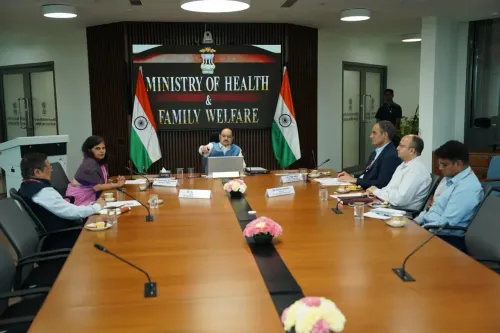
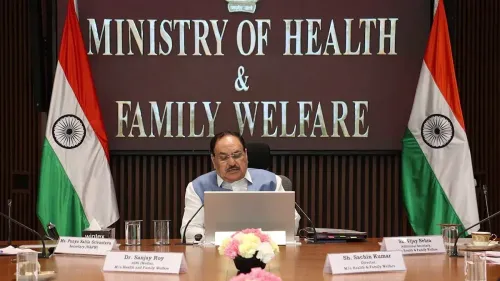
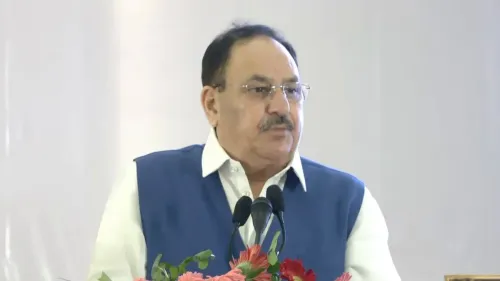
A landmark moment for cancer care in western India: Union Health Minister J. P. Nadda on Monday, November 2, 2026 declared the commissioning of an advanced radiotherapy facility at AIIMS Rajkot a historic achievement — for Gujarat and for the country's broader fight against cancer.
In a post on X, Nadda wrote in Hindi: 'AIIMS राजकोट में एडवांस्ड रेडियोथेरेपी सुविधा की स्थापना गुजरात और कैंसर उपचार के क्षेत्र में एक ऐतिहासिक उपलब्धि है' — ('The establishment of an advanced radiotherapy facility at AIIMS Rajkot is a historic achievement in the field of Gujarat and cancer treatment.') He added that the technology will make cancer treatment 'more precise, safe, and effective', and credited Prime Minister Narendra Modi's 'visionary thinking and leadership' for the initiative.
What the Rajkot Radiotherapy Unit Changes for Gujarat Patients
For cancer patients across Gujarat and neighbouring regions, the stakes are immediate. Until now, patients requiring high-precision radiotherapy — a treatment that targets tumours with tightly focused radiation beams to minimise damage to surrounding tissue — often had to travel hundreds of kilometres to older, better-equipped centres in metros. A functional radiotherapy unit at AIIMS Rajkot collapses that distance. Faster access to treatment matters enormously in oncology: delayed radiotherapy can directly affect survival outcomes. The addition is consistent with a deliberate national pattern. As new AIIMS campuses move from construction to clinical operation, the Health Ministry has been progressively commissioning specialised units — oncology, cardiac care, advanced imaging — to transform these institutes from basic referral points into full-spectrum tertiary centres.AIIMS Rajkot and the Pradhan Mantri Swasthya Suraksha Yojana
AIIMS Rajkot is one of the newest nodes in India's expanding public tertiary-care network, established under the Pradhan Mantri Swasthya Suraksha Yojana (PMSSY) — a central scheme first launched in 2003 to correct sharp regional imbalances in access to advanced hospital care. The scheme's core logic was blunt: too much specialist capacity was concentrated in a handful of older AIIMS, forcing patients from states like Gujarat, Jharkhand, and Himachal Pradesh into long, costly journeys for procedures available nowhere near home. Over successive governments, the AIIMS network has grown well beyond its original five campuses. The Rajkot facility represents that expansion reaching deep into Gujarat — a large, economically significant state that had historically lacked a central-government-run apex medical institution of this scale.Cancer Care as a Measure of a New AIIMS Coming of Age
Radiotherapy infrastructure is, in a real sense, a test of whether a new AIIMS has matured. The equipment is expensive, its operation demands certified physicists and radiation oncologists, and its commissioning signals that a campus has moved past bare-bones functionality. The Rajkot unit clears that bar. Nadda's framing — attributing the achievement directly to the Prime Minister's 'foresight' — also signals how the Health Ministry is positioning the AIIMS expansion politically: as a flagship of the Modi government's health equity agenda ahead of what remains a crowded policy calendar. For the patients who will walk through AIIMS Rajkot's oncology doors, the politics matter far less than the machine that is now switched on.Point of View
Measurable step in the long-running effort to decentralise India's specialist cancer care away from a handful of legacy metros. For the Health Ministry, it also offers a politically useful data point: the AIIMS expansion, which spans multiple governments under the PMSSY, is now delivering high-end clinical capability rather than just new buildings. Nadda's explicit attribution of the milestone to Prime Minister Modi's 'foresight' is a deliberate branding move, anchoring a technical infrastructure win to the ruling government's health equity narrative. The sharper policy question going forward is whether adequate staffing — radiation oncologists, medical physicists, trained technicians — will keep pace with equipment rollouts at the newer AIIMS campuses.
NationPress
2 Nov 2026
Frequently Asked Questions
What is the advanced radiotherapy facility at AIIMS Rajkot?
It is a newly commissioned high-precision cancer treatment unit at AIIMS Rajkot, Gujarat, designed to deliver targeted radiation therapy that minimises damage to healthy tissue while treating tumours more effectively.
What is AIIMS Rajkot and when was it set up?
AIIMS Rajkot is one of the newer All India Institutes of Medical Sciences established in Gujarat under the central government's Pradhan Mantri Swasthya Suraksha Yojana to improve tertiary healthcare access in states outside traditional medical hubs.
What is the Pradhan Mantri Swasthya Suraksha Yojana?
The Pradhan Mantri Swasthya Suraksha Yojana (PMSSY) is a central scheme launched in 2003 to reduce regional imbalances in advanced healthcare by setting up new AIIMS campuses and upgrading existing government medical colleges across India.
Why is radiotherapy important for cancer patients in Gujarat?
Radiotherapy is a standard and often life-saving treatment for many cancers. Without a local facility, patients in Gujarat had to travel to distant metro centres, causing delays that can worsen outcomes; the AIIMS Rajkot unit addresses that gap directly.
What did JP Nadda say about the AIIMS Rajkot radiotherapy launch?
Nadda called it a historic achievement for Gujarat and cancer treatment in India, saying the technology would make treatment more precise, safe, and effective, and credited Prime Minister Modi's visionary leadership for the development.