Nadda: AIIMS Rajkot to end cancer travel burden for Saurashtra, Kutch
Synopsis
Union Health Minister J. P. Nadda welcomed AIIMS Rajkot's launch of integrated oncology services — radiotherapy, chemotherapy, and surgery — calling it a new chapter in accessible cancer care for Saurashtra and Kutch, ending the need for patients to travel to distant metros.
Key Takeaways
AIIMS Rajkot has launched integrated cancer care services covering radiotherapy, chemotherapy, and surgery under one roof.
Patients from Saurashtra and Kutch will no longer need to travel to Ahmedabad, Mumbai, or Pune for oncology treatment.
AIIMS Rajkot was among six new AIIMS sanctioned in the Union Budget of 2014 under the Pradhan Mantri Swasthya Suraksha Yojana (PMSSY) .
Union Health Minister J.
Nadda described the development as a 'boon' for the people of the two regions.
The operationalisation of oncology services marks a significant phase in the campus's commissioning journey since its establishment.
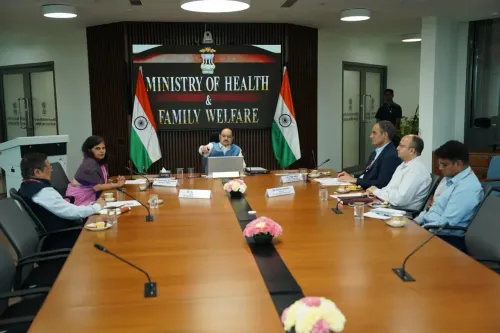
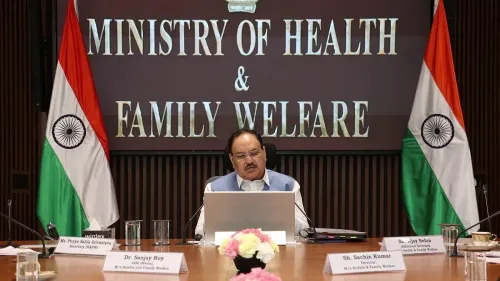
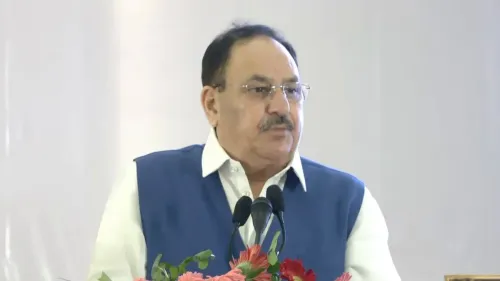
For cancer patients in Saurashtra and Kutch, the gruelling journey to Ahmedabad, Mumbai, or Pune for treatment may soon be history. Union Health Minister J. P. Nadda on Monday, 2 November 2026 hailed AIIMS Rajkot's new integrated oncology services as a landmark shift in how western Gujarat accesses advanced cancer care — radiotherapy, chemotherapy, and surgery, now under one roof.
Posting in Hindi, Nadda called the development 'ek naya adhyay' — 'a new chapter' — in accessible and timely cancer treatment for the region. He congratulated the entire AIIMS Rajkot team for the milestone, describing the institution as 'ek vardan', a boon, for the people of Saurashtra and Kutch.
Why Rajkot changes the oncology map of Gujarat
Before AIIMS Rajkot's oncology wing came into operation, patients from the two regions had no tier-one cancer care facility within reach. The nearest options — Ahmedabad (roughly 220 km from Rajkot), Mumbai, or Pune — demanded not just money but days away from home, often making treatment inaccessible for lower-income families. The availability of radiotherapy, chemotherapy, and surgical oncology at a single campus dramatically lowers that barrier.
Saurashtra covers the entire peninsula of western Gujarat and is home to several million residents spread across cities including Rajkot, Jamnagar, Bhavnagar, and Junagadh. Kutch, India's largest district by area, borders Pakistan and has historically been underserved by specialist medical infrastructure. For both regions, a functioning AIIMS with oncology capabilities is a structural leap forward.
AIIMS Rajkot's roots in PMSSY and the 2014 Budget
AIIMS Rajkot is part of a wave of new medical institutions sanctioned under the Pradhan Mantri Swasthya Suraksha Yojana (PMSSY), a scheme launched in 2003 to reduce regional disparities in tertiary healthcare. Cabinet approval for AIIMS Rajkot came as part of six new AIIMS announced in the Union Budget of 2014 — a cohort that also includes institutions in states like Himachal Pradesh, Telangana, and Uttarakhand.
The broader intent of PMSSY was to replicate the AIIMS Delhi model — world-class tertiary care, subsidised for ordinary citizens — in regions that had long depended on private hospitals or distant public facilities. The operationalisation of cancer services at Rajkot is a concrete measure of how far that ambition has travelled since 2014.
One roof, three pillars of cancer care
The three modalities now available at AIIMS Rajkot — radiotherapy, chemotherapy, and surgery — represent the clinical backbone of modern oncology. Most cancer treatment protocols require a combination of at least two, meaning patients previously had to coordinate across multiple hospitals and cities. A single-campus model eliminates that fragmentation, improves continuity of care, and reduces the psychological and financial toll on patients and families.
The milestone also signals a maturing of the AIIMS Rajkot campus itself. New AIIMS institutions typically pass through years of phased commissioning before specialist departments become fully operational, and the launch of a functional oncology service marks a decisive step beyond the foundational phase.
As more of India's newer AIIMS campuses cross similar operational thresholds, the real test will be patient volumes, staff retention, and whether the equipment pipeline stays ahead of demand. For Saurashtra and Kutch, the clock has started.
Point of View
Including Gujarat. The harder measure will come over the next two to three years: whether AIIMS Rajkot can sustain faculty rosters and equipment uptime at the level its patient catchment demands. If it does, Rajkot becomes a template for how the newer AIIMS cohort should sequence its specialist service rollouts.
NationPress
2 Nov 2026
Frequently Asked Questions
What cancer treatment services are available at AIIMS Rajkot?
AIIMS Rajkot now offers radiotherapy, chemotherapy, and surgical oncology — the three core pillars of modern cancer treatment — at a single campus, eliminating the need for patients to visit multiple hospitals or cities.
Which regions will benefit from AIIMS Rajkot's oncology services?
Saurashtra and Kutch in western Gujarat are the primary beneficiaries. Patients from cities like Rajkot, Jamnagar, Bhavnagar, Junagadh, and the vast Kutch district can now access specialist cancer care locally.
When was AIIMS Rajkot approved and under which scheme?
AIIMS Rajkot was approved as part of six new AIIMS announced in the Union Budget of 2014 under the Pradhan Mantri Swasthya Suraksha Yojana (PMSSY) , a scheme launched in 2003 to expand tertiary healthcare to underserved regions.
What did J. P. Nadda say about AIIMS Rajkot's cancer services?
Union Health Minister J. P. Nadda described AIIMS Rajkot as a 'boon' for Saurashtra and Kutch, calling the oncology launch 'a new chapter' in accessible and timely cancer treatment, and congratulated the AIIMS Rajkot team for the achievement.
Why did cancer patients from Saurashtra previously travel to other cities?
Before AIIMS Rajkot's oncology wing became operational, there was no tier-one cancer care facility within the region. Patients had to travel to Ahmedabad (about 220 km away), Mumbai , or Pune — a significant financial and logistical burden, particularly for low-income families.