Nadda Inaugurates Advanced Radiotherapy Unit at AIIMS Rajkot
Synopsis
Union Health Minister J. P. Nadda inaugurated the Advanced Radiotherapy Facility at AIIMS Rajkot on November 2, 2026, bringing precision cancer care to Saurashtra and reducing the need for patients to travel to Ahmedabad, Vadodara, or Mumbai.
Key Takeaways
Union Health Minister J.
Nadda inaugurated the Advanced Radiotherapy Facility at AIIMS Rajkot on November 2, 2026 .
The facility aims to provide precise, safe, and quality cancer treatment to patients across the Saurashtra region of western Gujarat.
Patients will no longer need to travel to Ahmedabad , Vadodara , or Mumbai for advanced radiotherapy.
AIIMS Rajkot was approved in 2016 under the Pradhan Mantri Swasthya Suraksha Yojana (PMSSY) to expand tertiary care beyond metro cities.
The inauguration reflects a broader national push to decentralise advanced oncology infrastructure at newly established AIIMS campuses.
Minister Nadda positioned the facility within a three-tier framework linking primary, secondary, and tertiary healthcare under PM Narendra Modi 's government.
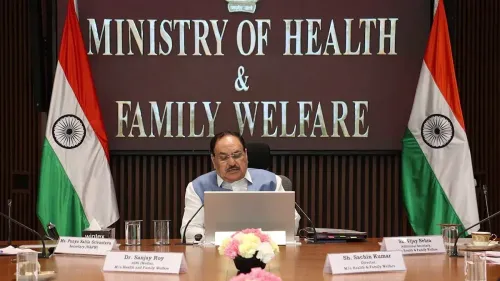
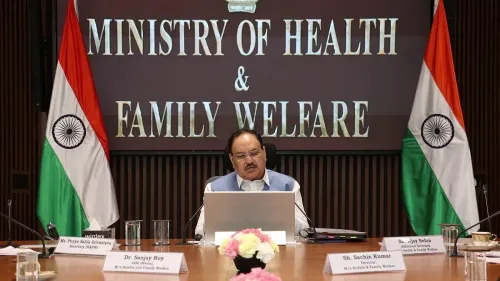
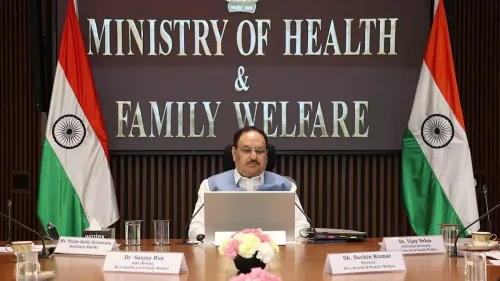
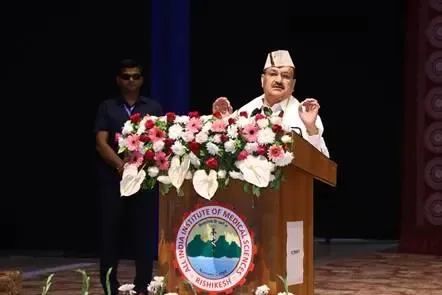
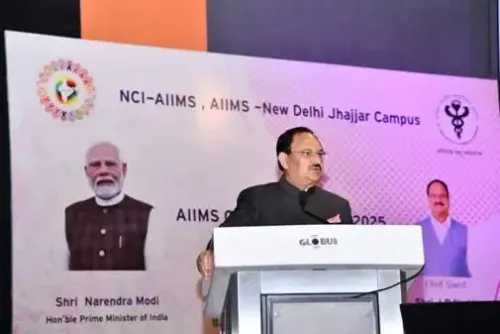
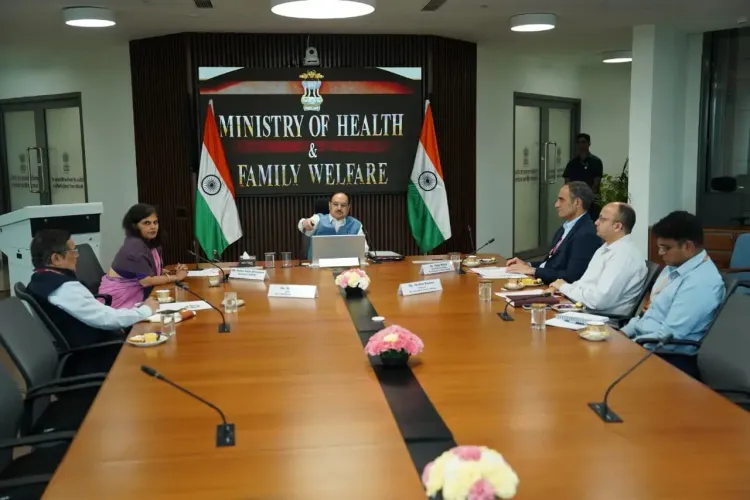
For cancer patients across Saurashtra who once faced gruelling journeys to Ahmedabad, Vadodara, or Mumbai for radiotherapy, a transformative facility just arrived at their doorstep. Union Health Minister J. P. Nadda on Monday, November 2, 2026, inaugurated and dedicated to the nation the Advanced Radiotherapy Facility at AIIMS Rajkot — a move aimed at bringing precision cancer care deep into western Gujarat.
What the new facility means for Saurashtra's cancer patients
The unit is equipped with what the minister described as 'state-of-the-art technologies and equipment,' designed to deliver precise, safe, and quality cancer treatment. Until now, residents of Saurashtra's sprawling multi-district belt — a region historically underserved in advanced oncology — had little choice but to travel hundreds of kilometres for radiotherapy. This facility changes that calculus entirely. Fewer overnight stays in unfamiliar cities, lower out-of-pocket costs, and earlier access to treatment: the downstream human impact is substantial.
AIIMS Rajkot's road from Cabinet approval to operational oncology unit
AIIMS Rajkot was approved by the Union Cabinet in 2016 under the Pradhan Mantri Swasthya Suraksha Yojana (PMSSY) — the central government's flagship scheme to correct regional imbalances in tertiary healthcare by seeding new AIIMS and upgrading government medical colleges across the country. The institute is one of a second-phase wave of AIIMS designed specifically to take advanced care beyond the four or five metros that have traditionally monopolised it. Today's radiotherapy inauguration represents a significant maturational milestone for the Rajkot campus: moving from construction and basic services into high-end, equipment-intensive oncology.
Decentralising radiotherapy — a deliberate national pattern
The Rajkot inauguration is not an isolated event. Across newly established AIIMS, successive administrations have made the installation of advanced oncology infrastructure — linear accelerators, image-guided radiotherapy systems — a stated priority precisely because radiotherapy cannot be delivered at primary or secondary levels. It demands specialised machines, trained radiation oncologists, and medical physicists: all concentrated, until recently, in a handful of cities. By anchoring such units at AIIMS campuses in tier-2 locations, the government is attempting to break the gravitational pull of metros and reduce catastrophic health expenditure caused by long-distance medical migration.
Minister Nadda framed the inauguration within the broader healthcare architecture being built under Prime Minister Narendra Modi, citing the government's commitment to 'strengthening primary healthcare with strong linkage with secondary care and expanding tertiary healthcare to ensure accessible, affordable and quality healthcare for every citizen.' That three-tier framing — primary, secondary, tertiary — matters: it signals that the Rajkot facility is not a standalone prestige project but is intended to function as the apex of a referral pyramid that begins with health and wellness centres at the village level.
What to watch as the facility ramps up
The real test lies ahead. Inauguration and operationalisation are two different milestones. Patient footfall data, waiting-list times, and the speed at which the facility achieves full staffing will determine whether today's ribbon-cutting translates into genuinely transformed access for Saurashtra's patients. Similar radiotherapy installations at other recently opened AIIMS will also bear watching — together they sketch the contours of India's emerging decentralised cancer-care map.
For a region that has long measured healthcare by how far its people must travel to receive it, the answer, at last, is: not as far as before.
Point of View
Approved in 2016, has now crossed the threshold from basic campus to specialist oncology provider. Politically, it hands the BJP a concrete healthcare deliverable in Gujarat ahead of future electoral cycles, and reinforces the government's 'last-mile tertiary access' narrative. More substantively, it tests a replicable model — AIIMS as anchor for high-end oncology in non-metro regions — whose success will depend on staffing, equipment uptime, and referral pathway strength rather than inauguration optics alone. If patient footfall and outcome data bear out the intent, Rajkot could become the template for the next dozen AIIMS radiotherapy rollouts.
NationPress
2 Nov 2026
Frequently Asked Questions
What is the Advanced Radiotherapy Facility at AIIMS Rajkot?
It is a newly inaugurated oncology unit at AIIMS Rajkot equipped with advanced radiotherapy technologies to provide precise and quality cancer treatment to patients in the Saurashtra region of Gujarat, reducing their need to travel to major cities.
Who inaugurated the AIIMS Rajkot radiotherapy facility?
Union Health Minister J. P. Nadda inaugurated and dedicated the Advanced Radiotherapy Facility at AIIMS Rajkot to the nation on November 2, 2026.
Why was AIIMS Rajkot established?
AIIMS Rajkot was approved by the Union Cabinet in 2016 under the Pradhan Mantri Swasthya Suraksha Yojana (PMSSY) to address regional imbalances in tertiary healthcare and bring advanced medical care to Gujarat and the Saurashtra region.
How will the AIIMS Rajkot radiotherapy centre help Saurashtra patients?
Cancer patients from Saurashtra's multiple districts will now be able to access advanced radiotherapy locally, avoiding expensive and time-consuming travel to Ahmedabad, Vadodara, or Mumbai for specialised cancer care.
What is the Pradhan Mantri Swasthya Suraksha Yojana?
PMSSY is a central government scheme designed to correct regional imbalances in tertiary healthcare across India by funding the construction of new AIIMS and the upgrading of government medical colleges, particularly outside major metropolitan areas.