US-Iran war: 2 American troops killed in Jordan attack, mission continues
Synopsis
Two American service members are dead, one is missing, and the Trump administration says the Iran campaign goes on regardless. With retaliatory airstrikes already launched and a senator calling this a 'war of choice without a plan,' the US-Iran confrontation has crossed a grim threshold — and neither side is signalling a halt.
Key Takeaways
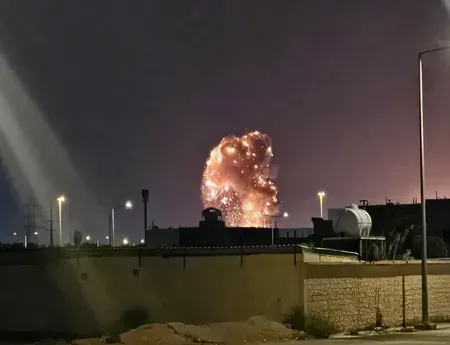
Two US service members were killed and a third went missing after an Iranian attack on a US base in Jordan on 20 July .
Four other personnel were injured but have since been discharged from hospital.
Energy Secretary Chris Wright confirmed the military mission against Iran will continue, saying it will go on 'until the mission is done.' US forces launched a fresh round of airstrikes on Iran in response to the attack.
Senator Mark Warner called the conflict a 'war of choice without a plan,' and flagged a cost disparity of $2.5 million US missiles versus $50,000 Iranian drones.
Retired Admiral James Stavridis outlined three options for the US: withdraw, escalate sharply, or maintain pressure while keeping negotiations open.
US President Donald Trump's administration declared on Sunday, 20 July that its military campaign against Iran would press ahead, even after two American service members were killed and a third went missing following an Iranian attack on a US base in Jordan. Four additional personnel were injured in the strike, though all four have since been discharged from hospital.
US Strikes Back
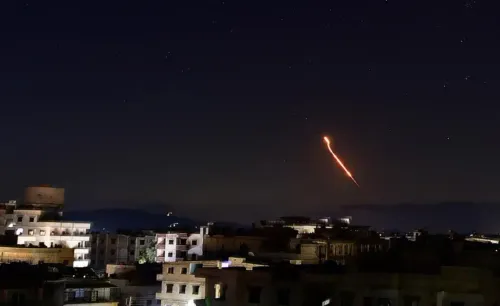
American forces responded with a fresh wave of airstrikes on Iran following the Jordan base attack. The deaths mark the first American combat fatalities since a US-Iran agreement collapsed weeks ago, significantly raising the stakes in an already volatile confrontation. The incident underscores how quickly the conflict has escalated beyond diplomatic containment.
What the Administration Said
Energy Secretary Chris Wright was unequivocal on ABC News' This Week, stating the losses would not alter Washington's objectives. 'Yes, this mission will go on until the mission is done,' Wright said. 'It's tragic to lose American lives, but this is a mission that will save countless lives going forward.'
Wright outlined the administration's three-pronged goal: degrading Iran's ability to, in his words, 'terrorize the world', securing global commerce through key waterways, and preventing Tehran from acquiring nuclear weapons. He added that President Trump still sought a diplomatic resolution, but stressed that US operations would continue if Iran refused to negotiate. 'President Trump wants to end it with a peaceful agreement with Iran, but it takes two parties to do that,' he said.
Democratic Pushback
Democratic Senator Mark Warner, vice-chairman of the Senate Intelligence Committee, offered a sharp rebuttal, challenging the foundational premise of the conflict. Speaking on CBS News' Face the Nation, Warner argued there had been no imminent Iranian threat when the Trump administration initiated hostilities. 'This is what happens when you start a war of choice,' he said. 'You start a war of choice without a plan.'
Warner also questioned the campaign's operational effectiveness, arguing it had failed to eliminate Iran's missile and drone capabilities or secure the Strait of Hormuz. He highlighted a stark cost asymmetry: 'We're using missiles that cost $2.5 million to shoot down Iranian drones that cost $50,000.'
The Strait of Hormuz Question
Wright pushed back on suggestions that traffic through the Strait of Hormuz had been halted. He said nearly seven million barrels of oil per day were still transiting the waterway, with a comparable volume moving through bypass pipelines. 'We're at a little under 14 million barrels a day from the Arabian Gulf region,' Wright said, adding that this represented 'two-thirds of pre-conflict traffic.' Critics argue that a one-third disruption to one of the world's most critical energy chokepoints is itself a significant economic warning sign.
Military Experts Weigh In
Retired Admiral James Stavridis, a former NATO supreme allied commander, outlined three difficult paths available to the Trump administration: a full withdrawal, a sharp escalation of military operations, or sustained pressure paired with open negotiations. 'Some have called this, and I think it's accurate, escalate to de-escalate to force them back to the table,' Stavridis told CNN. The framing reflects a broader strategic gamble — that intensifying military pressure will compel Tehran to return to a diplomatic framework before casualties mount further.
With American lives now lost and retaliatory strikes already launched, the trajectory of the US-Iran confrontation will be closely watched in the coming days for any signal from either side of a willingness to de-escalate.
Point of View
And how will Washington know when it has been achieved? The Strait of Hormuz data — two-thirds of pre-conflict traffic — is being spun as resilience, but a one-third disruption to a chokepoint carrying a significant share of global oil is not a minor footnote. Meanwhile, the $2.5 million-versus-$50,000 cost asymmetry Warner cited is not just a talking point; it is an attrition problem that strategists have warned about for years in drone-era warfare. The administration's diplomatic off-ramp rhetoric sits uneasily alongside fresh airstrikes — Tehran has little incentive to negotiate while under bombardment, and Washington has yet to articulate what a 'peaceful agreement' would concede.
NationPress
20 Oct 2026
Frequently Asked Questions
What happened at the US base in Jordan?
An Iranian attack on a US military base in Jordan killed two American service members and left a third missing, with four others injured. The four injured personnel have since been discharged from hospital, according to reports.
How has the US responded to the attack?
US forces launched a fresh round of airstrikes on Iran following the Jordan base attack. The Trump administration has also reaffirmed that its broader military campaign against Iran will continue until its objectives are met.
What are the US goals in its campaign against Iran?
Energy Secretary Chris Wright outlined three objectives: degrading Iran's ability to threaten global security, keeping oil commerce through the Strait of Hormuz open, and preventing Iran from acquiring nuclear weapons. Wright also said President Trump seeks a diplomatic resolution if Tehran is willing.
Why is Senator Mark Warner criticising the campaign?
Senator Mark Warner, vice-chairman of the Senate Intelligence Committee, argues the conflict began without an imminent Iranian threat and without a clear plan. He has also questioned the campaign's effectiveness, noting it has not eliminated Iran's missile and drone capabilities, and flagged the high cost of using $2.5 million US missiles against $50,000 Iranian drones.
What options does the US military have going forward?
Retired Admiral James Stavridis identified three paths: withdraw, sharply expand military operations, or maintain pressure while keeping negotiations open — a strategy he described as 'escalate to de-escalate to force them back to the table.'