Afghan police destroy drug lab in Helmand, seize narcotics amid crackdown
Synopsis
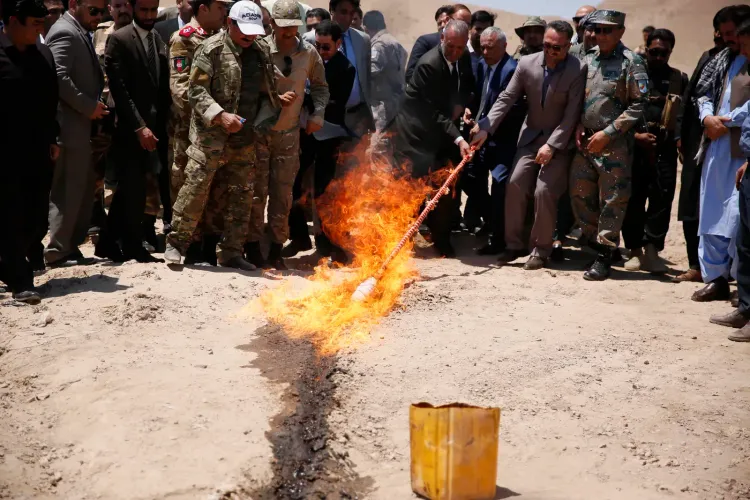
Afghan counter-narcotics police have destroyed a drug lab in Helmand's Baghran district — the latest in a multi-province crackdown that has netted over 8,170 kg of heroin, 55 kg of methamphetamine, and 273 stimulant tablets since May. The operations span Helmand, Uruzgan, Farah, and Nimroz, pointing to a coordinated enforcement push in one of the world's most active narcotics-producing regions.
Key Takeaways
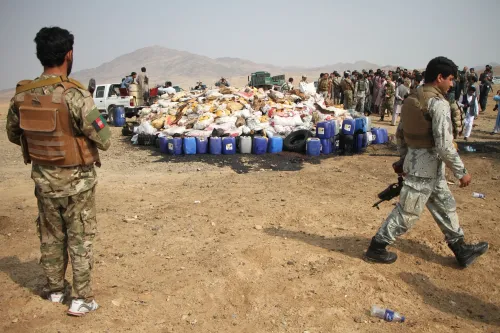
Afghan counter-narcotics police destroyed a drug-processing lab in Baghran district, Helmand province on 30 June .
No arrests were made in the Helmand operation; police say efforts to detain suspects are ongoing.
On 8 June , raids in Uruzgan and Farah provinces seized 21 kg of drugs, 273 Tablet K stimulants , and ~1,000 kg of heroin-manufacturing materials; 5 people were arrested.
In May , operations in Helmand yielded approximately 8,170 kg of heroin , with a separate seizure of 55 kg of methamphetamine in Nimroz province .
Authorities also demolished 400 acres of poppy farms in Farah province .
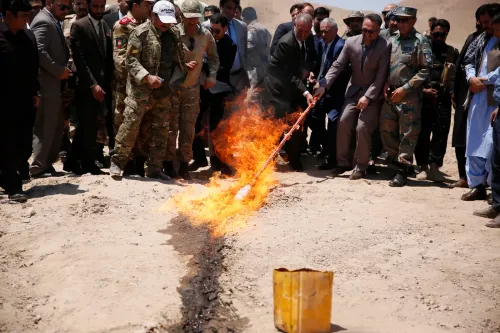
Afghan counter-narcotics police have discovered and destroyed an illegal drug-processing laboratory in Helmand province, southern Afghanistan, according to a statement issued by the provincial directorate for Information and Culture on Tuesday, 30 June. The operation is part of a sustained nationwide drive to dismantle the country's entrenched narcotics production networks.
What Happened in Helmand
The illegal laboratory was located in Baghran district and was spotted on Monday, according to the provincial statement. Authorities also seized a significant quantity of materials used in the manufacture of illegal drugs from the site. No arrests have been made in connection with this specific operation, though police confirmed that efforts to apprehend those responsible are ongoing.
Earlier Operations Across Provinces
The Helmand find follows a series of counter-narcotics operations across multiple provinces. On 8 June, Afghanistan's Ministry of Interior Affairs announced the destruction of drug-processing labs in the southern Uruzgan and western Farah provinces. Those operations yielded the seizure of 21 kg of illegal drugs and 273 stimulant tablets — locally referred to as Tablet K — along with approximately 1,000 kg of materials used in heroin manufacturing. Five individuals were taken into custody in connection with those raids, according to a statement posted by the ministry on its social media platform.
Separately, authorities also reported the demolition of 400 acres of poppy farms in Farah province in the days preceding the Helmand operation.
Large-Scale Seizure in May
In May, Afghan counter-narcotics forces conducted operations in southern Helmand province that resulted in the confiscation of approximately 8,170 kg of heroin, along with processing and production materials, according to state-run Bakhtar News Agency. In a separate operation, security forces seized 55 kg of methamphetamine in Nimroz province in western Afghanistan.
Broader Context and What It Signals
Helmand has historically been the epicentre of Afghanistan's opium economy, accounting for a disproportionate share of global poppy cultivation. The recent cluster of operations — spanning Helmand, Uruzgan, Farah, and Nimroz — suggests a coordinated, multi-province enforcement push rather than isolated incidents. Notably, the ministry's statement emphasised that counter-narcotics police would 'continue the war against illegal drugs until Afghanistan gets rid of the drug menace,' signalling sustained operational intent. Whether enforcement translates into a structural reduction in production remains to be seen, given the depth of narcotics networks in the region.
Point of View
But enforcement alone has historically failed to dent Afghanistan's narcotics output in any sustained way. The absence of arrests in the latest Helmand raid underscores a recurring gap: labs are destroyed, but networks reconstitute. The 8,170 kg heroin seizure in May is a headline number, yet it sits against a backdrop of industrial-scale production that has made Afghanistan the source of the vast majority of the world's illicit opium for decades. Without dismantling the financial and logistical infrastructure behind these labs, the crackdown risks becoming a cycle of tactical wins and strategic stalemate.
NationPress
29 Sept 2026
Frequently Asked Questions
What did Afghan police find in Helmand province on 30 June?
Afghan counter-narcotics police discovered and destroyed an illegal drug-processing laboratory in Baghran district, Helmand province, on 30 June. Authorities also seized materials used in drug manufacturing from the site, though no arrests have been made so far.
Have any arrests been made in connection with the Helmand drug lab?
No arrests were made in connection with the Baghran district operation as of 30 June. Police stated that efforts to identify and apprehend those responsible are continuing.
What other drug operations have Afghan police conducted recently?
On 8 June, Afghan police destroyed drug labs and seized 21 kg of illegal drugs, 273 stimulant tablets (Tablet K), and around 1,000 kg of heroin-manufacturing materials in Uruzgan and Farah provinces, arresting five people. In May, operations in Helmand yielded approximately 8,170 kg of heroin, and a separate operation in Nimroz seized 55 kg of methamphetamine.
Why is Helmand province significant in Afghanistan's drug trade?
Helmand is historically the centre of Afghanistan's opium economy and has long accounted for a large share of the country's poppy cultivation. It has been a recurring focus of counter-narcotics operations due to the concentration of drug-processing infrastructure in the region.
What is 'Tablet K' referenced in the Afghan drug seizures?
Tablet K is the local name for stimulant tablets seized during Afghan counter-narcotics operations. A total of 273 such tablets were confiscated during the 8 June raids in Uruzgan and Farah provinces, according to the Ministry of Interior Affairs.