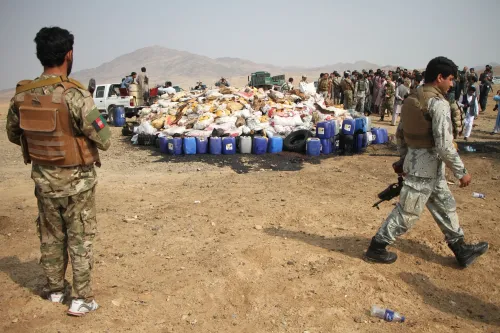
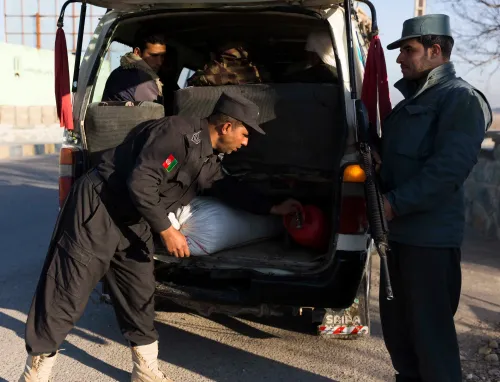
Afghan police bust drug labs in Uruzgan, Farah; seize 21 kg narcotics
Synopsis
Afghan counter-narcotics police dismantled heroin processing labs and seized 21 kg of drugs across Uruzgan and Farah provinces on 8 June, arresting five suspects. The action is the latest in a multi-province enforcement wave that has netted over 8,170 kg of heroin in Helmand and 80 trafficking arrests since April — pointing to a sustained, coordinated crackdown on Afghanistan's deep-rooted drug economy.
Key Takeaways
Afghan police seized 21 kg of illegal drugs and 273 stimulant tablets (Tablet K) in Uruzgan and Farah provinces on 8 June .
Drug processing labs and approximately 1,000 kg of heroin-manufacturing materials were destroyed.
Five individuals were arrested on charges of involvement in the illicit drug trade.
In May , a separate operation in Helmand province yielded approximately 8,170 kg of heroin .
55 kg of methamphetamine was also seized in Nimroz province.
On 26 April , coordinated raids across multiple provinces led to the arrest of 80 individuals on drug trafficking charges.
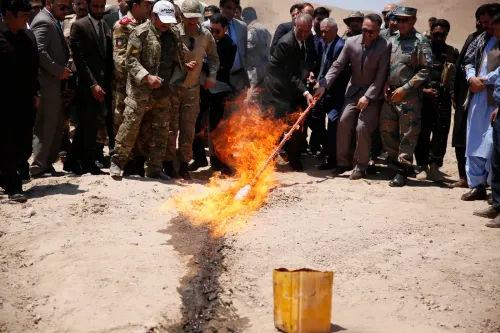
Afghan counter-narcotics police have seized 21 kg of illegal drugs and dismantled drug processing laboratories in the southern Uruzgan and western Farah provinces, according to a statement issued by the Ministry of Interior Affairs on Monday, 8 June. The operation also resulted in the arrest of five individuals on charges linked to illicit drug trade.
Key Developments
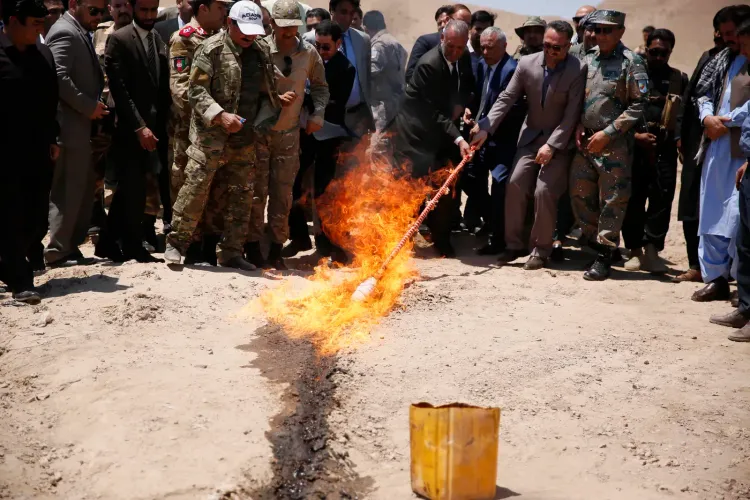
Alongside the 21 kg drug haul, authorities confiscated 273 stimulant tablets — locally referred to as Tablet K. Police also destroyed drug processing labs and recovered approximately 1,000 kg of materials used in heroin manufacturing from the two provinces, the ministry's statement said.
The five arrested individuals are facing charges of involvement in the illegal narcotics trade, according to the ministry. No further details on their identities were provided.
Counter-Narcotics Push Across Provinces
The latest seizures are part of a sustained nationwide campaign. In May, Afghan counter-narcotics forces operating in the southern Helmand province confiscated approximately 8,170 kg of heroin, along with materials used in drug processing, according to state-run Bakhtar News Agency. Separately, security forces seized 55 kg of methamphetamine in Nimroz province in western Afghanistan.
Earlier, on 26 April, the Ministry of Interior Affairs announced the arrest of 80 individuals on drug trafficking charges following coordinated raids across multiple provinces. Those operations yielded significant quantities of hashish, narcotic tablets, and heroin-production materials.
What the Government Said
The ministry's statement, posted on its official social media platform, stated that counter-narcotics police would continue operations 'until Afghanistan gets rid of the drug menace.' No timeline was specified for concluding the campaign.
Broader Context
Afghanistan has long been identified as the world's largest producer of illicit opium. The successive waves of enforcement — spanning Uruzgan, Farah, Helmand, and Nimroz — suggest a coordinated multi-province strategy rather than isolated raids. Notably, Helmand alone has historically accounted for a disproportionate share of the country's poppy cultivation, making the 8,170 kg heroin seizure there particularly significant. The pattern of arrests and lab destructions indicates that authorities are targeting both supply-side production infrastructure and distribution networks simultaneously.
As operations continue, the ministry has signalled that further crackdowns across additional provinces remain on the agenda.
Point of View
Farah, Helmand, Nimroz — suggest a deliberate, coordinated enforcement strategy rather than opportunistic raids. Yet the critical question is one of sustainability: Afghanistan's drug economy is structurally entrenched, and lab destructions without addressing cultivation incentives have historically produced limited long-term impact. The 8,170 kg Helmand seizure is striking on paper, but Helmand's poppy fields have rebounded repeatedly after prior crackdowns. Without parallel efforts on demand reduction and alternative livelihoods, these numbers risk becoming a recurring headline rather than a turning point.
NationPress
24 Sept 2026
Frequently Asked Questions
What did Afghan police seize in the 8 June operation?
Afghan police seized 21 kg of illegal drugs and 273 stimulant tablets known as Tablet K in Uruzgan and Farah provinces. They also destroyed drug processing labs and recovered around 1,000 kg of heroin-manufacturing materials, arresting five suspects.
Which provinces were targeted in the latest Afghan drug raids?
The 8 June operations focused on the southern Uruzgan province and the western Farah province. Earlier operations this year also covered Helmand and Nimroz provinces as part of a nationwide counter-narcotics campaign.
How large was the Helmand heroin seizure in May 2025?
Afghan counter-narcotics forces seized approximately 8,170 kg of heroin in Helmand province in May 2025, along with drug-processing materials. The seizure was reported by the state-run Bakhtar News Agency.
How many people have been arrested in Afghanistan's drug crackdowns in 2025?
At least 80 individuals were arrested on drug trafficking charges following coordinated raids across multiple provinces on 26 April 2025, in addition to five more arrested in the 8 June Uruzgan-Farah operation.
What has the Afghan Ministry of Interior Affairs said about the ongoing campaign?
The Ministry of Interior Affairs stated that counter-narcotics police will continue operations until Afghanistan is free of the drug menace. No specific timeline or end date for the campaign has been provided.