Is There a Controversy Surrounding the Nobel Prize Amid US Engagement in Venezuela?
Click to start listening
Synopsis
Venezuela's political crisis has escalated with the US intervention and the controversial Nobel Peace Prize awarded to Maria Corina Machado, sparking debates about sovereignty and international politics. Can this award and intervention truly lead to democracy in Venezuela, or do they mask deeper issues?
Key Takeaways
- The US military captured President Maduro on January 3, 2026.
- The Nobel Peace Prize was awarded to Maria Corina Machado for her advocacy for democracy.
- The US claims its actions are aimed at restoring stability in Venezuela.
- International observers warn of potential chaos resulting from foreign intervention.
- The Nobel Prize highlights the disparity between international recognition and domestic turmoil.
New Delhi, Jan 8 (NationPress) The ongoing political crisis in Venezuela has once again drawn global scrutiny.
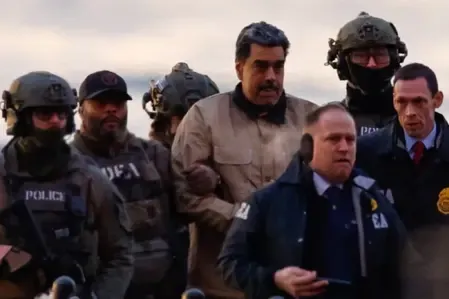
On January 3, 2026, Venezuelan President Nicolas Maduro was apprehended by the US military and placed in American custody.
The Trump administration has declared its intention to manage the South American country through a "safe political transition".
According to the US government, this action aims to restore democracy and stability in Venezuela.
However, from the standpoint of international law, it represents a significant breach of national sovereignty and has faced widespread condemnation as a blatant act of interference in another country’s affairs.
Members of the United Nations, human rights organizations, and global observers have criticized the incident as a contemporary instance of imperial overreach.
The 2025 Nobel Peace Prize was awarded to Maria Corina Machado, a leading opposition figure recognized for her staunch anti-Chavismo and anti-Maduro positions.
Hailing from Caracas’ politically engaged Altamira neighborhood, Machado has long been an advocate for democracy and human rights.
Although her professional background is in engineering, her political identity is rooted in her steadfast opposition to Venezuela's socialist regime and her push for democratic reforms.
The Nobel Committee highlighted her dedication to safeguarding democracy and minority rights in Venezuela as the rationale for the award.
This accolade was announced on October 10, 2025, and formally bestowed in Oslo on December 10, 2025.
Notably, this recognition emerged just weeks prior to Maduro's removal, showcasing the stark contrast between international acclaim for pro-democracy figures and the tumultuous situation on the ground.
The Political Context of the Nobel Peace Prize
The awarding of the 2025 Nobel Peace Prize led to controversy, with some analysts suggesting that former US President Donald Trump may have been a contender due to his role in global peace negotiations. Ultimately, the committee chose Machado, underscoring her commitment to democratic governance and human rights.
Machado was unable to attend the ceremony in Oslo personally and sent her daughter Ana Corina Sosa to accept the award on her behalf, delivering a speech that highlighted the ongoing struggle for democracy in Venezuela.
Reactions within the country have been mixed: while supporters view the award as a symbol of hope, detractors argue it serves foreign political interests.
Venezuela now stands at a crossroads.
The detention of an elected President has thrust the nation into uncertain political waters.
International observers warn that although the US frames its actions as a peace initiative, these measures could instead ignite a new wave of instability.
Recent developments illustrate a recurring theme: in the name of peace, foreign powers frequently intervene, leaving disorder in their wake.
The Venezuelan scenario serves as a poignant reminder that awards and diplomacy can sometimes obscure genuine political maneuvering.
Point of View
We observe that while the international community's involvement in Venezuela raises concerns about sovereignty, the complexities of the political landscape necessitate a nuanced understanding. Our commitment is to uphold the values of democracy and human rights while navigating these intricate issues.
NationPress
09/01/2026
Frequently Asked Questions
What led to the US intervention in Venezuela?
The US intervention was framed as a response to Venezuela's political crisis, aiming to restore democracy and stability.
Who is Maria Corina Machado?
Maria Corina Machado is a prominent opposition leader in Venezuela, awarded the Nobel Peace Prize for her commitment to democracy and human rights.
What are the implications of the Nobel Peace Prize?
The awarding of the Nobel Peace Prize to Machado has sparked controversy regarding foreign influence in Venezuela's political landscape.
How has the international community reacted?
The international community has largely condemned the US intervention as a violation of Venezuela's sovereignty.
What does the future hold for Venezuela?
Venezuela faces an uncertain future as it navigates the aftermath of Maduro's capture and the ongoing political crisis.