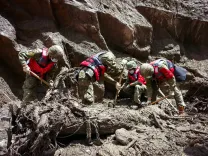
Nepal's tourism resilience tested again after flash floods hit Himalayan gateway

Synopsis
Nepal's mountains — the very asset its economy depends on — are increasingly becoming a liability. This week's flash flood along the Kailash Mansarovar pilgrimage route is not just another disaster; it is a climate signal that experts say can no longer be managed through tourism marketing or political goodwill alone. With 6.6% of GDP at stake, Nepal's next recovery will need to be structural, not just seasonal.
Key Takeaways
A sudden flash flood this week struck the Rasuwagadhi-Timure area, a key gateway for Kailash Mansarovar pilgrims travelling from Nepal to Tibet.
Former Nepal Tourism Board CEO Deepak Raj Joshi warned that economic effects could last at least six to seven months .
Travel and tourism contributes an estimated 6.6% of Nepal's GDP , according to the World Travel and Tourism Council .
Experts say climate change and glacial outburst hazards are making Nepal's mountains an increasingly risky destination.
Nepal has previously recovered from the 2015 earthquake (nearly 9,000 deaths ), the Covid-19 shutdown, Maoist insurgency, and Gen Z protests of September 2025 .
The Kathmandu Post report argues disaster preparedness must now be integrated into Nepal's tourism policy as a structural priority.
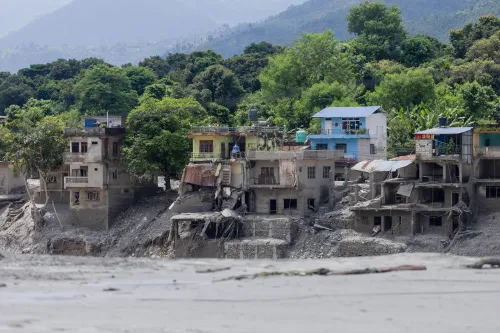
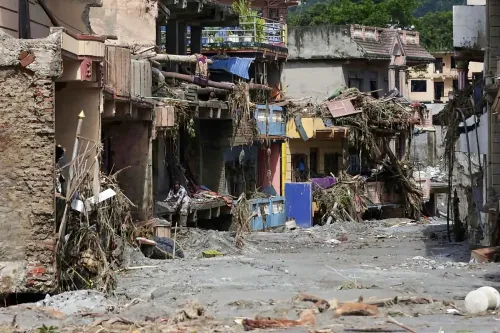
Nepal has once again been forced to demonstrate its crisis recovery capacity after a sudden flash flood this week devastated the Rasuwagadhi-Timure corridor — a critical gateway for pilgrims travelling from Nepal to Tibet — dealing a fresh blow to a tourism-dependent economy still finding its footing after recent political unrest. Search and rescue operations were stepped up in the immediate aftermath, even as a full assessment of the damage remained underway as of Friday, 28 August.
Scale of the Damage
The deluge washed out significant sections of infrastructure along the Rasuwagadhi-Timure area, a major transit point for the Kailash Mansarovar pilgrimage market — one of Nepal's most lucrative tourism segments. According to a report in The Kathmandu Post, the disaster has “shattered hopes of a strong tourism recovery” at a particularly sensitive moment. Roads, bridges, and supply chains in the affected region have reportedly been disrupted, compounding the economic fallout.
Climate Change at the Core
Experts quoted in the report warned that the incident raises a far larger structural question: whether Nepal's mountains are becoming an increasingly dangerous destination due to climate change. The flash flood is believed to be linked to glacial outburst activity, a hazard that specialists say is growing harder to ignore across the Himalayan region. “A full assessment of Wednesday's disaster is underway. But the destruction has already highlighted the potentially devastating consequences of glacial outbursts and other climate-induced hazards for communities, infrastructure and tourists in the Himalayan region,” the report noted.
Notably, this is not merely a one-off weather event — it is part of a documented pattern of climate-induced risk accumulation in high-altitude zones that Nepal's tourism infrastructure was not designed to absorb.
Tourism's Outsized Role in Nepal's Economy
The stakes are considerable. The World Travel and Tourism Council has estimated that travel and tourism contributes 6.6 per cent to Nepal's gross domestic product. The sector is also the primary source of employment in remote hill and mountain communities where few economic alternatives exist. That structural dependence amplifies the impact of any disruption — from cancelled pilgrimages and trekking permits to damaged hotels and a dented safety reputation.
Deepak Raj Joshi, former chief executive officer of the Nepal Tourism Board, warned that the effects of this week's disaster could last at least six to seven months. “We need a dedicated tourism recovery team to send the message that the rest of Nepal is intact,” he said. Despite the gravity of the situation, Joshi offered a measured note of confidence: “Amid all this, there is one reason to cheer. Nepal has the capacity to recover quickly.”
A History of Bouncing Back
Nepal's track record of recovery from successive crises is, by any measure, remarkable. The Maoist insurgency between 1996 and 2006, which claimed more than 17,000 lives, disrupted economic activity nationwide. The 1999 Indian Airlines hijacking, the global travel downturn following the September 11 attacks, and the 2001 Royal Massacre — which killed King Birendra and members of the royal family — each delivered successive shocks to visitor confidence.
Prolonged political instability after the 2006 comprehensive peace accord, years of power shortages including up to 18 hours of daily load-shedding, and the catastrophic 2015 earthquake — which killed nearly 9,000 people and caused billions of dollars in losses — all tested the sector. So did the Covid-19 pandemic, which effectively shuttered international tourism for nearly two years. Each time, visitor arrivals recovered.
Most recently, Gen Z-led anti-corruption protests in September 2025 brought tourism to a sudden halt just as Nepal was entering its peak season, compounding earlier setbacks including catastrophic floods and two major aviation accidents that raised air safety concerns.
The Road Ahead
The Kathmandu Post report argued that Wednesday's disaster is “different” from previous crises because it points to a threat that cannot be resolved through political stability or marketing alone. Disaster preparedness, experts stressed, can no longer be separated from tourism policy. For Nepal, the challenge has shifted: it is no longer simply about attracting more visitors, but about ensuring that the mountains drawing them remain safe enough to visit. With coordinated effort, the report implied, the country will recover — but the underlying climate risk will require a structural, long-term response that goes well beyond any single season's recovery plan.
Point of View
But the underlying exposure to climate-induced Himalayan hazards has grown with every passing year, not shrunk. The 6.6% GDP dependence on tourism, concentrated in high-altitude corridors with no climate-proofed infrastructure, is a systemic risk that no marketing campaign or recovery team can offset. Until disaster preparedness is hardwired into tourism licensing, infrastructure investment, and climate adaptation planning, Nepal will keep recovering — and keep being hit.
NationPress
28 Aug 2026
Frequently Asked Questions
What happened in Nepal this week?
A sudden flash flood struck the Rasuwagadhi-Timure area of Nepal, a major corridor for pilgrims on the Kailash Mansarovar route to Tibet. The disaster disrupted infrastructure and search and rescue operations were launched in the immediate aftermath, with a full damage assessment still underway as of 28 August.
How does the flood affect Nepal's tourism sector?
According to a report in The Kathmandu Post, the disaster has shattered hopes of a strong tourism recovery, particularly for the Kailash Mansarovar pilgrimage market. Former Nepal Tourism Board CEO Deepak Raj Joshi estimated the economic effects could last at least six to seven months, and called for a dedicated tourism recovery team.
How dependent is Nepal's economy on tourism?
The World Travel and Tourism Council estimates that travel and tourism contributes 6.6% to Nepal's gross domestic product. The sector is also the primary employer in remote hill and mountain communities where few alternative livelihoods exist, making it especially vulnerable to disaster-related disruptions.
Has Nepal recovered from major crises before?
Yes — Nepal's tourism industry has recovered from the Maoist insurgency (1996–2006), the 2001 Royal Massacre, the 2015 earthquake that killed nearly 9,000 people, the Covid-19 pandemic, and most recently the Gen Z-led protests of September 2025. Each time, visitor arrivals eventually rebounded.
Why is this flood considered different from past disasters?
Experts cited in The Kathmandu Post argue that unlike previous crises — which were rooted in political instability or global events — this disaster points to a climate-driven threat that cannot be resolved through marketing or governance reforms alone. Rising glacial outburst risk means Nepal's mountains themselves are becoming a hazard, requiring disaster preparedness to be integrated into tourism policy.