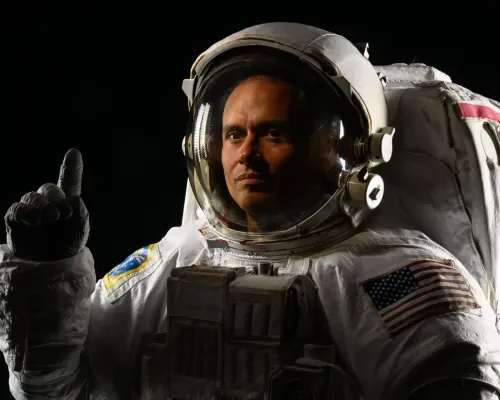
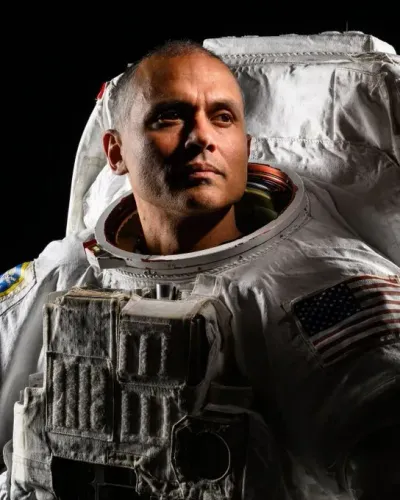
Indian-origin astronaut Anil Menon launches to ISS on Soyuz MS-29
Synopsis
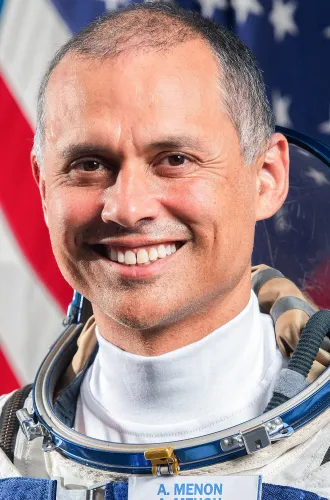
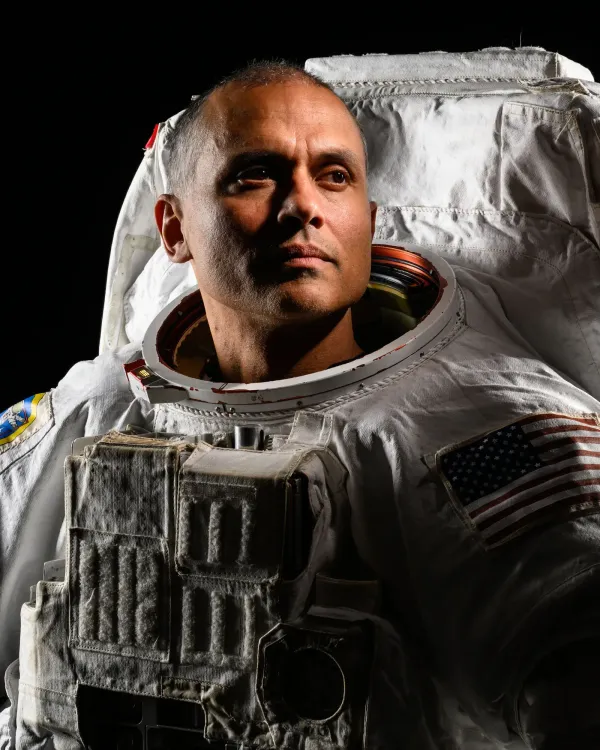
Indian-origin NASA astronaut Anil Menon is now in orbit — his first spaceflight — after a flawless Soyuz MS-29 launch from Baikonur. Over eight months, he will pursue research on space-grown semiconductor crystals, AI-assisted ultrasound, and bioprinting in microgravity: work that could reshape both deep-space medicine and Earth-side computing.
Key Takeaways
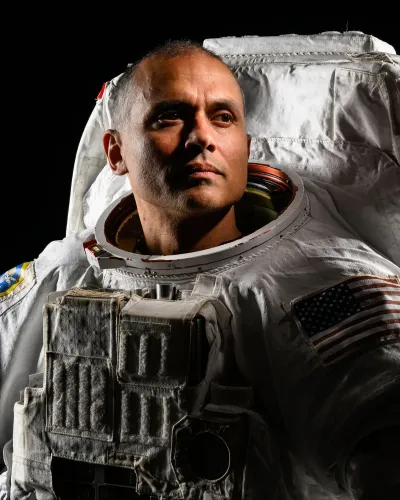
Anil Menon , Indian-origin NASA astronaut, launched to the ISS on 15 July aboard Soyuz MS-29 — his first spaceflight.
Liftoff was at 10:47 a.m.
EDT from Baikonur Cosmodrome, Kazakhstan ; docking at the Prichal module occurred at 1:52 p.m.
Crewmates are Roscosmos cosmonauts Pyotr Dubrov and Anna Kikina , both on their second spaceflights.
Mission duration is approximately eight months , with return to Earth expected in April 2027 .
Research focus includes semiconductor crystal production , AI-assisted ultrasound , blood flow studies , and vascular bioprinting in microgravity.
Menon joins a 10-member Expedition 74/75 crew already aboard the station.
Indian-origin NASA astronaut Anil Menon lifted off to the International Space Station (ISS) on Tuesday, 15 July aboard Russia's Soyuz MS-29 spacecraft, beginning his first-ever spaceflight — an eight-month mission centred on scientific research and technology demonstrations. The launch marks a milestone for the Indian-American space community and advances NASA's ongoing human presence aboard the orbital laboratory.
Launch and Docking Details
The Soyuz MS-29 lifted off from the Baikonur Cosmodrome in Kazakhstan at 10:47 a.m. EDT (7:47 p.m. Baikonur time), carrying Menon alongside Roscosmos cosmonauts Pyotr Dubrov and Anna Kikina. After a two-orbit journey lasting approximately three hours, the spacecraft docked automatically with the ISS's Prichal module at 1:52 p.m. EDT. This is the second spaceflight for both Dubrov and Kikina, while it is Menon's first.
What Menon Said Before Launch
Ahead of liftoff, Menon posted on social media: 'Proud to serve the United States Space Force and fly to the International Space Station today in support of NASA and our international partners!' In an earlier post, he added: 'Excited to launch aboard Soyuz MS-29 from Kazakhstan and begin an eight-month mission supporting NASA and Expedition 74/75. Grateful for the NASA community, friends, family, and loved ones and excited for tomorrow.'
Research Agenda Aboard the ISS
Once aboard the station, Menon joined a nine-member crew as part of Expedition 74/75, which includes NASA astronauts Jessica Meir, Jack Hathaway, and Chris Williams; European Space Agency (ESA) astronaut Sophie Adenot; and Roscosmos cosmonauts Sergey Kud-Sverchkov, Sergei Mikaev, and Andrey Fedyaev.
According to NASA, Menon's research portfolio includes refining the in-space production of semiconductor crystals — work that could enable large-scale manufacturing of components for high-performance computers, artificial intelligence (AI) systems, and advanced medical devices. He will also conduct ultrasound procedures using augmented reality and AI methods, a technique designed to reduce dependence on Earth-based medical support during future deep-space missions.
Additionally, Menon will serve as a test subject in studies examining blood flow changes in microgravity, aimed at protecting astronauts on long-duration missions. He will also test bioprinting of vascular constructs in microgravity to advance understanding of the ageing process and accelerate therapeutic development.
Significance of the Mission
NASA described the mission as part of the continuous scientific programme aboard the ISS, where humans have maintained an uninterrupted presence for more than 25 years. The station serves as a unique zero-gravity laboratory, enabling breakthroughs in medicine, materials science, biology, and engineering that are impossible to replicate on Earth. This mission also underscores the enduring importance of US-Russia space cooperation through the Soyuz programme, even as geopolitical tensions persist in other domains.
What Happens Next
The newly arrived crew is expected to remain aboard the orbital laboratory until approximately April 2027, when they are scheduled to return to Earth. Their findings — particularly in semiconductor production and AI-assisted medical tools — could have direct applications for both future deep-space exploration and terrestrial technology development.
Point of View
The findings could give NASA and its partners a manufacturing edge that rivals on Earth are also chasing. The US-Russia Soyuz arrangement, meanwhile, continues to hold even as diplomatic relations strain — a quiet reminder that the ISS remains one of the last functioning multilateral institutions in space.
NationPress
13 Oct 2026
Frequently Asked Questions
Who is Anil Menon and why is his ISS mission significant?
Anil Menon is an Indian-origin NASA astronaut and US Space Force officer who launched to the International Space Station on 15 July aboard the Soyuz MS-29 spacecraft. This is his first spaceflight, making him one of the few Indian-origin astronauts to reach the ISS. His eight-month mission includes research on semiconductor production, AI-assisted medicine, and microgravity biology.
When did Soyuz MS-29 launch and when did it dock with the ISS?
Soyuz MS-29 lifted off from Baikonur Cosmodrome, Kazakhstan, at 10:47 a.m. EDT on 15 July. It docked automatically with the ISS's Prichal module at 1:52 p.m. EDT, completing the journey in approximately three hours across two orbits.
What research will Anil Menon conduct on the ISS?
Menon's research agenda includes refining the in-space production of semiconductor crystals for use in high-performance computers, AI systems, and medical devices. He will also conduct AI-assisted ultrasound experiments, participate in blood flow studies in microgravity, and test bioprinting of vascular constructs — all aimed at advancing future deep-space missions and Earth-side applications.
How long will Anil Menon stay on the ISS and when will he return?
Menon and his crewmates are expected to spend approximately eight months aboard the ISS, with their return to Earth scheduled for around April 2027, according to NASA.
Who are the other crew members on Soyuz MS-29?
Menon flew alongside Roscosmos cosmonauts Pyotr Dubrov and Anna Kikina, both on their second spaceflights. On the ISS, they joined NASA astronauts Jessica Meir, Jack Hathaway, and Chris Williams; ESA astronaut Sophie Adenot; and Roscosmos cosmonauts Sergey Kud-Sverchkov, Sergei Mikaev, and Andrey Fedyaev as part of Expedition 74/75.