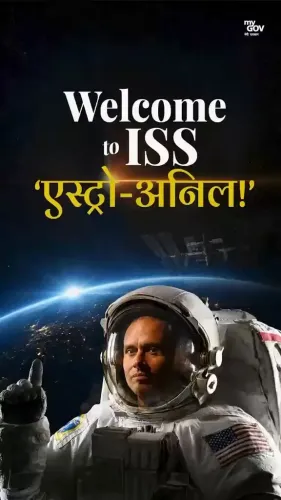
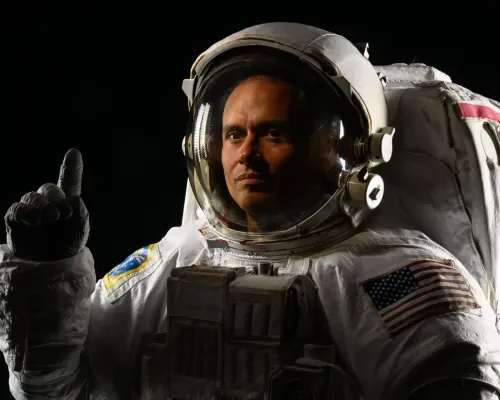
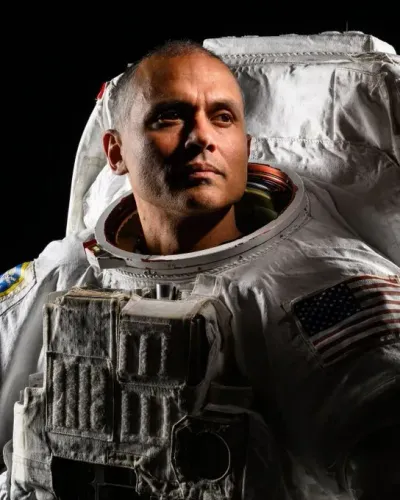
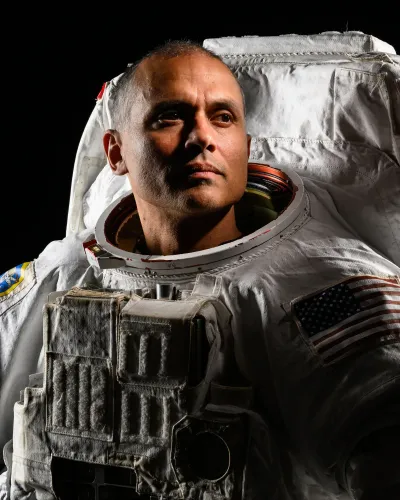
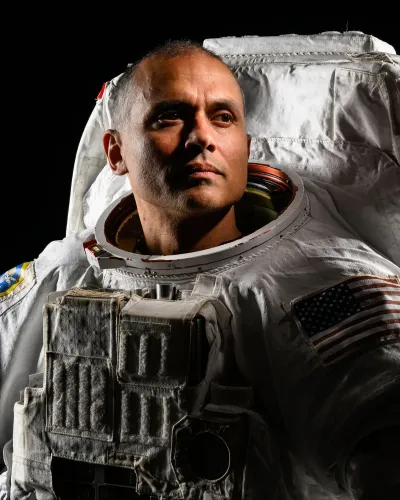
CM Pinarayi hails Dr. Anil Menon, first Malayali on ISS
Synopsis
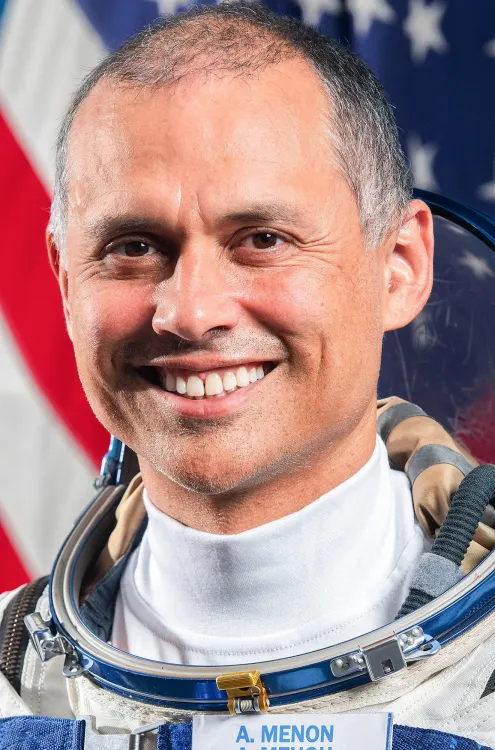
Kerala Chief Minister Pinarayi Vijayan congratulated Dr. Anil Menon on 14 July 2026 for becoming the first Malayali to reach the International Space Station, calling it a moment of immense pride and urging Kerala's youth to pursue scientific excellence.
Key Takeaways
Anil Menon has become the first Malayali to reach the International Space Station , according to CM Pinarayi Vijayan's post on 14 July 2026 .
Chief Minister Vijayan described the achievement as built on 'dedication, hard work and an unwavering commitment to science.' The ISS is a multinational orbital laboratory that has operated continuously since 1998 .
Kerala has India's highest literacy rate and a strong record of producing STEM professionals, a fact the state government regularly highlights.
The milestone is expected to be used in science-outreach messaging aimed at Kerala's student community.
Further crew and mission developments under NASA's commercial crew programme remain to be announced.
Kerala Chief Minister Pinarayi Vijayan on Tuesday, 14 July 2026 congratulated Dr. Anil Menon on becoming the first Malayali to reach the International Space Station (ISS), calling the milestone a moment of 'immense pride and joy for every Malayali.'
Context
Dr. Anil Menon, a NASA astronaut of Malayali origin, made history by travelling to the ISS, the multinational orbital laboratory that has operated continuously since 1998 under an intergovernmental framework involving the United States, Russia, Europe, Japan and Canada. Chief Minister Vijayan posted his congratulations on X, tagging @astro_anil directly and using the hashtags #spaceexploration and #nasa.
In his post, Vijayan described the achievement as 'built on dedication, hard work and an unwavering commitment to science,' and expressed hope that it would 'inspire generations of young people to dream bigger and pursue scientific excellence.'
Policy Backdrop
Kerala holds India's highest literacy rate and has a well-documented record of producing professionals in science, medicine and technology. State governments in Kerala have consistently used public messaging to connect local educational outcomes with national and international scientific milestones.
The recognition of diaspora and expatriate achievement in STEM fields is a recurring feature of Kerala's political communication. NASA's commercial crew programme, under which ISS missions operate, has opened pathways for astronauts from diverse backgrounds to serve on long-duration orbital missions.
Stakeholders and Impact
The announcement carries symbolic weight for Kerala's student community and STEM aspirants across the state. Chief Minister Vijayan framed Dr. Menon's journey explicitly as an inspiration for 'young people,' signalling the state government's intent to use the milestone in science-outreach messaging.
For the broader Indian space community, the achievement adds to a pattern of Indian-origin professionals contributing to international human spaceflight programmes, even as ISRO — established in 1969 — continues to develop its own orbital and human spaceflight capabilities under the Gaganyaan programme.
What's Next
Attention will now turn to further crew announcements under NASA's commercial crew programme and any formal response from ISRO or the Union government regarding Dr. Menon's mission. Whether Kerala translates this moment of public pride into structured STEM initiatives — scholarships, outreach programmes or institutional tie-ups — will be worth watching in the weeks ahead.
Point of View
Globally competitive citizens. The framing of Dr. Menon's journey as inspiration for 'generations' signals an intent to embed this milestone in the state's STEM narrative. Coming at a time when ISRO's Gaganyaan programme is building toward India's own human spaceflight capability, the celebration also reflects a broader national mood around space ambition. Whether this translates into policy action — or remains symbolic messaging — will define its lasting impact.
NationPress
13 Oct 2026
Frequently Asked Questions
Who is Dr. Anil Menon and why is he significant for Kerala?
Dr. Anil Menon is a NASA astronaut of Malayali origin who has become the first Malayali to reach the International Space Station, a milestone celebrated by Kerala Chief Minister Pinarayi Vijayan as a moment of pride for the entire state.
What did Kerala CM Pinarayi Vijayan say about Dr. Anil Menon?
CM Vijayan congratulated Dr. Menon on 14 July 2026, calling his achievement a moment of 'immense pride and joy for every Malayali' and saying it would inspire young people to pursue scientific excellence.
What is the International Space Station?
The International Space Station is a multinational orbital laboratory that has operated continuously since 1998 under an intergovernmental agreement involving the United States, Russia, Europe, Japan and Canada.
Is Dr. Anil Menon the first Indian-origin astronaut on the ISS?
Dr. Anil Menon is confirmed by CM Vijayan as the first Malayali — a person of Kerala origin — to reach the ISS; the broader question of Indian-origin astronauts on the station involves a separate history.
What is Kerala's connection to science and space?
Kerala has India's highest literacy rate and a long record of producing professionals in science, medicine and technology; state governments have consistently used such milestones to reinforce Kerala's identity as a hub of educational achievement.