Nepal Bhote Koshi floods: Death toll hits 1,252, Kathmandu seeks global aid for reconstruction
Synopsis
Nepal's Bhote Koshi flood has killed at least 1,252 people and left over 4,200 unaccounted for — making it one of the deadliest disasters in the country's recent history. With 583 foreign nationals missing and hydropower infrastructure in ruins, Kathmandu is now turning to the world for reconstruction funds, invoking the same donor-conference playbook used after the 2015 earthquake.
Key Takeaways
The Bhote Koshi flood death toll reached 1,252 by Thursday noon, 3 September , with 4,216 people still out of contact.
583 foreign nationals remain unaccounted for, according to the NDRRMA .
Foreign Minister Shishir Khanal briefed diplomats from the World Bank , Asian Development Bank , and United Nations on Nepal's reconstruction plans.
A Post-Disaster Needs Assessment (PDNA) is underway; Nepal will formally request international funds once it is complete.
Nepal is discussing an international donor conference — similar to the 2015 earthquake conference that raised US$ 4.1 billion .
Nepal has written to the UN Loss and Damage Fund Board requesting immediate assistance, framing the disaster as a climate justice issue.
The Nepali government on Thursday, 3 September briefed the foreign diplomatic community in Kathmandu on the Bhote Koshi flood disaster, formally signalling its intent to seek international assistance for recovery and reconstruction once a Post-Disaster Needs Assessment (PDNA) is completed. The death toll from the Rasuwa flood disaster had reached 1,252 by Thursday noon, with 4,216 people still out of contact, according to data released by the National Disaster Risk Reduction and Management Authority (NDRRMA).
Scale of the Disaster
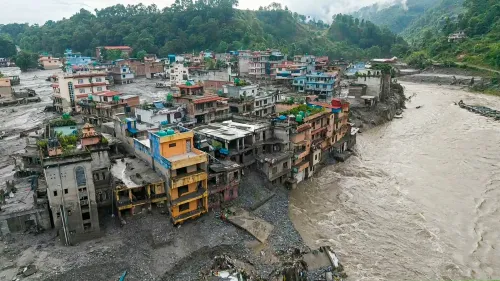
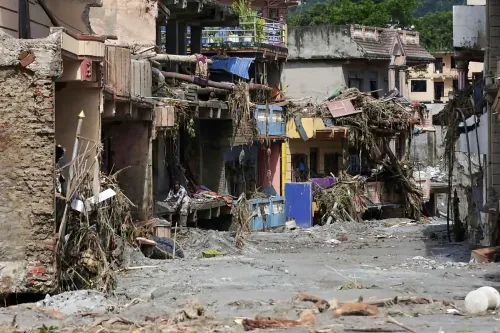
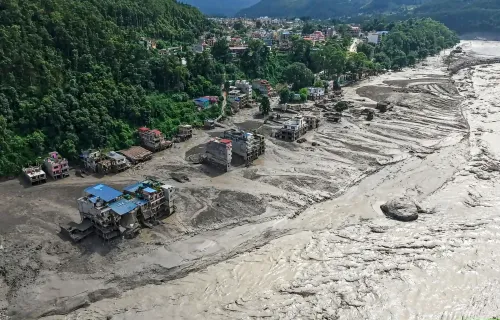
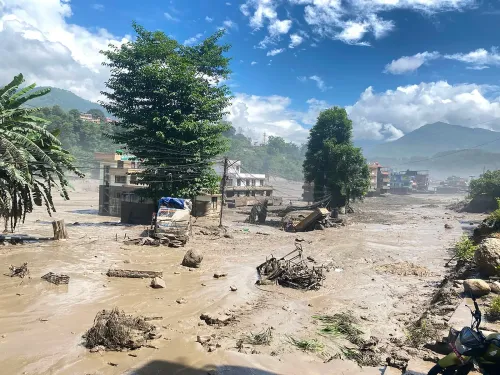
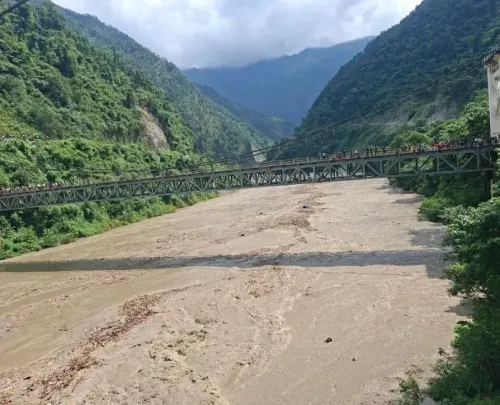
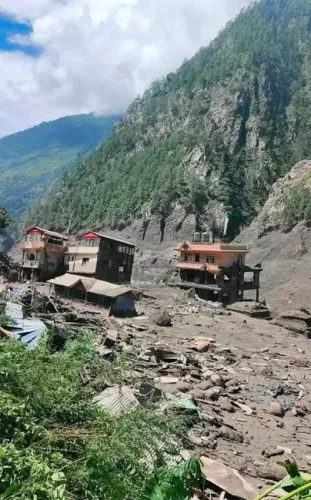
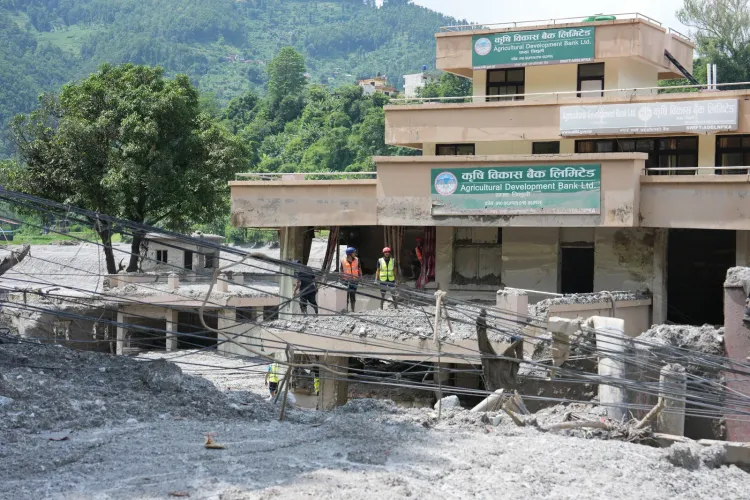
The floods have caused catastrophic damage along the Bhote Koshi and Trishuli river corridors, destroying roads, bridges, public and private buildings, and hydropower projects. Among those unaccounted for, many are believed to be trapped inside tunnels of hydropower projects. Additionally, 583 foreign nationals remain out of contact, according to the NDRRMA, making this a crisis with significant international dimensions.
Foreign Minister Shishir Khanal described the event as a 'Himalayan tsunami', underscoring the unprecedented scale of destruction. This is the second major disaster to cause significant loss of life and infrastructure damage in Nepal since the Gen-Z movement last year, during which 77 people were killed and property worth more than NPR 84 billion was destroyed, according to government statistics.
What the Government Said
'The Nepali government will seek international assistance for the recovery and reconstruction of infrastructure damaged by the Bhote Koshi flood after completing a Post-Disaster Needs Assessment,' Foreign Minister Khanal said at a diplomatic briefing held at the Ministry of Foreign Affairs. The session was attended by ambassadors, heads of diplomatic missions, and representatives of international organisations including the World Bank, the Asian Development Bank, and the United Nations.
'Preliminary estimates indicate that a significant amount of resources will be required to reconstruct the infrastructure damaged by the Bhote Koshi flood,' Khanal said. 'Once the detailed assessment is completed, the government will formally inform international partners about the resources required and request assistance for recovery and reconstruction.'
Khanal also committed to managing any international assistance with transparency, accountability and clearly defined priorities, and indicated that discussions were underway about holding an international donor conference — a mechanism Nepal last used after the 2015 earthquake, when the donor community pledged US$ 4.1 billion.
Foreign Nationals and Rescue Efforts
Foreign Minister Khanal stressed that the safety and welfare of foreign nationals remained a top priority. The Emergency Control Room at the Ministry of Foreign Affairs and Nepali diplomatic missions abroad are providing verified information to families of missing foreign nationals and facilitating identification and repatriation where necessary. Nepal has thanked diplomatic missions for sharing information about their missing nationals, calling it critical to search and verification efforts.
Climate Justice at the Centre
Minister Khanal framed the Bhote Koshi disaster within the broader context of accelerating climate risks in the Himalayan region. 'Although Nepal makes a negligible contribution to global emissions, the people of Nepal are bearing a disproportionate and heavy burden of the impacts of a warming Himalaya,' he said. He called for translating climate justice, early warning systems, and resilient reconstruction from paper commitments into concrete action. Nepal has already written to the co-chairs of the Loss and Damage Fund Board under the United Nations requesting immediate assistance, Khanal confirmed.
What Comes Next
A preliminary assessment of damage to houses, roads, bridges, hydropower projects and other critical infrastructure is currently underway. The PDNA, once completed, will establish the full extent of losses and define the resource requirements for reconstruction. The government is expected to formally approach international partners with a funding request once the assessment is finalised. How swiftly the donor community responds — and whether a formal pledging conference materialises — will determine the pace of Nepal's recovery.
Point of View
252 — with over 4,200 still missing — places the Bhote Koshi disaster among the deadliest in Nepal's post-2015 history, yet international attention has been slower to mobilise than the scale warrants. Kathmandu's invocation of the 2015 donor-conference model is politically astute, but that process took months to translate pledges into disbursements. The more urgent signal is Nepal's appeal to the UN Loss and Damage Fund — a mechanism still in its infancy and untested at this scale. If Nepal's case becomes a template for how small, low-emission nations access climate finance after extreme weather events, the Bhote Koshi disaster could reshape the Loss and Damage Fund's operational priorities well beyond the Himalayas.
NationPress
3 Sept 2026
Frequently Asked Questions
What is the current death toll from the Nepal Bhote Koshi floods?
The death toll from the Rasuwa flood disaster reached 1,252 by Thursday noon on 3 September, according to the National Disaster Risk Reduction and Management Authority (NDRRMA). An additional 4,216 people remain out of contact.
What is Nepal asking the international community for?
Nepal is seeking international assistance for the recovery and reconstruction of infrastructure damaged by the Bhote Koshi floods. Foreign Minister Shishir Khanal said a formal request will be made once a Post-Disaster Needs Assessment (PDNA) is completed, and discussions are underway about holding an international donor conference.
How many foreign nationals are missing in the Nepal floods?
As many as 583 foreign nationals remain out of contact, according to the NDRRMA. Nepal's Foreign Ministry has set up an Emergency Control Room to provide verified information to families and facilitate identification and repatriation.
How does this disaster compare to the 2015 Nepal earthquake?
Nepal last sought a large-scale international pledging conference after the 2015 earthquake, at which donors committed US$ 4.1 billion. The government is now considering a similar conference for Bhote Koshi reconstruction, though the PDNA must first establish the full extent of damage.
How is Nepal connecting the floods to climate change?
Foreign Minister Khanal described the disaster as part of accelerating climate risks in the Himalayan region, noting that Nepal contributes negligibly to global emissions but bears a disproportionate burden of climate impacts. Nepal has formally written to the co-chairs of the UN Loss and Damage Fund Board requesting immediate assistance.