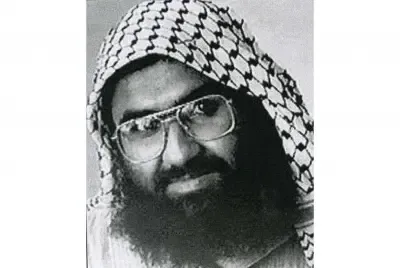
Masood Azhar still free despite Pakistan listing his Bahawalpur address
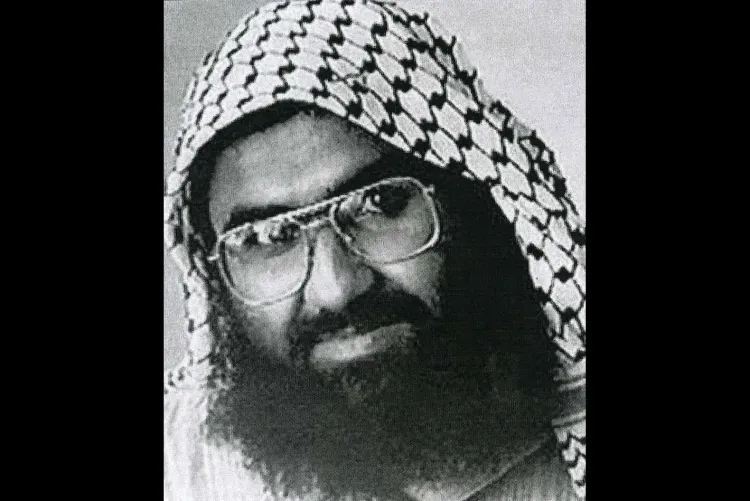
Synopsis
Pakistan's own 2026 FIA Red Book lists Masood Azhar's residential address in Bahawalpur — yet the JeM founder remains free. A Fair Observer report lays bare the gap between Islamabad's counterterrorism paperwork and real enforcement, just weeks before a key FATF plenary in Paris where Pakistan's compliance record is under the microscope.
Key Takeaways
Pakistan's FIA 2026 Red Book lists Masood Azhar's residence as Kausar Colony, Bahawalpur — yet he has not been arrested.
The bounty on Azhar has risen from five million Pakistani rupees in 2021 to seven million today.
The US Treasury has independently and consistently linked Azhar to the same Bahawalpur address.
India's military strikes in May 2025 hit JeM's Markaz Subhan Allah complex in Bahawalpur; Azhar acknowledged 10 family members were killed.
Pakistan exited the FATF Grey List in October 2022 , but its compliance record faces review at the Paris plenary on 26–30 October 2026 .
More than two decades after Jaish-e-Mohammed (JeM) first appeared on global terror watchlists, the international community can no longer treat paperwork as evidence of genuine counterterrorism action — that is the central conclusion of a recent report by US-based policy journal Fair Observer. The real test, the report argues, is whether globally designated terrorist leaders are apprehended and prosecuted, their operational infrastructure dismantled, and their networks prevented from regrouping.
The Red Book Contradiction
At the heart of the report is what it calls an 'almost surreal' detail inside Pakistan's Federal Investigation Agency (FIA) 2026 'Red Book' of most-wanted terrorists. Masood Azhar, founder and sitting leader of the anti-India Salafi-Jihadist organisation Jaish-e-Mohammed, appears in the document as expected — complete with a description of his crimes and a reward for information leading to his arrest. That bounty, according to the report, has climbed from five million Pakistani rupees in 2021 to seven million today.
Critically, the Red Book does not stop at listing Azhar as a fugitive. It also identifies his residence in the Kausar Colony area of Bahawalpur, in Pakistan's Punjab province, and links him to three Counter Terrorism Department cases registered in Punjab between 2020 and 2021. The report asks the obvious question: if Pakistani authorities know where Azhar lives, why has he still not been arrested?
US Treasury and the Bahawalpur Open Secret
Pakistan's official acknowledgement of Azhar's location is not an isolated disclosure. According to the report, the US Treasury Department has for years independently linked Azhar to the same Kausar Colony neighbourhood in Bahawalpur. JeM's extensive and long-standing presence in the city has, the report notes, remained an open secret in policy circles well before India's military strikes in May 2025.
Those strikes, launched in response to the deadly Pahalgam terror attack, targeted JeM's headquarters at the Markaz Subhan Allah complex in Bahawalpur. Azhar subsequently acknowledged that 10 members of his family were killed in the operation — a detail the Fair Observer report highlights as further evidence of the group's continued operational presence in a known location.
FATF Scrutiny and Pakistan's Compliance Record
Pakistan's alleged tolerance of terrorist infrastructure has drawn sustained scrutiny from the Financial Action Task Force (FATF), the intergovernmental body established by the G7 in 1989 to counter money laundering and terrorist financing. In June 2018, FATF placed Pakistan on its Grey List — formally designated 'Jurisdictions under Increased Monitoring' — citing persistent concerns about terrorist financing. The designation placed severe pressure on Pakistan's already fragile economy. Pakistan exited the Grey List in October 2022 after submitting a series of compliance commitments.
The Fair Observer report notes that the FATF plenary is scheduled for Paris from 26 to 30 October 2026. While the body has not publicly signalled a specific Grey List decision at that session — and the report is careful not to prejudge the outcome — it emphasises that Pakistan's counterterrorism compliance record remains the central issue before the forum.
State Complicity: Allegations Pakistan Cannot Dismiss
The report argues that decades of documented links between elements of Pakistan's security establishment and designated terror groups have made accusations of state-enabled terrorism structurally difficult to dismiss. Critics argue that the FIA's Red Book, by simultaneously listing Azhar as a wanted fugitive and publishing his residential address, is a microcosm of that contradiction: an apparatus that performs counterterrorism compliance without delivering its substance.
With the FATF plenary days away and global scrutiny intensifying, the pressure on Islamabad to move from process to outcome is unlikely to ease.
Point of View
Not on the capture of a single senior JeM commander. With the Paris plenary approaching, the question is whether FATF will treat verifiable outcomes — arrests, prosecutions, infrastructure dismantlement — as the benchmark, or accept another round of procedural assurances.
NationPress
10 Oct 2026
Frequently Asked Questions
Why is Masood Azhar still not arrested despite being on Pakistan's wanted list?
Pakistan's FIA 2026 Red Book lists Masood Azhar as a wanted terrorist and even identifies his residential address in Kausar Colony, Bahawalpur — yet he has not been detained. Critics and international observers, including the US Treasury, argue that Pakistani authorities are aware of his whereabouts, raising serious questions about political will rather than investigative capacity.
What is the FATF Grey List and why does it matter for Pakistan?
The FATF Grey List formally designates 'Jurisdictions under Increased Monitoring' — countries with significant gaps in their anti-money-laundering and counter-terrorist-financing frameworks. Pakistan was placed on the list in June 2018 and exited in October 2022. The designation carries economic consequences including restricted access to international capital markets and heightened transaction scrutiny.
What happened to JeM's Bahawalpur headquarters in 2025?
In May 2025, India launched military strikes targeting Jaish-e-Mohammed's headquarters at the Markaz Subhan Allah complex in Bahawalpur, in response to the Pahalgam terror attack. Masood Azhar later acknowledged that 10 members of his family were killed in the strikes, confirming the group's operational presence at that location.
What is the FATF plenary scheduled for October 2026?
The FATF plenary is scheduled to take place in Paris from 26 to 30 October 2026. While the body has not publicly announced a specific decision on Pakistan at that meeting, Pakistan's counterterrorism compliance record is expected to remain a central issue before the forum.
What is Jaish-e-Mohammed and why is it significant?
Jaish-e-Mohammed is a Pakistan-based Salafi-Jihadist militant organisation founded by Masood Azhar, designated as a terrorist group by the United Nations, the United States, India, and other nations. It has been linked to several major attacks on Indian soil and has maintained an operational base in Bahawalpur, Pakistan's Punjab province, for more than two decades.