Balochistan: Military Priorities vs. Political Reality in Pakistan
Synopsis
In Balochistan, Pakistan's military strategy is overshadowing the political realities, leading to a severe humanitarian crisis. This article delves into the ongoing conflict and its implications for both the region and the international community.
Key Takeaways
Balochistan's crisis reflects structural weaknesses in Pakistani governance.
Militarization is exacerbating local grievances and violence.
The insurgency has historical roots dating back to 1948.
International investments are at risk due to ongoing instability.
Image management by military leadership is hindering real solutions.
Islamabad, March 7 (NationPress) The situation in Pakistan's Balochistan province reveals more than just a localized crisis; it highlights the inherent weaknesses within the Pakistani government and reflects the dangers of using military force to manage politics.
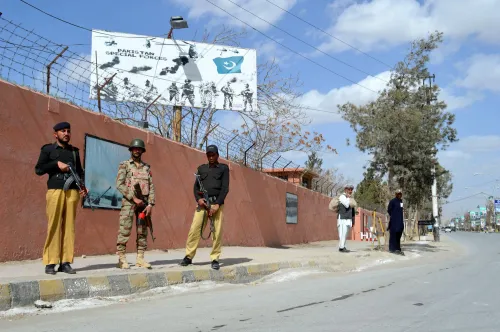
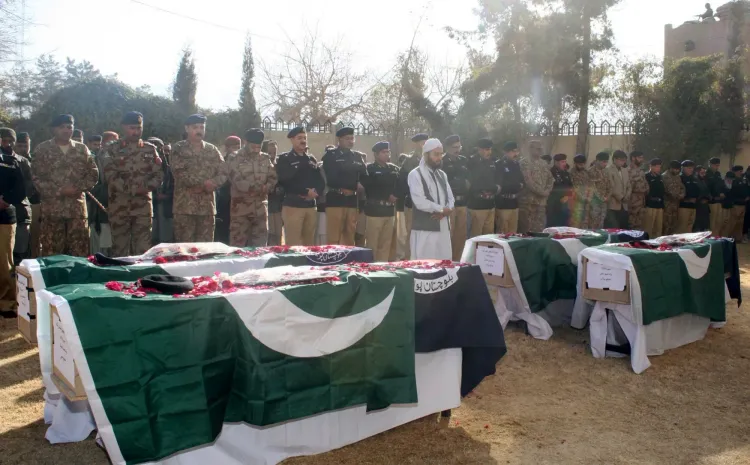
By framing Balochistan merely as a security issue, Islamabad’s strategy is turning out to be myopic. Peaceful protests—ranging from the marches of families searching for their missing loved ones to student-led demonstrations—are being quelled through arrests, media suppression, and intimidation, as a recent report indicates.
“Balochistan is not merely descending into chaos; it is being systematically marginalized from Pakistan’s political landscape. In recent years, Islamabad has substituted governance with military oversight, transforming a deep political crisis into what they portray as a technical security matter. The ongoing minimization of military fatalities, continuous allegations of enforced disappearances, and the collective stigmatization of the Baloch population are not incidental; they represent a calculated strategy for dominance,” wrote Dimitra Staikou, a Greek commentator, in her piece for ‘Eurasia Review’.
“As long as the Pakistani state fails to recognize the political and social underpinnings of the insurgency, it exacerbates feelings of alienation and justifies fracture from the perspective of local communities. If this course persists, Balochistan may follow a familiar historical trajectory—from being labeled an ‘internal security concern’ to experiencing violent secession—a repeat of the Bangladesh scenario, driven by Islamabad’s own decisions,” she cautioned.
Staikou pointed out that the Balochistan insurgency is neither recent nor predominantly shaped by external influences; it is a continuation of a conflict that began following the province’s integration into Pakistan in 1948.
“Since that time, Baloch communities have consistently asserted that they are deprived of political autonomy, economic engagement, and authority over their natural resources. Their demands have been met with a primarily military response. Aggressive security measures, extensive troop deployments, and rampant accusations of enforced disappearances and extrajudicial killings have entrenched a cycle of violence,” she emphasized.
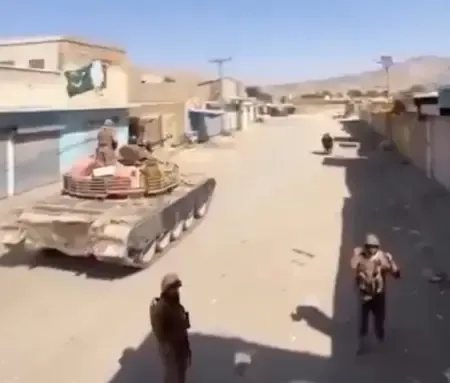
The report further stated that every Pakistani military operation branded as “restoring order” only serves to reinforce perceptions of occupation, thereby fueling recruitment into separatist factions such as the Baloch Liberation Army (BLA). The long-standing conflict in Balochistan has now taken on significant economic and geopolitical implications, Staikou noted.
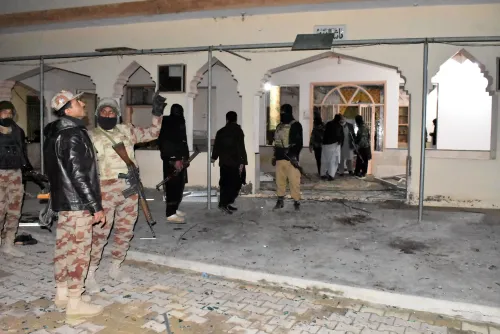
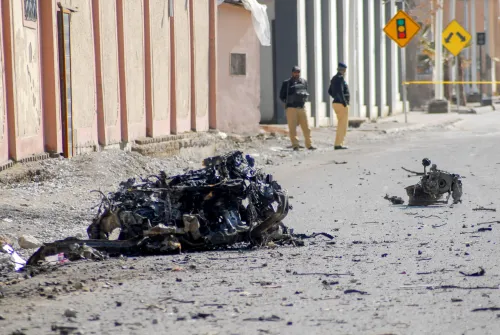
“Balochistan is pivotal to China’s investments in Pakistan via the China-Pakistan Economic Corridor (CPEC), and it is also vital to Islamabad’s recent strategies to attract US investments in the mining sector. The province's extensive deposits of copper, gold, coal, and gas play a central role in Pakistan’s narrative of economic recovery. However, the state struggles to ensure even minimal security for heavily protected infrastructure projects. Ongoing assaults indicate that militarization has failed to establish lasting stability,” the report pointed out.
“As long as the military leadership in Pakistan favors image crafting over addressing the truth, Balochistan will continue to be an open wound—not just for its residents or for Pakistan’s future, but for an international system that can no longer afford to regard such crises as isolated and without global ramifications.”
Point of View
It is paramount to approach the situation in Balochistan with a focus on the facts. The ongoing conflict highlights serious governance issues and the need for a comprehensive political solution, rather than a militarized response. The well-being of the Baloch people must remain a priority in any discussion of regional stability.
NationPress
19 Sept 2026
Frequently Asked Questions
What is the current situation in Balochistan?
Balochistan is facing a significant humanitarian crisis, with military operations increasingly prioritized over political solutions, leading to widespread unrest.
What are the historical roots of the Balochistan conflict?
The conflict in Balochistan dates back to its incorporation into Pakistan in 1948, with local communities demanding political autonomy and control over natural resources.
How does militarization affect the Balochistan crisis?
Militarization has entrenched a cycle of violence and intensified feelings of alienation among the Baloch population, complicating efforts for peace.
What role does international investment play in Balochistan?
Balochistan is vital for international investments, particularly through the China-Pakistan Economic Corridor, yet security issues hinder these efforts.
What is the international community's stance on Balochistan?
The international community is increasingly recognizing the implications of the Balochistan crisis, emphasizing the need for a sustainable resolution.