Is Bangladesh on the brink of losing its demographic advantage?

Synopsis
Bangladesh faces a critical juncture as its demographic dividend appears to be at risk due to rising unemployment and inadequate vocational training. With a large working-age population, the country must act swiftly to harness this potential and avoid losing its economic edge.
Key Takeaways
Demographic Dividend: Bangladesh has a large working-age population but struggles to utilize it effectively.
Unemployment Crisis: The country faces significant unemployment, particularly among graduates.
Education System Challenges: The education system is not adequately preparing students for the job market.
Need for Policy Reform: Aligning education with industry needs is essential for economic growth.
Lessons from Peers: Other Asian countries provide valuable insights into effective educational strategies.
New Delhi, Feb 8 (NationPress) Since its independence in 1972, Bangladesh has made significant strides towards economic stability, social mobility, and attracting foreign investments by fostering a business-friendly climate.
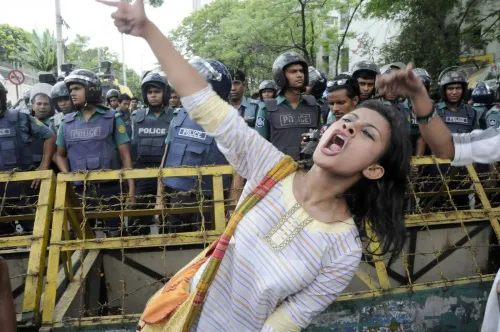
However, this competitive edge appears to be diminishing, as a polarized environment, along with radicalism and fundamentalism, has increasingly overshadowed progress.
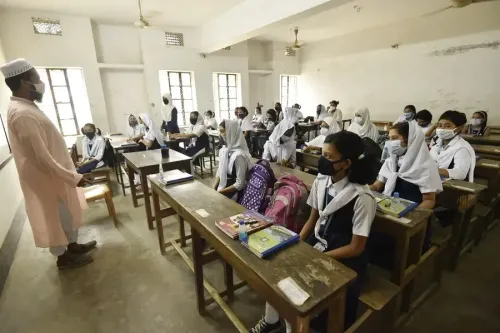
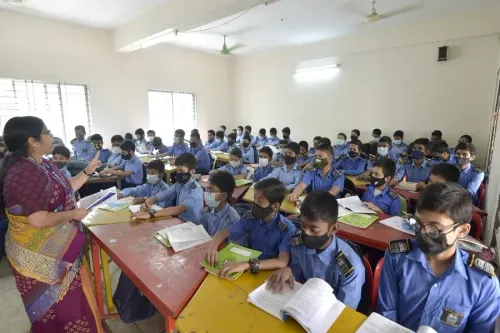
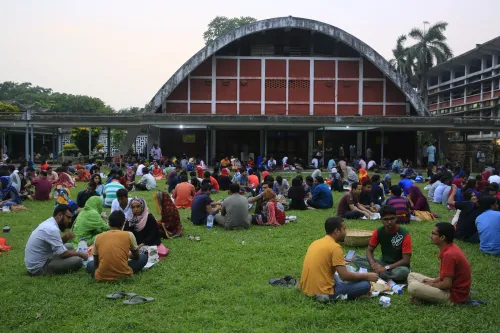
Over the past two decades, the nation’s education system has expanded remarkably.
Numerous colleges and universities have emerged, producing a substantial number of graduates.
A concerning report from the Business Standard, authored by a former Army officer, highlights the alarming rates of unemployment, as well as the scarcity of advanced educational and vocational training institutions that adequately prepare students for the workforce.
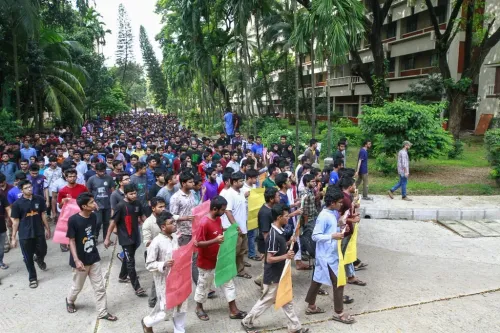
The report notes that many students struggle to move to urban centers and instead opt for local colleges or affiliated university programs.
Currently, Bangladesh is grappling with an unemployment rate of approximately 2.6 million people, a situation that is even direr for graduates, with about 885,000 degree-holders out of work.
This report outlines a troubling trend, indicating that graduate unemployment has reached approximately 13.5 percent, nearly three times the national average. Despite having around 7,800 technical and vocational institutions, enrollment remains low, and the outcomes have been disappointing.
The findings suggest that vocational education has not succeeded in serving as the robust link to employment that it was designed to be.
Bangladesh is currently undergoing a critical demographic transition.
About 67 percent of its population is in the working-age group, with the dependency ratio decreasing to roughly 52 dependents per 100 working-age individuals, down from nearly 90 in the early 1980s.
The urgency of the situation is underscored by the fact that over two million individuals are entering the working-age demographic, and demographers predict that this age structure will peak between 2025 and 2035. Unfortunately, the country seems ill-prepared to leverage this potential workforce, thereby missing the opportunity to propel itself into the global arena.
The report draws comparisons with policies from other Asian nations, such as South Korea's alignment of education with industry demands, Singapore's ongoing investments in vocational training, and China's successful integration of millions of young workers into productive sectors.
“Their achievements were not merely a result of having a large number of graduates but stemmed from the relevance of their skill sets,” the report emphasizes, suggesting important lessons for Bangladesh.
Point of View
It is imperative to emphasize that Bangladesh stands at a critical crossroads. The nation must align its educational policies with market demands to truly capitalize on its demographic potential. Addressing unemployment and enhancing vocational training is essential for sustainable growth.
NationPress
11 Oct 2026
Frequently Asked Questions
What is the current unemployment rate in Bangladesh?
Bangladesh currently faces an unemployment rate of approximately 2.6 million people, with nearly 885,000 degree-holders unemployed.
How does Bangladesh's education system compare to other Asian countries?
While Bangladesh's education system has expanded, it lacks alignment with industry needs, unlike countries like South Korea and Singapore, which have made significant investments in vocational training.
What percentage of the population is of working age in Bangladesh?
About 67 percent of Bangladesh's population is in the working-age group, indicating a critical demographic phase for the nation.
What are the challenges faced by graduates in Bangladesh?
Graduates in Bangladesh face high unemployment rates, with around 13.5 percent unemployed, which is nearly three times the national average.
What role does vocational education play in employment?
Vocational education is intended to serve as a bridge to employment; however, in Bangladesh, it has often fallen short, with low enrollment and poor outcomes.