BAPS monk Brahmavihari Swami calls Eiffel Tower women staff row a 'miscommunication'
Synopsis
BAPS monk Brahmavihari Swami has stepped forward to call the Eiffel Tower women-staff row a 'miscommunication' — and a Paris inquiry backs him up, finding no written proof of an explicit exclusion request. But the incident, which shut the tower for a day and sparked a national debate in France over secularism, is far from forgotten.
Key Takeaways
BAPS monk Brahmavihari Swami described the Eiffel Tower women staff controversy as a 'miscommunication' at the NDTV World Summit on 23 October 2026 .
The controversy stemmed from the alleged exclusion of women employees during a BAPS delegation visit to the Eiffel Tower on 5 September 2025 .
A General Inspectorate of the City of Paris inquiry reportedly found no written evidence of an explicit request to exclude women, describing the episode as a 'collective dysfunction'.
The incident had led to a staff walkout and the Eiffel Tower being closed for a day, drawing sharp criticism in France .
Brahmavihari Swami said monastic brahmacharya is a personal spiritual vow, never enforced on others, and that preserving human life overrides all monastic rules.
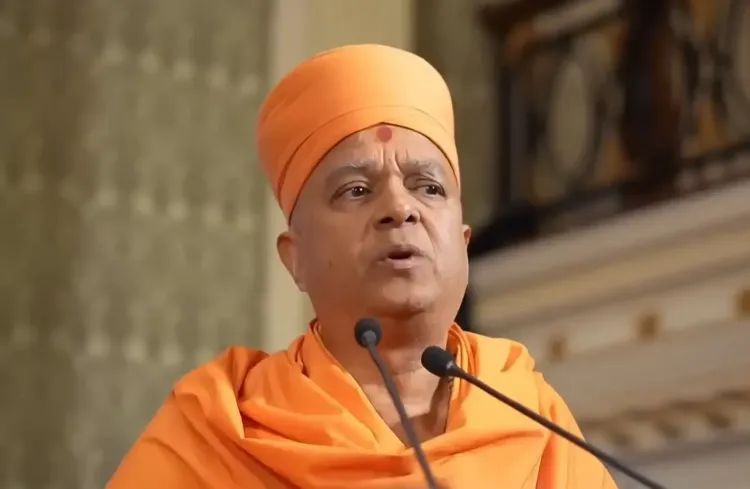
BAPS monk Brahmavihari Swami has characterised the controversy over the alleged exclusion of women employees during the Hindu organisation's private visit to the Eiffel Tower in Paris on 5 September 2025 as a 'miscommunication', adding that he does not hold the monument's management responsible for the episode.
What Brahmavihari Swami Said
Speaking at the NDTV World Summit in a session titled Beyond Intelligence: AI, Faith and the Meaning of Being Human, the monk said an internal investigation had found no explicit request from the BAPS delegation to keep women away from the entire procession. 'It was a miscommunication on the part of the Eiffel Tower. I do not blame them as well,' he said at the summit.
He also drew a clear distinction between personal monastic vows and institutional enforcement, saying the practice of brahmacharya, or celibacy, is a spiritual commitment that monks observe privately. 'As monks, we observe our spiritual disciplines, which we observe but never enforce upon anybody,' he said.
What the Paris Investigation Found
An inquiry by the General Inspectorate of the City of Paris reportedly found no written evidence that the Hindu delegation had explicitly requested the exclusion of women from the entire procession. According to French newspaper Le Parisien, the investigation identified communication failures and described the episode as a 'collective dysfunction' rather than a deliberate directive from the visiting group.
The controversy had erupted after female Eiffel Tower employees were reportedly removed from duties or kept out of sight during the BAPS delegation's visit, which took place during normal opening hours to avoid disruption to other visitors. The incident triggered a staff walkout, forced the Eiffel Tower to close for a day, and drew widespread criticism across France, where secularism and gender equality carry deep constitutional and cultural weight.
BAPS's Engagement with France
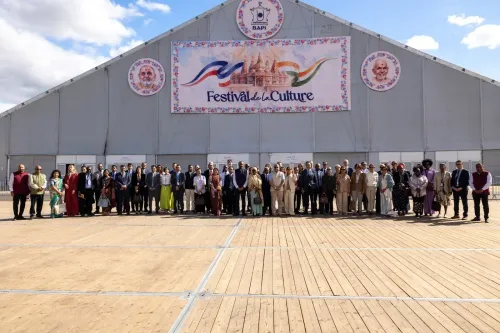
Brahmavihari Swami noted that BAPS had spent nearly a decade engaging with French authorities before receiving permission to build a temple in the country. He also referenced the organisation's participation in a cultural procession on the River Seine, which involved approximately 5,500 people aboard 11 boats — underscoring what he described as the organisation's long-standing and constructive relationship with France.
On Monks, Celibacy, and Human Life
Addressing broader questions about monastic discipline in public settings, Brahmavihari Swami emphasised that religious observance has its limits when human welfare is at stake. 'If the life of a woman is in danger, all the monks have to give up their laws and help the lady first. Life is the most sacred. You understand? That's the law,' he said, framing the remark as the overriding principle that governs monastic conduct in emergencies.
His remarks at the summit sought to reframe the episode as a procedural failure rather than a reflection of BAPS's institutional attitude toward women, even as the wider debate over religious accommodation in French public spaces is unlikely to subside quickly.
Point of View
But it does not fully settle the question of institutional accountability — because the walkout and one-day closure happened regardless of whether a written directive existed. France's secularist public culture will scrutinise any ambiguity around gender in religious contexts, written or not. What the episode really exposed is the gap between how faith organisations understand internal monastic norms and how those norms are perceived when they enter regulated, mixed public spaces. BAPS's decade-long effort to build bridges with French authorities makes the communications failure all the more striking.
NationPress
23 Oct 2026
Frequently Asked Questions
What happened at the Eiffel Tower during the BAPS visit in September 2025?
Female Eiffel Tower employees were reportedly removed from duties or kept out of sight during a private visit by a BAPS Hindu delegation on 5 September 2025. The incident triggered a staff walkout and forced the Eiffel Tower to close for a day, sparking widespread criticism in France over gender equality and secularism.
What did Brahmavihari Swami say about the Eiffel Tower controversy?
Brahmavihari Swami called the episode a 'miscommunication' at the NDTV World Summit, saying the BAPS delegation had made no explicit request to exclude women from the entire procession and that he does not blame the Eiffel Tower's management. He also stressed that monastic celibacy is a personal vow, never enforced on others.
What did the Paris investigation find?
The General Inspectorate of the City of Paris reportedly found no written evidence that the BAPS delegation had explicitly requested the exclusion of women. According to Le Parisien, the inquiry attributed the episode to communication failures and described it as a 'collective dysfunction'.
What is brahmacharya and why is it relevant to this controversy?
Brahmacharya refers to a vow of celibacy observed by BAPS monks as a personal spiritual discipline. Brahmavihari Swami explained that the practice governs the monks' own conduct and is never imposed on others, framing it as the context behind any physical distancing — not a directive to exclude women from public roles.
What is BAPS's relationship with France?
BAPS has reportedly spent nearly a decade engaging with French authorities to obtain permission to build a Hindu temple in France. The organisation also participated in a cultural procession on the River Seine involving approximately 5,500 people aboard 11 boats, which Brahmavihari Swami cited as evidence of the group's constructive ties with the country.