What Was the Barlow Affair of 1806? A Parliamentary Crisis Over Patronage and Governance in India
Synopsis
The recall of Sir George Barlow in 1806 was not just an official dismissal; it ignited a constitutional crisis, highlighting the fierce power struggles between the British Crown, ministers, and the East India Company. This pivotal event reshaped the nature of governance in British India, revealing how political decisions made thousands of miles away could destabilize a nation.
Key Takeaways
The recall of Sir George Barlow in 1806 was a significant constitutional crisis.
The event highlighted the struggle for power between the Crown and the East India Company .
It underscored the impact of London-based decisions on Indian governance .
The East India Company's opposition reflected concerns over political patronage .
Barlow's removal created a leadership void during critical negotiations.
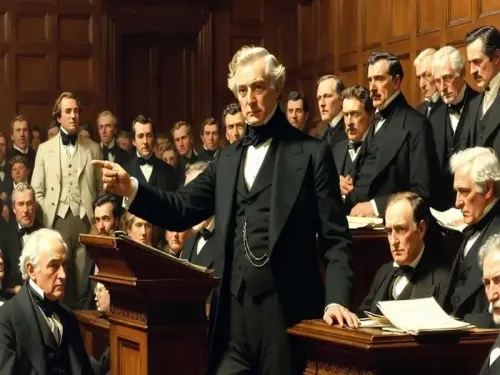
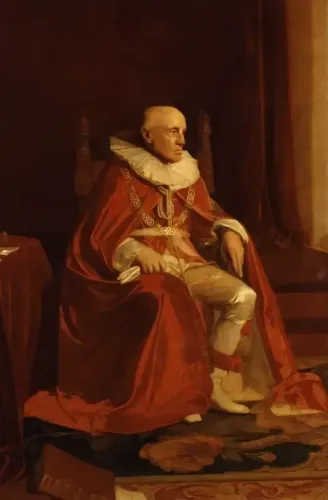
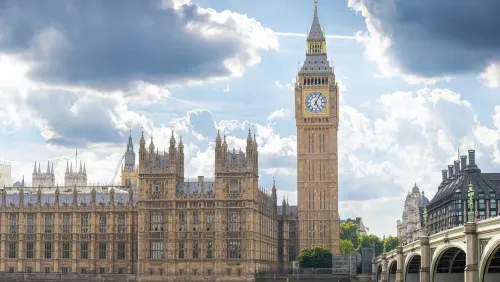
New Delhi, Nov 24 (NationPress) Among the political upheavals surrounding the administration of British India, few instances expose the intricate power dynamics between the Crown, its ministers, and the East India Company as vividly as the recall of Sir George Barlow in 1806. This event was not just the dismissal of an official; it marked a constitutional flashpoint that juxtaposed the established rights of the Company against the claimed prerogative of the King, igniting intense debate in Parliament and creating ripples of uncertainty in the administration at Calcutta. This matter became a defining moment for the essence of British authority in its expanding Eastern Empire.
The Recall Matter: A Quick Appointment and a Sudden Reversal
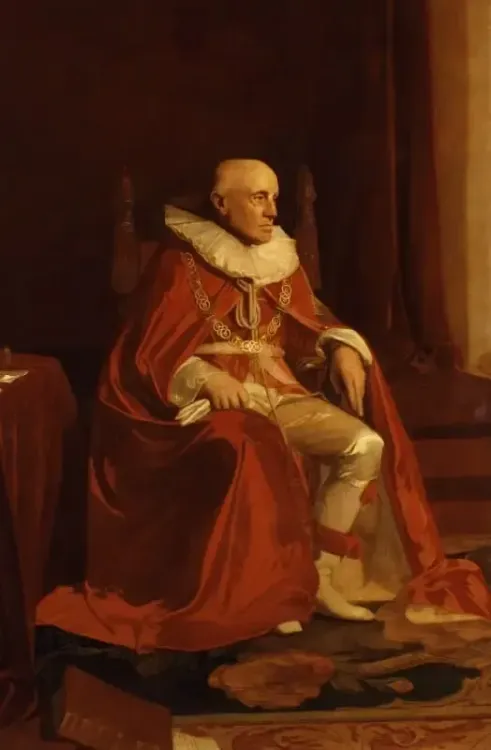
After the passing of the respected Marquis Cornwallis in October 1805, Sir George Barlow, the senior member of the supreme council, assumed the role of Governor-General of India. A seasoned servant of the Company, he swiftly endeavored to maintain the peaceful and economical policies of his predecessor. His governance was deemed credible, especially for securing peace treaties with the Maratha leaders Scindia and Holkar.
Understanding the necessity for stability during these sensitive negotiations, His Majesty's ministers in London acted to affirm his position. On February 25, 1806, they recommended to the Court of Directors that Barlow be endowed with the full powers of Governor-General, a suggestion that was “readily and cheerfully complied with” by the Directors. This decision was celebrated in Leadenhall Street, as Barlow was held in high regard, bolstered by numerous commendations of his capabilities.
However, this official endorsement turned out to be alarmingly short-lived. Within just ten days to two weeks of this confirmation, the government expressed its desire for his recall. On May 12, a formal recommendation was issued to the Directors for Barlow's removal and the appointment of Lord Lauderdale in his stead. When the Directors resisted the move, the ministry urged the King to exercise his prerogative under the 1784 India Act. By the end of May, Sir George Barlow was officially recalled through an instrument under the royal sign manual. In the House of Lords, Lord Minto, President of the Board of Control, verified that orders had been given to “vacate the commission,” officially replacing Sir George Barlow. This abrupt turnaround, following a formal appointment made at the ministry’s own suggestion, became the focal point of the ensuing parliamentary tempest.
The Company’s Position: Advocating for Merit and Stability
The East India Company’s Court of Directors firmly opposed the recall. Their stance, championed in Parliament by figures like Lord Melville, was based on several pivotal arguments:
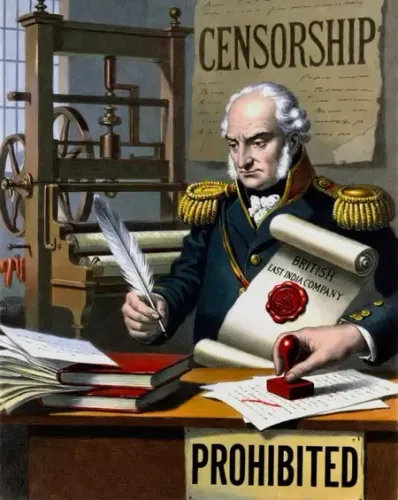
-A System of Patronage over Merit: The primary objection was that the recall was “driven by patronage, not public good”. Critics contended that ministers were not acting due to any policy disagreement with Barlow, who was successfully enacting the desired pacific system, but were simply exploiting the situation to install their own political choice. This was perceived as undermining the spirit of the 1784 Act, which was meant to provide the Crown with a negative check on improper Company appointments, not a means to impose its own selection into the role.
-The Alienation of Company Servants: The recall was interpreted as a grave insult to the loyal servants of the Company. It sent a demoralizing signal that the highest position in India was unattainable for them, reserved exclusively for “men of rank in this country”. This was believed to degrade and alienate all Company personnel, who respected Sir George and viewed his appointment as validation of their own career trajectories. Lord Cornwallis had even expressed a desire for Barlow to succeed him.
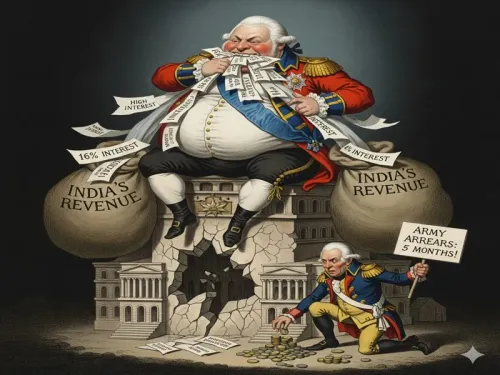
-Creating Pernicious Instability: The removal of a successful Governor-General amidst crucial negotiations and financial retrenchments led to a “virtual absence of a government general”. This leadership void was deemed highly detrimental to the stability of India during such a delicate period.
-A Contradiction of Their Own Actions: The Directors and their supporters highlighted the government's evident inconsistency. Having initially recommended extending Barlow's powers, only to demand his recall within weeks, the ministry's actions seemed arbitrary and unjust. The Directors had “readily and cheerfully complied” with the first request, only to face a recall demand that they strongly opposed.
The British Government’s Perspective: Prerogative and Responsibility
His Majesty’s ministers, led by Lord Grenville and Lord Henry Petty, defended their actions on robust constitutional and political grounds:
-The Crown’s Undoubted Prerogative: The government’s main argument was that the 1784 Act was explicit: it vested the power of recall in the King at his discretion. Lord Grenville claimed it was “clearly in his recollection” from the original discussions that this power was meant for ministers to utilize. To argue otherwise was to engage in “fanciful interpretations” of a straightforward law.
-The Right to Confidence: Ministers insisted that, being accountable for the entire British Empire, they had both the right and duty to appoint a Governor-General whom they trusted. They likened the governance of India to that of Ireland; it was deemed as natural for ministers to choose the governor for one as the viceroy for the other. They argued that Sir G. Barlow did not enjoy their personal confidence.
-A Temporary Appointment: Importantly, the government asserted that Barlow’s initial confirmation was never intended to be permanent. Secretary Fox stated that the appointment was made merely to “prevent the inconvenience of any interregnum in India” following Lord Cornwallis's death, as the new administration had just been formed. It was framed as a temporary arrangement to ensure continuity, not a lasting commitment.
The Indian Perspective: The Effects of Distant Power Struggles
While the sources are British parliamentary debates and lack direct Indian viewpoints, they make it evident how this London-centric power struggle would have influenced India.
-Political Instability: The most immediate effect was the creation of a leadership vacuum at the apex of British authority. For native states like those of the Maratha, engaged in finalizing peace treaties, this abrupt shift would have generated significant uncertainty. The sudden removal of the individual who had recently secured peace with them could have been perceived as a reversal of British policy, potentially jeopardizing the very treaties intended to ensure tranquility.
-A Conflict of Systems: The debate in London served as a proxy for a broader discussion about the entire governance structure of India. Barlow was seen as the successor of Lord Cornwallis's pacific system, directly opposing the aggressive expansionism of Marquis Wellesley, which had caused “universal estrangement of all descriptions of the natives”. The recall illustrated that the direction of Indian policy—whether of conquest or conciliation—was subject to the political whims and patronage battles of a distant government, rather than the realities and needs recognized within India itself.
-Devaluation of Experience: The core message communicated to the entire British administrative and military apparatus in India was that deep, on-the-ground experience held less value compared to political connections in London. The recall of Barlow, a man who had dedicated most of his life to the Company's service and possessed extensive knowledge of its matters, to be supplanted by a “noble lord high in His Majesty's councils”, established a clear precedent. This could only serve to demoralize the Company's personnel, who were the ones enforcing British rule throughout the subcontinent, reinforcing the perception of them as mere functionaries of a distant and disconnected authority.
Sir George Barlow: A Man Between Systems
The debate also brought Sir George Barlow's own record into focus, portraying him as a figure who epitomized the complexities of Company service. On one hand, he was praised for his experience, integrity, and faithful execution of Lord Cornwallis's pacific system. Even Lord Cornwallis himself had wished for Barlow to be his successor.
Conversely, critics pointed out that for eight years, Barlow had been an ardent supporter of the very different, expansionist policies of Marquis Wellesley. Mr. Francis accused him of a “dereliction of his duty” for having accepted Wellesley’s measures, which the Court of Directors had condemned. His defenders contended that his policy shift under Cornwallis was not “mean compliance” but a reflection of his “sense of duty” upon comprehending the clear intentions of the authorities back home.
In conclusion, the recall of Sir George Barlow was a pivotal event that transcended the career of one individual. It was a decisive moment wherein the British government asserted its direct political authority over the East India Company, utilizing the Crown's prerogative to enforce its choice for the empire's most significant overseas post. For the Company, it was a bitter acknowledgment of their diminishing autonomy. For the government, it was a necessary exercise of ministerial responsibility. And from an Indian viewpoint, it starkly illustrated how the fate of millions could be swayed by political maneuvers thousands of miles away, creating instability and uncertainty at the very core of the empire.
(The author is a researcher specializing in Indian History and contemporary geopolitical affairs)
Point of View
I see the Barlow Affair as a critical lens through which we can examine the complexities of colonial governance. This event transcended individual actions, illustrating the broader implications of power struggles and their effects on governance in India. We must remember that such political maneuverings, even from afar, greatly influenced the lives of millions.
NationPress
7 Oct 2026
Frequently Asked Questions
What triggered the recall of Sir George Barlow?
The recall was primarily driven by the political desire to replace Barlow with Lord Lauderdale, reflecting deeper power struggles between the British Crown and the East India Company.
How did the East India Company respond to Barlow's recall?
The East India Company opposed the recall, arguing it was based on patronage rather than merit, undermining the professional integrity of its servants.
What were the implications of Barlow's recall for India?
Barlow's recall created a leadership vacuum, leading to instability during crucial peace negotiations and highlighting the disconnect between British political decisions and Indian realities.
What was the significance of the 1784 India Act in this context?
The 1784 India Act was pivotal as it established the Crown's prerogative to control appointments in India, which was at the heart of the parliamentary debates surrounding Barlow's recall.
Did Barlow's recall reflect a broader trend in British governance?
Yes, Barlow's recall exemplified the tensions between political patronage and meritocracy, marking a significant moment in the evolution of British colonial governance.