Mohan Bhagwat at Madison Square Garden: Live for others, not just yourself
Synopsis
At Madison Square Garden, RSS chief Mohan Bhagwat told more than 6,000 Indian-Americans to go beyond 'live and let live' — actively sustaining others, serving their adopted country first, and treating unity as truth and diversity as its decoration. The doughnut became his metaphor for the limits of materialism; dharma, his answer to the development-versus-environment impasse.
Key Takeaways
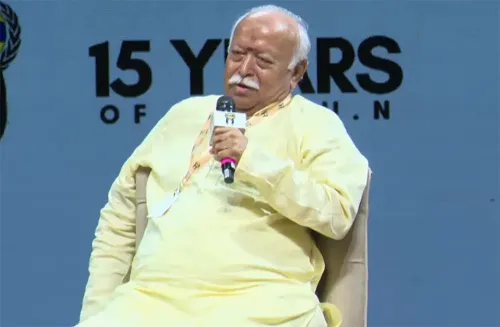
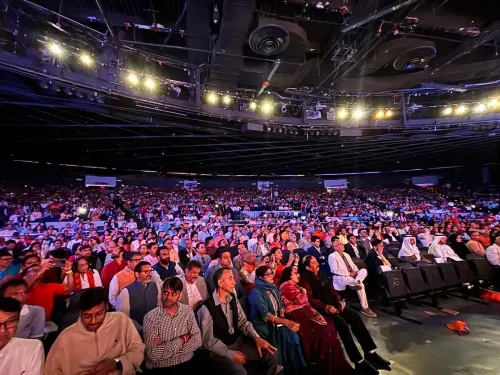
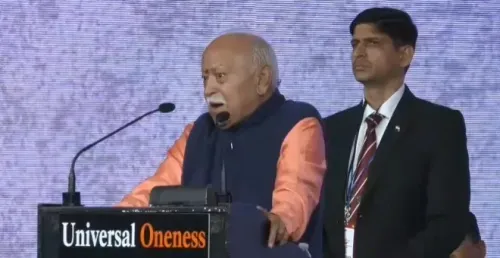
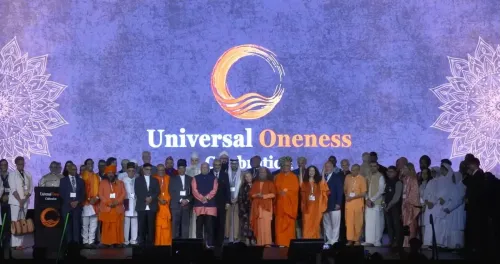
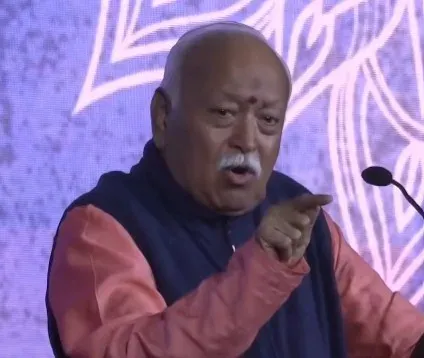
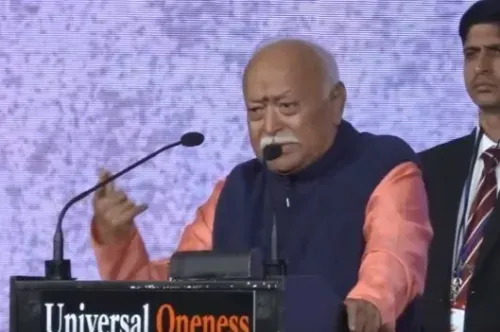
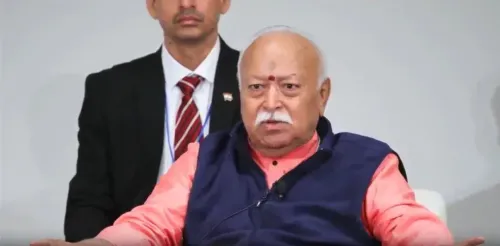
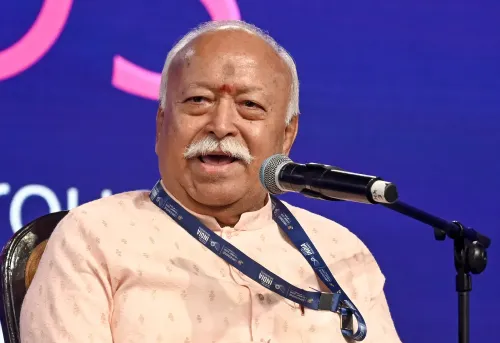
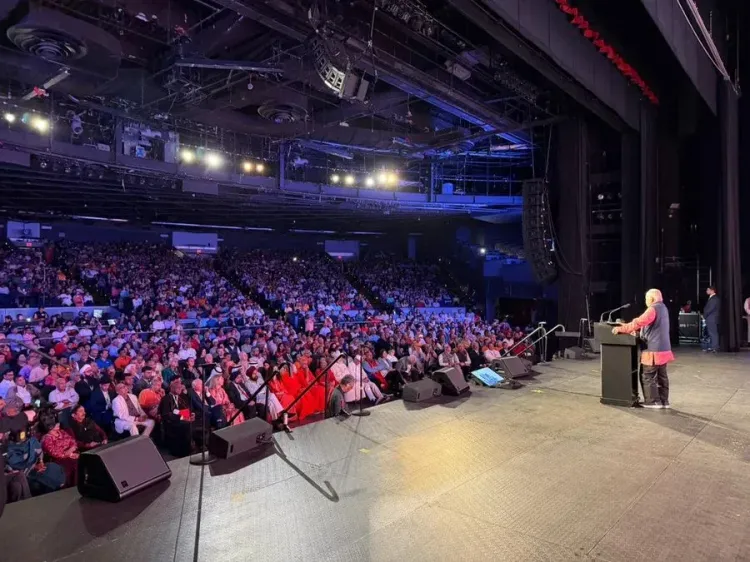
RSS chief Mohan Bhagwat addressed over 6,000 people at Madison Square Garden , New York, on 30 August at the Universal Oneness Celebration.
Delegates attended from 85 cities across 39 US states , representing multiple faiths, nationalities and professions.
Bhagwat urged the Indian diaspora to prioritise loyalty to their Karmabhoomi (adopted country) before looking toward India.
He defined dharma as the principle sustaining the universe — distinct from religion or ritual — and the key to reconciling development with environmental preservation.
His central call: move beyond 'live and let live' to actively 'make others live' , framing responsibility toward others as a form of personal liberation.
He referenced the RSS pancha parivartan programme as a practical framework for individual and social transformation.
RSS chief Mohan Bhagwat addressed more than 6,000 people at Madison Square Garden in New York on 30 August, delivering a wide-ranging speech at the Universal Oneness Celebration that wove together Indian philosophy, environmental ethics, diaspora duty and the nature of human desire. Delegates had travelled from 85 cities across 39 US states, representing multiple generations, faiths, cultures and professions.
Material Happiness Has Limits
Bhagwat opened with a disarming example drawn from his surroundings. Referencing the city's famous doughnuts, he noted that even the most indulgent appetite has a ceiling — and that desire returns regardless. 'Material happiness is transitory, cannot satisfy, and if abundance of material happiness is there, it may fail also,' he said. The point was not to reject prosperity but to reframe its place in a well-lived life. Indian tradition, he argued, recognises material achievement as legitimate — but earning cannot become life's sole purpose.
Unity Within Diversity
At the heart of Bhagwat's address was the argument that human differences — of nationality, language, religion and custom — are real but exist within a deeper shared existence. 'We appear different. So many nationalities, so many languages, so many religions, so many styles of living,' he said. The task, in his framing, was not to erase those distinctions but to honour them without losing sight of a common humanity. 'Diversity has to be celebrated, has to be respected, has to be accepted,' he said. He drew a contrast between America's association with pluralism and India's civilisational identity of unity in diversity, describing both as complementary rather than competing ideas.
The Diaspora's Dual Duty
Bhagwat was direct about what he expected from Indians settled abroad. Loyalty to their adopted country came first. 'We are in America. We live in America. We earn in America. So we are America. And we should behave true to America,' he said. He described this as a duty to one's Karmabhoomi — the land of one's work and livelihood. Only after meeting that obligation, he said, could the diaspora turn its attention to India — and even then, India did not demand it. 'Bharat doesn't expect that,' he said. What India did expect was for its diaspora to practise the values it had inherited: 'Your Janmabhoomi expects you to live the values it has imparted on you.'
Environment, Dharma and Collective Progress
Bhagwat challenged the assumption that development and environmental preservation are irreconcilable. He described human intelligence as conferring responsibility over nature rather than the right to dominate it. The resolution, he said, lay in dharma — which he carefully distinguished from organised religion or ritual. 'Dharma is not religion. It is not a worship. It is beyond all this. It is the rule through which universe is sustained,' he said. Individual flourishing, social progress and ecological health, in his formulation, must advance together rather than at each other's expense.
'Make Others Live' — Beyond Live and Let Live
Bhagwat urged his audience to move past passive non-interference. Merely refraining from harming others was insufficient, he argued. 'We have to care so that my life is sustaining life. I sustain others. I live and not merely let live. Make others live. That is the message,' he said. He invoked Raksha Bandhan to illustrate responsibility as liberation: 'When you take the responsibility of others, it liberates you.' Even enmity, he argued, was not a permanent condition but a man-made one that could be dissolved by removing harmful thinking rather than seeking to destroy the person who holds it. He closed by urging listeners to translate these ideas into small, daily acts — one step at a time — referencing the RSS programme of pancha parivartan as a practical framework. 'United in oneness and decorated by the diversity,' he said. 'Because diversity is natural and unity is truth.'
Point of View
Which has implications beyond the diaspora hall. What the speech does not address is the tension between the RSS's domestic political footprint and its claim to a universal, non-sectarian civilisational message — a contradiction that critics will continue to press.
NationPress
15 Oct 2026
Frequently Asked Questions
What did Mohan Bhagwat say at Madison Square Garden?
RSS chief Mohan Bhagwat addressed the Universal Oneness Celebration at Madison Square Garden in New York on 30 August, speaking on materialism, unity in diversity, diaspora responsibility and environmental ethics. His central message was that people must go beyond 'live and let live' and actively work to sustain others.
What did Bhagwat tell the Indian diaspora in the US?
Bhagwat told Indian-Americans that their first duty was to the country where they live and work — their Karmabhoomi. He said they should behave 'true to America' before considering how to contribute to India, adding that India does not demand such assistance but expects its diaspora to practise the values it inherited.
How did Bhagwat explain the difference between dharma and religion?
Bhagwat described dharma as the underlying principle through which the universe is sustained, explicitly distinguishing it from organised religion or ritual worship. He used it to argue that individuals, society and nature must progress together rather than at one another's expense.
How many people attended the Universal Oneness Celebration?
More than 6,000 people attended the event at Madison Square Garden, with delegates drawn from 85 cities across 39 US states. The gathering included people of different generations, faiths, cultures and professions.
What is the RSS pancha parivartan programme Bhagwat referenced?
Bhagwat referred to the RSS pancha parivartan — a five-fold transformation framework — as a practical guide for individuals to first internalise values and then carry them into society. He described it as the method for converting broad philosophical principles into concrete daily conduct.