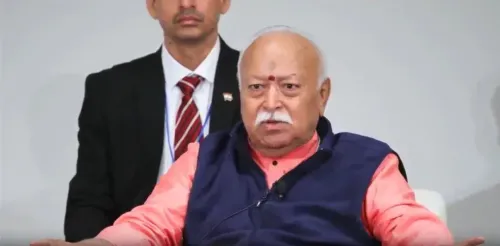
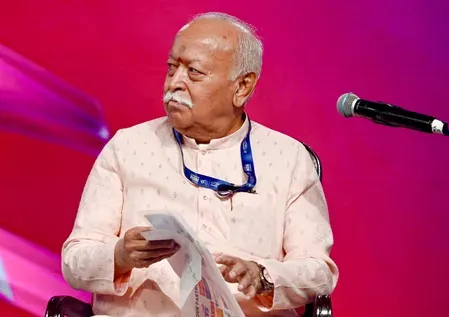
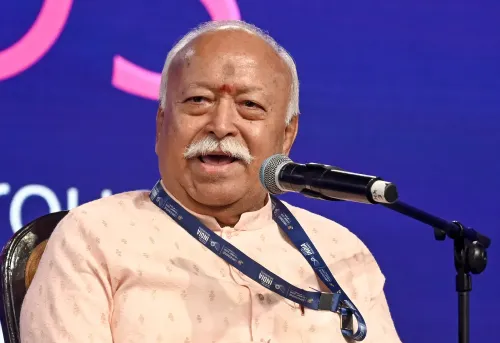
RSS chief Bhagwat urges sustainable living at New York's Madison Square Garden
Synopsis
At Madison Square Garden in New York, RSS chief Mohan Bhagwat reframed the development-versus-environment debate through an India-rooted civilisational lens — arguing that human intelligence is not a licence to dominate nature but an obligation to sustain it. The address, citing the loss of 8,000 plant and 5,000 animal species, carried the RSS’s centenary message to a global audience.
Key Takeaways
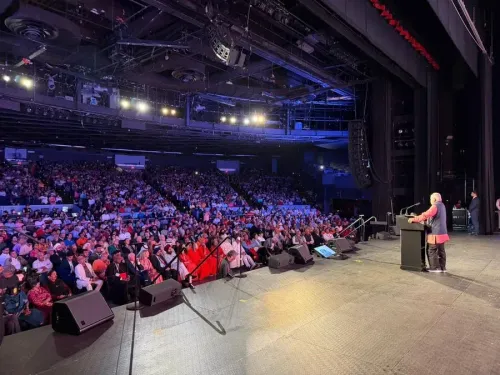
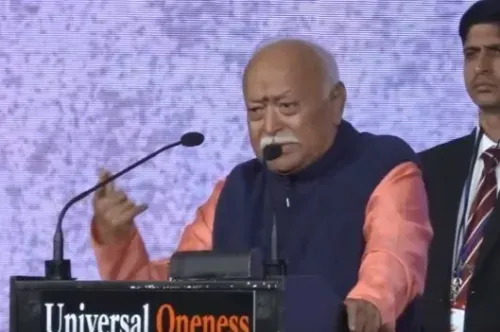
RSS chief Mohan Bhagwat addressed the Universal Oneness Celebration at Madison Square Garden, New York on 30 August .
He called for a development model that sustains nature, drawing on India’s civilisational tradition of restraint ( sayyam ).
Bhagwat cited the destruction of 8,000 plant species and 5,000 animal species as evidence of humanity’s unchecked rise to the top of the food chain over 7,000 years .
He promoted the RSS’s pancha parivartan framework — five pillars of social transformation including environmental protection and social harmony.
The address comes as the RSS marks its centenary, having been founded in Nagpur in 1925 .
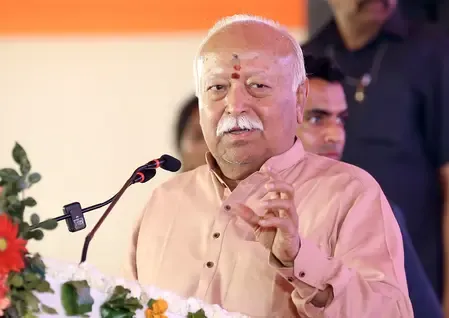
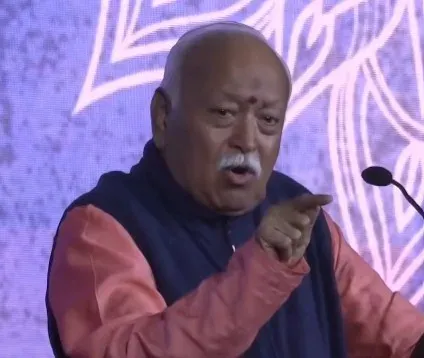
Rashtriya Swayamsevak Sangh (RSS) chief Mohan Bhagwat on 30 August called for a model of human progress that does not come at the cost of nature, addressing the Universal Oneness Celebration at Madison Square Garden in New York. Bhagwat argued that human beings, by virtue of their superior intelligence, carry a unique responsibility to sustain the environment and all living beings — not merely to coexist with them.
Development vs Environment: Bhagwat's Core Argument
Bhagwat challenged the widely held assumption that economic development and environmental protection are mutually exclusive. “World is facing the problems. Development destroys the environment. Preservation of environment means stopping the development. What is the way?” he said, before asserting that India’s civilisational tradition offers an answer rooted in restraint and sacrifice.
“We have to give the way, and our ancestors have given this way through their own sacrifice, through their own sayyam,” he said. The RSS chief framed this not as a rejection of progress but as a reorientation of its purpose — development that sustains rather than depletes.
Human Intelligence as Responsibility, Not Dominance
Bhagwat argued that the cognitive edge humans hold over other species is a moral obligation, not a licence for unchecked exploitation. “Human beings are responsible for the world because they have been given special quality of thinking,” he said. “They have been also given the understanding of right and wrong.”
Drawing on ecological history, he noted that humans entered the food chain relatively late but rose to its apex with severe consequences. “Man came into picture in this food chain very late and was at the bottom,” he said. “But within 3,000 years, he came at the middle. And in 7,000 years, he came at the top, destroying 8,000 plant species. And some 5,000 animal species.” He added that animals, being mobile, could escape; plants could not — and paid the price.
A Call to Active Sustenance
Bhagwat urged audiences to move beyond passive tolerance of other life forms toward active care. “We have to care for each other. We have to care so that my life is sustaining life. I sustain others. I live and not merely let live. Make others live. That is the message,” he said.
He acknowledged that sweeping systemic change may be slow, but said individual action need not wait. “Whatever happened up till now, hereafter at least, I will think about my life and one small thing at a time, one small step at a time, I will make life a sustaining life,” he said.
RSS's Pancha Parivartan and the Centenary Context
Bhagwat also referenced the RSS programme of ‘pancha parivartan’ — five areas of social transformation: environmental protection, social harmony, family values, civic duties, and the adoption of indigenous practices. He said these principles must first take root in individuals before radiating outward into society. “They will sustain the humanity. They will sustain the environment. They will sustain the Srishti, the existence,” he said.
The address comes as the RSS, founded in Nagpur in 1925 by Keshav Baliram Hedgewar, marked its centenary in 2025. Bhagwat, the organisation’s sixth Sarsanghchalak, has led it since 2009. His appearance at Madison Square Garden signals a deliberate effort to project the RSS’s civilisational philosophy on a global platform.
Point of View
In its centenary year, is consciously projecting its ecological and civilisational worldview onto a global stage. The ‘pancha parivartan’ framework is not new, but framing it at one of the world’s most recognisable venues signals an ambition to position RSS thought as a credible answer to global sustainability challenges. What is notably absent is any engagement with India’s own environmental record — deforestation rates, river pollution, or urban air quality — which would test whether the philosophy translates into domestic policy outcomes. The speech is rich in moral framing but light on institutional accountability.
NationPress
14 Oct 2026
Frequently Asked Questions
What did RSS chief Mohan Bhagwat say at Madison Square Garden?
Bhagwat called for a model of development that does not destroy nature, arguing that human intelligence carries a moral obligation to sustain all life forms. He cited India’s civilisational tradition of restraint as a path forward and promoted the RSS’s pancha parivartan framework of social transformation.
What is the RSS’s pancha parivartan programme?
Pancha parivartan identifies five areas of social transformation promoted by the RSS: environmental protection, social harmony, family values, civic duties, and the adoption of indigenous practices. Bhagwat said these principles must first be adopted by individuals before spreading into society.
Why did Bhagwat mention the destruction of plant and animal species?
He used ecological history to illustrate the cost of humanity’s rise to dominance, noting that humans destroyed 8,000 plant species and 5,000 animal species as they moved to the top of the food chain over roughly 7,000 years. He argued this trajectory is incompatible with the responsibilities that come with human intelligence.
What is the Universal Oneness Celebration?
The Universal Oneness Celebration is an event held at Madison Square Garden in New York at which Bhagwat delivered his address on sustainable living and civilisational responsibility on 30 August.
How long has Mohan Bhagwat led the RSS?
Bhagwat has served as the RSS’s Sarsanghchalak — its chief — since 2009. He is the sixth person to hold the position since the organisation was founded in Nagpur in 1925 by Keshav Baliram Hedgewar.