RSS chief Mohan Bhagwat's New York speech wins praise from Indian-American leaders
Synopsis
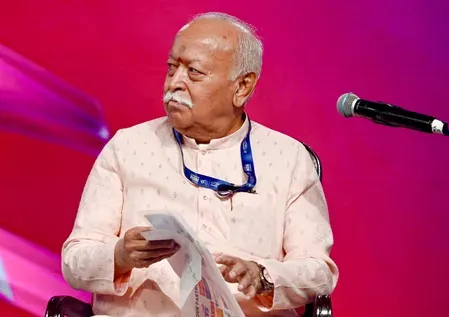
Mohan Bhagwat's New York address wasn't a political rally — it was a quiet rebranding exercise. By framing the RSS as a 'volunteer manufacturing' organisation focused on local capacity-building, sustainability, and universal human unity, Bhagwat appears to be pitching the century-old organisation's model to an international audience on terms that resonate well beyond its traditional base.
Key Takeaways
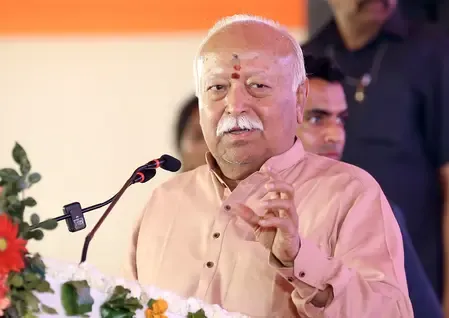
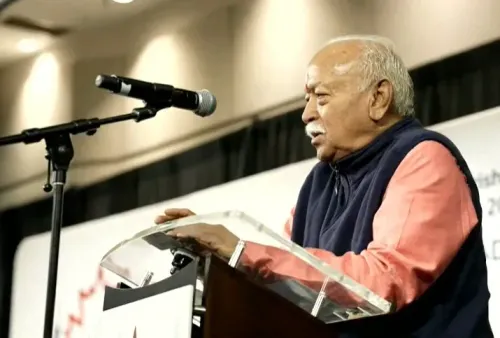
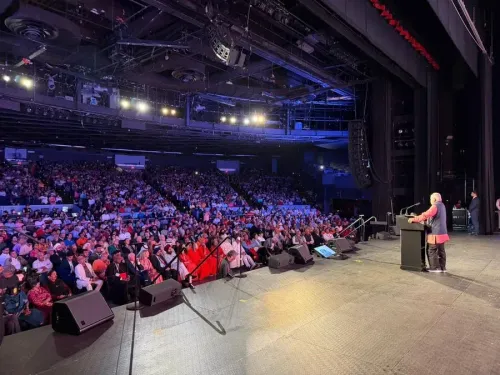
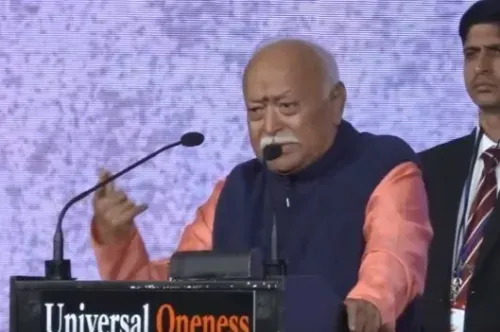
RSS Sarsanghchalak Mohan Bhagwat addressed Indian-American community members in New York on 29 August .
Bhagwat described the RSS as a 'manufacturing of karyakarta' — a people-development organisation whose volunteers then drive community work.
Jagdish Sewhani , president of the American India Public Affairs Committee , called it the most memorable address he had heard in nearly 40 years in the US.
Anurag Mairal of Sewa Bay Area and Stanford School of Medicine highlighted Bhagwat's emphasis on local capacity-building and universal human unity.
The RSS, founded in Nagpur in 1925 , is currently observing its centenary year ; Bhagwat has served as its chief since 2009 .
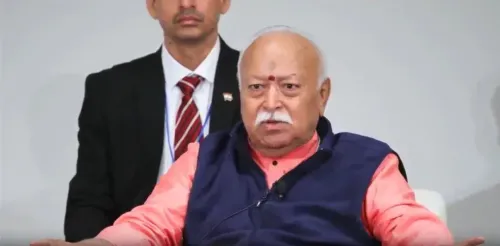
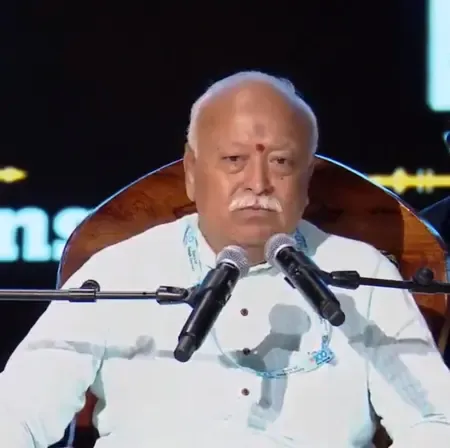
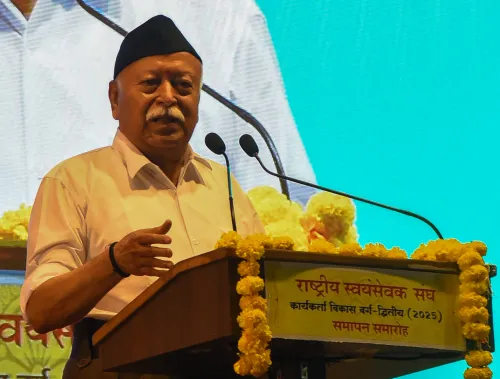
RSS Sarsanghchalak Mohan Bhagwat addressed Indian-American community members in New York on 29 August, drawing widespread appreciation from diaspora leaders for his message on shared humanity, grassroots volunteerism, and the responsibilities of Indians living abroad toward their families, cultural heritage, and the environment. The address came during Bhagwat's ongoing US visit, which has included multiple engagements centred on Rashtriya Swayamsevak Sangh (RSS) philosophy, Hindu thought, and universal human unity.
Key Themes of the Address
Community leaders who attended the event said Bhagwat explained the RSS's work in accessible language, describing the organisation's core function as the development of committed volunteers — or karyakartas — who then go on to serve in various capacities. He also spoke about Bharat, Sanatan traditions, and the role the Indian diaspora could play in the United States. Sustainability, family life, and individual responsibility were among the other themes highlighted by attendees.
Jagdish Sewhani, president of the American India Public Affairs Committee, called it the most memorable address he had heard in nearly four decades in the United States. 'Today is the most memorable day of my life,' Sewhani said. 'I've been here for almost 40 years, and I have listened to, you name the leader, all over the world.' He added that Bhagwat described what the Bharatiya diaspora could contribute to American society 'in very, very simple words, very amazing.'
RSS as a 'Volunteer Manufacturing' Organisation
Sewhani quoted Bhagwat as describing the RSS in a single memorable phrase: 'RSS is a manufacturing of karyakarta, and then it is up to karyakartas to do.' This framing — positioning the organisation as a people-development engine rather than a political body — appeared to resonate strongly with an audience that included many listeners unfamiliar with the RSS.
Anurag Mairal, president of the Sewa Bay Area chapter and a professor at Stanford School of Medicine, said Bhagwat's explanation of volunteer development particularly struck him. 'What he was saying was that Sangh focuses on developing people,' Mairal said. 'People who are trained, who become volunteers end up doing various things.' Mairal cited Sewa volunteers' work in health inequity, education equity, and food insecurity as examples of this model in practice.
Unity Across Cultural Differences
Mairal also highlighted Bhagwat's broader message about the commonality of humanity, which he said carried significance beyond the Indian-American community. 'Our cultures may be different, our languages may be different, but we are one people,' Mairal said. 'And unless we come together, we can't really address many of the challenges that we see in our society.' He underscored the emphasis on local capacity-building: 'How do you build capacity locally to solve problems locally? That's actually really, really important.'
Passing Culture to the Next Generation
Rakhi Israni, vice-president of public affairs for Sewa International and a California-based attorney, said the speech stressed the duty of diaspora parents to transmit cultural values to younger generations. 'It's our duty to spend time with our kids so they actually also understand the value that they have,' she said.
Narasimham Desika, a doctor and longtime RSS volunteer, said Bhagwat's references to the three runas — obligations toward family, cultural lineage, and the environment — were among the address's most impactful elements. 'He really emphasised the need to follow those three runas, and I'm so glad that he did that,' Desika said.
Background: RSS at 100
The RSS was founded in Nagpur in 1925 and is currently observing its centenary year. The organisation's volunteers and affiliated bodies are active in education, healthcare, disaster relief, and community service. Bhagwat has led the organisation as Sarsanghchalak since 2009. His US engagements are being closely watched by both supporters and critics as the RSS marks its first century of existence.
Point of View
Or whether it primarily reinforces existing supporters, is the real question. The glowing testimonials from attendees are consistent with a curated audience; a fuller picture would require hearing from Indian-Americans who chose not to attend or who hold reservations about the RSS's domestic record.
NationPress
13 Oct 2026
Frequently Asked Questions
What did RSS chief Mohan Bhagwat speak about in New York?
Bhagwat addressed Indian-American community members on 29 August in New York, speaking about shared humanity, the RSS's volunteer-development model, Sanatan traditions, diaspora responsibility, sustainability, and family values. He described the RSS as an organisation focused on 'manufacturing karyakartas' — trained volunteers who then serve communities in various capacities.
Who attended Mohan Bhagwat's New York event?
The event drew Indian-American community leaders including Jagdish Sewhani, president of the American India Public Affairs Committee; Anurag Mairal, a Stanford School of Medicine professor and Sewa Bay Area president; attorney Rakhi Israni of Sewa International; and doctor Narasimham Desika, a longtime RSS volunteer.
What is the RSS and why is it observing a centenary?
The Rashtriya Swayamsevak Sangh (RSS) is a Hindu nationalist volunteer organisation founded in Nagpur in 1925, making 2025 its centenary year. It operates through affiliated bodies in education, healthcare, disaster relief, and community service, and is led by Mohan Bhagwat as Sarsanghchalak since 2009.
What did Anurag Mairal say about Bhagwat's speech?
Mairal, a professor at Stanford School of Medicine and president of Sewa Bay Area, said Bhagwat's explanation of how the RSS develops volunteers resonated strongly with him. He cited Sewa volunteers' work in health inequity, education equity, and food insecurity as real-world examples of the model, and highlighted Bhagwat's message that communities must build local capacity to solve local problems.
What are the 'three runas' Bhagwat referenced in his address?
According to attendee Narasimham Desika, Bhagwat spoke about three runas — obligations or debts — that individuals owe toward their family, cultural lineage, and the environment. Desika described this as one of the most impactful elements of the address.