Mohan Bhagwat in New York: 'How much we distribute is important'
Synopsis
At a New York gathering, RSS chief Mohan Bhagwat reframed the meaning of success — not by how much one earns, but by how much one gives back. Citing the Upanishads, farmers, and doughnuts in the same breath, he made a case for collective interdependence that cuts against the grain of individualist achievement culture.
Key Takeaways
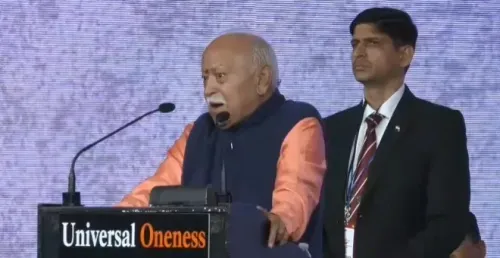
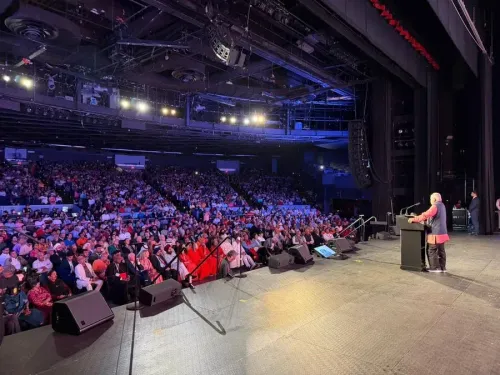
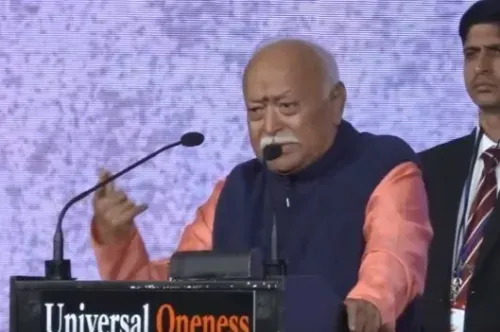
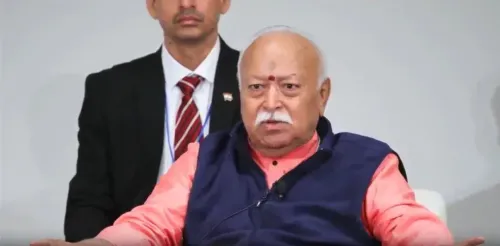
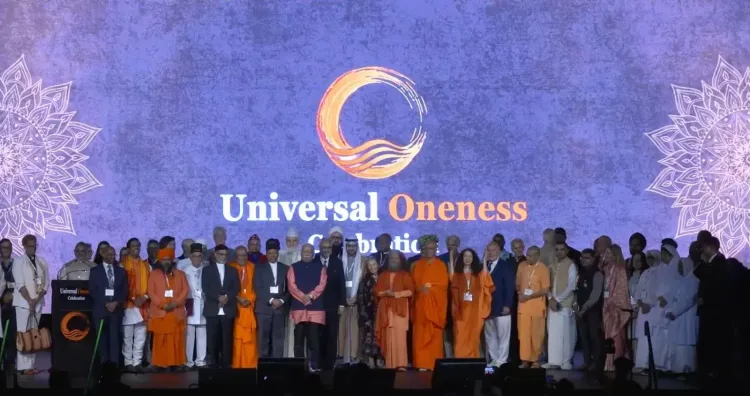
RSS chief Mohan Bhagwat addressed the Universal Oneness Celebration in New York on 30 August .
He argued that distribution of wealth matters more than its accumulation: ‘How much we earn is not important.
How much we distribute is important.’ Bhagwat cited the Upanishads to note that Indian tradition endorses material success but does not treat it as life’s sole purpose.
He said every individual owes their capacity to thrive to parents, farmers, and labourers — making giving back a moral obligation, not a choice.
Material happiness, he said, is ‘transitory’ and ultimately incapable of providing lasting satisfaction.
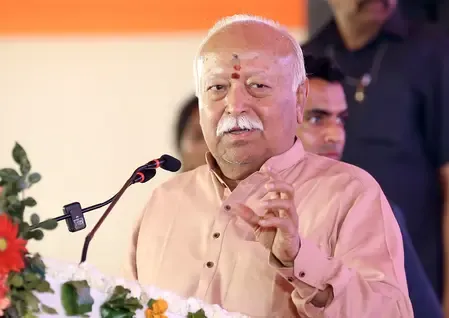
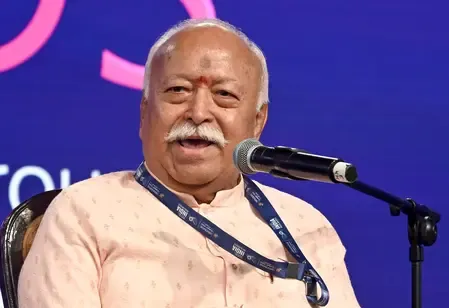
Rashtriya Swayamsevak Sangh (RSS) chief Mohan Bhagwat on 30 August called on people to look beyond personal wealth and material success, arguing that the true measure of a life well lived is how much one gives back to society. Addressing the Universal Oneness Celebration at Garden in New York, Bhagwat drew on Indian philosophical traditions, everyday analogies, and the idea of collective interdependence to make his case.
The Core Message: Distribution Over Accumulation
Bhagwat opened with a pointed challenge to conventional notions of success. “How much we earn is not important. How much we distribute is important,” he said. He questioned whether a career should be measured solely by financial gain or material comfort, while acknowledging that prosperity itself is not something Indian tradition rejects.
“You think of career. Is career only money? Is career only material happiness? It is not denied,” he said, drawing a careful distinction between pursuing wealth and treating it as life’s sole end.
Upanishads, Farmers and the Debt We Owe
Bhagwat grounded his argument in classical Indian thought, noting that even the Upanishads do not counsel a rejection of material achievement. “Even our Upanishads tell us that don’t go only after liberation. You have to achieve material success also,” he said.
He then turned to the question of self-reliance, arguing that no individual is truly self-made. Every person, he said, owes their capacity to thrive to parents, farmers, labourers, and countless others they may never encounter. “Who gave us this body, our parents. Food you eat. There is some agriculture in the world. That is why you can eat. If farmers stop farming, what will you eat?” he asked.
He extended the argument to clothing and everyday necessities: “You are wearing your clothes because there are mills. Labourers are working. Cotton growing farmers are still there.” His conclusion was direct: “We owe everything to someone else. We take from the world. And so we have to give back.”
Why Material Happiness Alone Falls Short
Bhagwat argued that the pursuit of material pleasure cannot deliver lasting satisfaction, illustrating the point with a characteristically self-deprecating example. “If I like, what should I say, doughnuts in New York. So I will eat doughnuts. How many doughnuts I can eat at a time? I don’t know. I am a diabetic,” he said, drawing laughter from the audience.
“Tomorrow morning I am ready to eat 50 more. So the material happiness is transitory, cannot satisfy, and if abundance of material happiness is there, it may fail also,” he added. The point, he said, is that human beings possess a unique capacity to reason about the consequences of their choices — and that capacity must be directed outward, not only inward.
The Responsibility of Thought
Bhagwat framed right thinking as the dividing line between a life of service and one of self-absorption. “You can think, but in what way you think, that is important. If you think in right way, you go nearer to God. If you think in wrong way, you go nearer to the animal kingdom,” he said.
He concluded with a call for a way of living in which personal needs are met without neglecting the welfare of others and the natural world. “We have to care for each other. We have to care so that my life is sustaining life. I sustain others. I live and not merely let live. Make others live. That is the message,” he said.
Bhagwat’s New York address is part of a broader engagement with the Indian diaspora and international audiences, where the RSS has increasingly sought to articulate its philosophical positions on social responsibility and civilisational values.
Point of View
He chose to foreground obligation over achievement. That is a deliberate rhetorical choice. The RSS has long sought to position itself as a civilisational voice rather than a purely political one, and international platforms like this serve that project. Whether the message lands differently in New York than it would in Nagpur is the more interesting question mainstream coverage tends to skip.
NationPress
15 Oct 2026
Frequently Asked Questions
What did Mohan Bhagwat say at the New York event?
RSS chief Mohan Bhagwat urged people to prioritise giving back to society over accumulating personal wealth, saying ‘How much we earn is not important. How much we distribute is important.’ He spoke at the Universal Oneness Celebration in New York on 30 August.
What is the Universal Oneness Celebration where Bhagwat spoke?
The Universal Oneness Celebration is a gathering held in New York at which Bhagwat addressed themes of social responsibility, collective interdependence, and Indian philosophical values. It forms part of the RSS’s broader engagement with the Indian diaspora abroad.
How did Bhagwat use Indian tradition to support his argument?
Bhagwat cited the Upanishads to argue that Indian tradition does not reject material success but treats it as one part of human life, not its entire purpose. He said the texts counsel achieving material success alongside spiritual growth, not instead of it.
Why did Bhagwat say no one is truly self-made?
He argued that every person depends on parents for their body, farmers for food, and labourers for clothing and other necessities — most of whom they will never meet. That web of dependence, he said, creates a moral obligation to give back to society.
What did Bhagwat say about material happiness?
Bhagwat said material happiness is ‘transitory’ and ultimately incapable of lasting satisfaction, using the example of eating doughnuts to illustrate that physical pleasures have natural limits and can even become harmful in excess.