RSS chief Mohan Bhagwat calls for Antyodaya-led growth at Yavatmal event
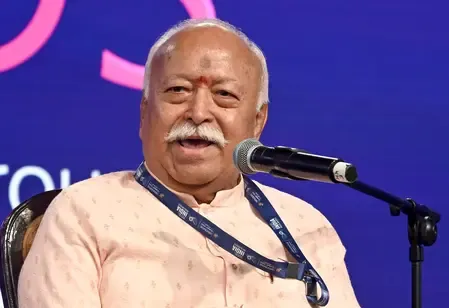
Synopsis
At a Yavatmal event honouring Pandit Deendayal Upadhyaya, RSS chief Mohan Bhagwat spelled out six minimum guarantees — food, clothing, shelter, education, healthcare, and social capability — that every Indian must have, warning that growth which bypasses the poorest is no growth at all.
Key Takeaways
RSS chief Mohan Bhagwat spoke at a Deendayal Seva Pratishthan event in Yavatmal on 29 September 2026 .
He reaffirmed the philosophy of Antyodaya and Integral Humanism (Ekatma Manav Darshan) associated with Pandit Deendayal Upadhyaya .
Bhagwat outlined six fundamental necessities — food, clothing, shelter, basic education, healthcare, and social capability — as non-negotiable for every citizen.
He warned that if development does not reach the marginalised, policymakers must rethink the entire development model.
On agriculture, he cautioned against over-reliance on chemical farming and advocated sustainable, nature-aligned practices.
He framed national prosperity as inseparable from global well-being, saying no one can be truly happy while suffering persists around them.
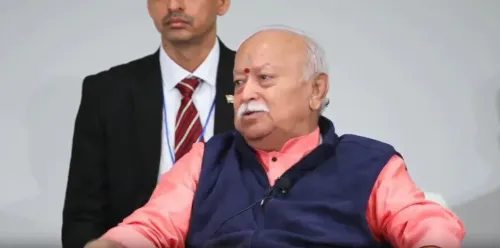
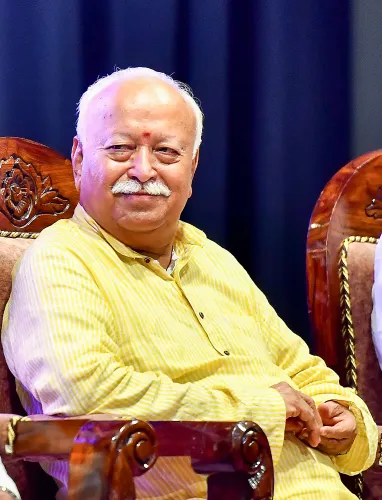
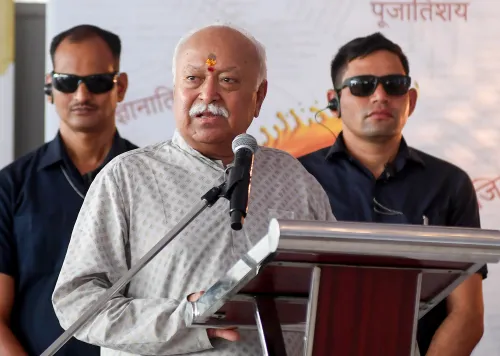
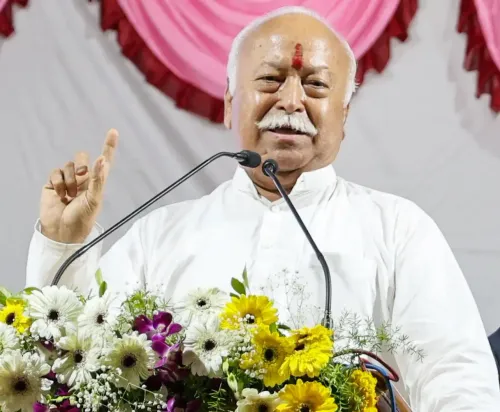
Rashtriya Swayamsevak Sangh (RSS) chief Mohan Bhagwat on 29 September 2026 stressed that economic progress is hollow unless it reaches the poorest and most marginalised citizens, reaffirming the foundational principles of Integral Humanism (Ekatma Manav Darshan) and the concept of Antyodaya at an event in Yavatmal, Maharashtra. Bhagwat was speaking at a programme organised by the Deendayal Seva Pratishthan to mark the birth anniversary of Pandit Deendayal Upadhyaya.
The Core Message: Narrowing the Development Gap
Acknowledging the scale of India's development challenge, Bhagwat conceded that uniform growth across a vast nation is not immediately achievable. However, he argued that the distance between the most prosperous and the most deprived must be reduced to the barest minimum.
'People may argue that in a vast country like India, everyone cannot reach the same level of growth simultaneously. That perspective is acceptable, but the gap between the highest and lowest levels of development must be kept to an absolute minimum,' Bhagwat observed.
He went further, asserting that if growth fails to percolate to marginalised communities, policymakers bear the responsibility to redesign the development model entirely and place the poorest individuals at the centre of planning.
Six Minimum Guarantees Every Citizen Deserves
Drawing a distinction between historical poverty and contemporary deprivation, the RSS chief argued that even economically underprivileged households in ancient India retained access to life's essentials. He outlined six fundamental necessities that every individual must be guaranteed: Food (adequate nutrition), Clothing, Shelter, Basic Education, Healthcare, and Social Capability — defined as the financial capacity to extend hospitality to guests and monks.
'In our country's history, even the poor were not deprived of these six essentials. They had enough to sustain a dignity-filled life,' he said, calling on modern economic models to treat these as non-negotiable minimums for all citizens.
Agriculture as Social Responsibility, Not Commerce
Turning to farming, Bhagwat cautioned against treating agriculture purely as a commercial or production-driven activity. He urged a shift toward sustainable practices aligned with natural harmony and warned against over-reliance on chemical farming — a concern that resonates strongly in the agrarian belt of Vidarbha, where Yavatmal is located and where farmer distress has historically been acute.
A Global Frame for National Progress
Concluding his address, Bhagwat situated India's development goals within a broader humanitarian context. 'No one can be truly happy in this world as long as suffering exists around us. To make our country prosperous and happy, every single citizen within it must be empowered,' he said.
The remarks come at a time when income inequality in India has attracted renewed scrutiny, with multiple economic surveys flagging the widening gap between the country's top earners and its bottom quintiles. Bhagwat's invocation of Upadhyaya's Antyodaya philosophy signals the RSS's continued effort to frame the organisation's social agenda in the language of last-mile inclusion.
Point of View
Or remains in the realm of moral exhortation, will determine whether this speech is remembered as a landmark or a ritual.
NationPress
30 Sept 2026
Frequently Asked Questions
What did RSS chief Mohan Bhagwat say at the Yavatmal event?
Mohan Bhagwat emphasised that true national development is meaningless if it does not reach the poorest citizens, reiterating the Antyodaya philosophy of Pandit Deendayal Upadhyaya. He outlined six basic necessities — food, clothing, shelter, education, healthcare, and social capability — that every Indian must be guaranteed.
What is Antyodaya and why did Bhagwat invoke it?
Antyodaya is a concept rooted in the philosophy of Pandit Deendayal Upadhyaya meaning 'upliftment of the last person.' Bhagwat invoked it to argue that development indices must be measured from the bottom up, not just by aggregate growth figures.
What are the six essentials Bhagwat outlined?
The six essentials Bhagwat listed are: adequate food (nutrition), clothing, shelter, basic education necessary for life, access to healthcare, and social capability — defined as the financial means to extend hospitality to guests and monks, reflecting a dignity-based standard of living.
Why is Bhagwat's speech significant for Indian politics and policy?
The speech comes as income inequality in India faces fresh scrutiny from economists and global surveys. By calling on policymakers to redesign development models if they fail the poorest, Bhagwat is raising the accountability bar in a language rooted in the BJP's own ideological tradition, making it harder to dismiss.
What did Bhagwat say about agriculture?
Bhagwat cautioned against treating farming purely as a commercial activity and warned of the dangers of over-reliance on chemical farming, calling instead for sustainable, nature-aligned agricultural practices. His remarks carry particular weight in Vidarbha, a region historically marked by severe agrarian distress.