Karan Bilimoria at Kautilya Conclave 2026: India's diversity a unique global edge
Synopsis
At the Kautilya Economic Conclave 2026, British Indian peer Karan Bilimoria made a case that India's real competitive edge isn't just its billion-plus population — it's the unmatched combination of 22 official languages, thousands of dialects, and a creative economy tied to millions of SMEs, in a sector that accounts for 6% of global GDP.
Key Takeaways
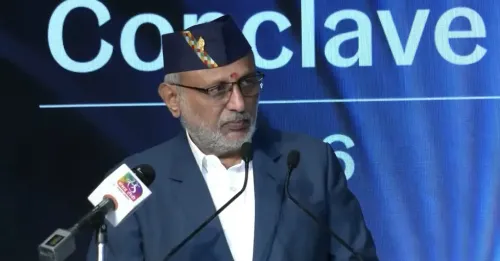
Karan Bilimoria , Baron Bilimoria and UK House of Lords member, spoke at the Kautilya Economic Conclave 2026 in New Delhi on Monday, 5 October 2026 .
He argued India's strength rests on three pillars: scale , demography , and diversity — with diversity spanning language, religion, terrain, food, music, and dance.
India has 22 official languages and thousands of dialects, which Bilimoria called globally unmatched.
The global creative economy accounts for approximately 6 per cent of global GDP ; India holds a significant share through film, media, and SMEs.
Bilimoria said India's film industry extends well beyond Bollywood , with regional industries adding substantially to the creative economy.
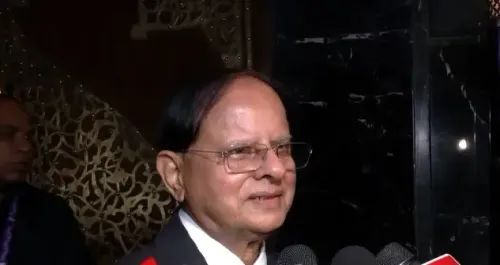
Karan Bilimoria, Baron Bilimoria and Member of the House of Lords of the United Kingdom, on Monday declared that India's demographic scale, cultural diversity, and expanding creative economy together give the country a distinctive and unmatched advantage on the global stage. Speaking at the Kautilya Economic Conclave 2026 in New Delhi, the British Indian businessman argued that conventional macroeconomic metrics alone do not capture the true depth of India's economic potential.
Beyond GDP: Culture as Economic Strength
Bilimoria noted that policy discussions on investment and growth tend to fixate on indicators such as GDP growth, per capita income, and geopolitical positioning, while underestimating the role culture plays in shaping a nation's underlying resilience. He contended that India's strength is not reducible to its status as the world's most populous country, but is reinforced by two additional and underappreciated pillars: demography and diversity.
"India's strength is not just in its scale, being the most populous country in the world, but it has two other things: demography, diversity. The diversity of India, whether it's in language, whether it's in race, whether it's in religion, whether it's in terrain, whether it's in food, whether it's in different cultures, whether it's music, dance, all over this country is beyond compare. No other country comes close to it," Bilimoria said.
The Scale of India's Diversity
Bilimoria highlighted the breadth of India's diversity spanning 22 official languages, thousands of dialects, multiple religions, distinct regional geographies, cuisines, music traditions, and dance forms. He emphasised that this mosaic is not merely a social characteristic but an economic asset that few nations can replicate. According to him, India's cultural diversity is globally unmatched and represents a structural source of competitive strength.
Creative Economy: An Underestimated Driver
The British Indian peer also drew attention to the potential of India's creative industries and media sector, arguing that the country's film industry extends well beyond Bollywood. Regional film industries across different states, he said, contribute meaningfully to India's creative economy alongside millions of small and medium-sized enterprises (SMEs) linked to cultural production.
Bilimoria noted that the global creative economy accounts for approximately 6 per cent of global GDP, and that India commands a significant share of creative activity within its own economy. "India has huge power in the creative industries, let alone the media sector," he said. This comes amid growing international recognition of India's soft power, with Indian cinema, music, and digital content finding growing audiences worldwide.
India's Distinctive Global Position
Bilimoria concluded that India's combination of scale, youthful demography, unparalleled diversity, and creative capabilities places it in a position no other country occupies. Notably, his remarks arrive at a time when India is actively positioning itself as a global economic and cultural leader, with policymakers increasingly referencing soft power alongside manufacturing and services in growth narratives.
The Kautilya Economic Conclave, named after the ancient Indian strategist, is a prominent platform for economic and policy discourse, drawing business leaders, policymakers, and international voices to debate India's growth trajectory.
Point of View
But it also risks being aspirational rather than actionable. The creative economy's 6% share of global GDP is a compelling number, yet India has no unified policy framework to systematically monetise its cultural diversity at scale — regional film industries, for instance, remain chronically underfunded relative to their cultural reach. The deeper question is whether diversity, which has historically also been a source of political friction, can be harnessed as a durable economic asset without the governance structures to support it. Soft power narratives need hard institutional follow-through to move markets.
NationPress
5 Oct 2026
Frequently Asked Questions
What did Karan Bilimoria say at the Kautilya Economic Conclave 2026?
Karan Bilimoria said India's diversity, demography, and creative economy give it a unique and unmatched global advantage that goes beyond conventional macroeconomic indicators. He argued that India's 22 official languages, thousands of dialects, and rich cultural traditions represent an underappreciated economic asset.
What is the Kautilya Economic Conclave 2026?
The Kautilya Economic Conclave is a prominent annual policy and economic forum held in New Delhi, named after the ancient Indian strategist Kautilya. It brings together business leaders, policymakers, and international voices to discuss India's economic trajectory and global positioning.
How large is the global creative economy according to Bilimoria?
Bilimoria cited the global creative economy as accounting for approximately 6 per cent of global GDP, with India holding a significant share through its film industries, media sector, and millions of small and medium-sized enterprises linked to cultural production.
Who is Karan Bilimoria?
Karan Bilimoria, formally known as Baron Bilimoria, is a British Indian businessman and a Member of the House of Lords of the United Kingdom. He is widely recognised as a prominent voice on India-UK economic and cultural ties.
Why does Bilimoria say India's diversity matters economically?
Bilimoria argues that diversity in language, religion, geography, food, music, and culture is not merely a social characteristic but a structural economic strength that no other country can replicate. He contends this, combined with India's youthful demography and creative industries, gives India a distinctive global position.