VP Radhakrishnan: India's economic resilience hinges on inclusive growth
Synopsis
Vice-President C.P. Radhakrishnan used the 5th Kautilya Economic Conclave to make a pointed argument: India's 7.8% GDP growth is meaningful only if it reaches every citizen. With 25 crore lifted from poverty and the JAM stack cited as proof of concept, he framed inclusion not as charity — but as the foundation of genuine economic resilience.
Key Takeaways
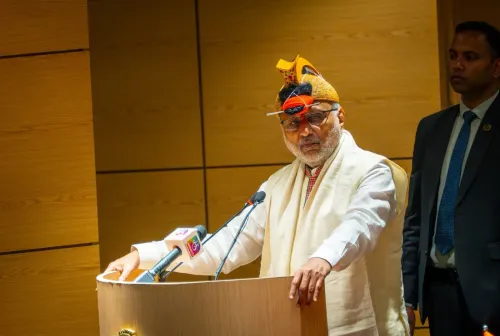
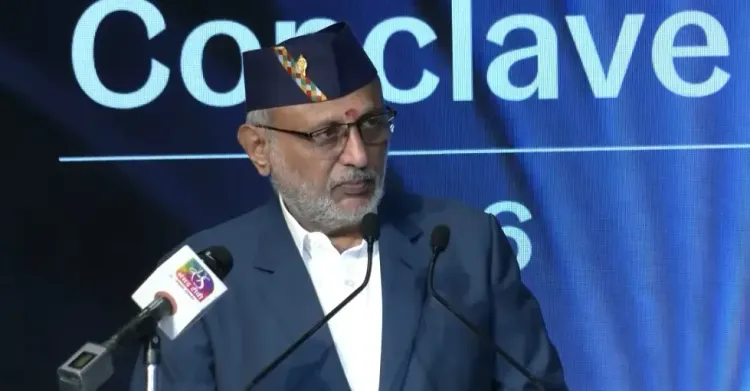
Radhakrishnan delivered the inaugural address at the 5th Kautilya Economic Conclave in New Delhi on 3 October 2026 .
He argued that GDP alone cannot measure development — inclusive growth reaching every citizen and region is the true test of economic resilience.
Radhakrishnan placed women's empowerment — particularly access to education — at the core of the inclusive growth agenda.
He cited the Jan Dhan-Aadhaar-Mobile (JAM) architecture as a model for using social inclusion to strengthen economic resilience.
More than 25 crore Indians have moved out of poverty over the past decade, according to the Vice-President.
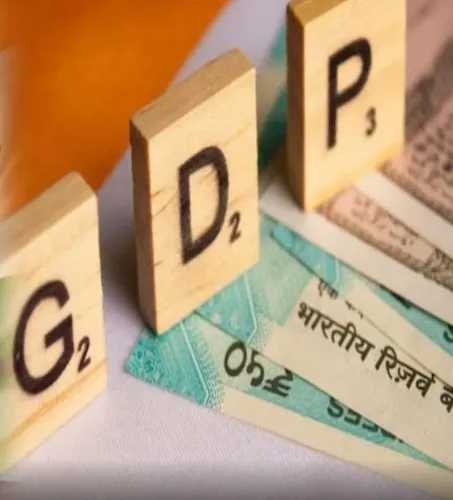
India's real GDP grew 7.8% in Q1 FY 2026-27 , reaching ₹81.36 lakh crore , up from ₹75.46 lakh crore in Q1 FY 2025-26.
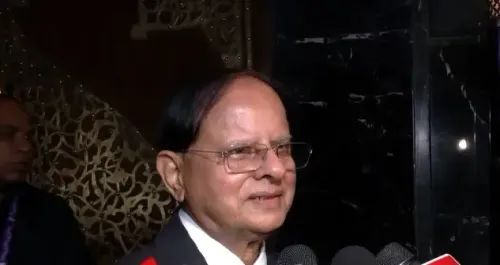
Vice-President C.P. Radhakrishnan on Saturday, 3 October 2026, said that India's long-term economic resilience will ultimately depend on whether the benefits of growth reach every citizen and every region — not merely whether headline GDP numbers impress. Speaking at the 5th Kautilya Economic Conclave in New Delhi, he argued that prosperity measured only at the national aggregate level risks leaving the most vulnerable behind.
Inclusive Growth as the True Measure
'The true measure of resilience is our ability to ensure that no citizen, no region is left behind. GDP alone cannot be the measure of development,' Radhakrishnan said in his inaugural address. He positioned inclusion not as a welfare add-on but as a structural precondition for durable economic strength, stating that 'inclusion can become an instrument of resilience.'
He cautioned policymakers against viewing resilience solely through the lens of financial markets or large infrastructure projects. Social inclusion, he argued, directly enhances an economy's ability to absorb and withstand external shocks — making it a macroeconomic, not merely a moral, imperative.
Women's Empowerment at the Centre of the Agenda
Radhakrishnan placed women's participation prominently within this inclusive vision. He argued that expanding access to education and economic opportunities would enable women to increasingly take on leadership roles across sectors. 'We want to empower the woman, give them the right to education and they will empower themselves,' he said. This framing positions gender equity as both a social and an economic growth lever.
JAM Architecture and Poverty Reduction
The Vice-President cited the Jan Dhan-Aadhaar-Mobile (JAM) architecture as a concrete illustration of how social inclusion can reinforce economic resilience. The JAM stack, he noted, enabled broader financial inclusion and more efficient direct benefit transfers — reducing leakage while expanding the base of formal financial participation.
He also stated that more than 25 crore Indians had moved out of poverty over the past decade, and described the Goods and Services Tax (GST) as India's most significant tax reform to date. The Vice-President acknowledged that India is actively transitioning from a developing economy toward its stated ambition of becoming a fully developed economy, underscoring that policymakers must track inclusivity metrics alongside headline growth figures.
GDP Growth Context
India's real GDP grew by 7.8% in Q1 FY 2026-27, up from 6.9% in Q1 FY 2025-26, according to available data. In absolute terms, real GDP at constant prices stood at ₹81.36 lakh crore in Q1 FY 2026-27, compared with ₹75.46 lakh crore in the corresponding quarter of the previous year — an expansion that Radhakrishnan framed as an opportunity to deepen, not defer, the inclusivity agenda.
What Comes Next
The Kautilya Economic Conclave serves as a high-profile platform for shaping policy discourse, and remarks made in inaugural addresses often set the tone for working-group deliberations that follow. With India's growth rate accelerating and the Viksit Bharat vision gaining momentum, pressure is likely to mount on both central and state governments to demonstrate that economic gains are translating into measurable improvements in quality of life for marginalised communities. How that accountability is designed — and whether it extends beyond headline poverty statistics — will be the critical question in the months ahead.
Point of View
Not a byproduct of it — is a substantive reorientation of how growth is publicly justified, but the argument is only as strong as the metrics backing it. The 25-crore poverty-reduction figure is frequently cited without a consistent methodology footnote, and the JAM architecture, while genuinely transformative, has faced documented challenges around exclusion errors. The real test of this vision is whether it moves beyond conclave rhetoric into a measurable policy framework that holds states accountable for distributional outcomes — not just aggregate growth rates. India's accelerating GDP creates exactly the political window to demand that rigour; whether this government uses it remains an open question.
NationPress
3 Oct 2026
Frequently Asked Questions
What did Vice-President C.P. Radhakrishnan say at the Kautilya Economic Conclave 2026?
VP Radhakrishnan said India's economic resilience will depend on whether growth reaches every citizen and region, not just headline GDP figures. He called inclusion 'an instrument of resilience' and highlighted the JAM architecture and women's empowerment as key pillars of this approach.
What is the Kautilya Economic Conclave?
The Kautilya Economic Conclave is a high-profile policy forum that brings together policymakers, economists, and thought leaders to deliberate on major economic themes. The 2026 edition is its fifth iteration and was held in New Delhi.
How much has India's GDP grown in Q1 FY 2026-27?
India's real GDP grew by 7.8% in Q1 FY 2026-27, compared with 6.9% in Q1 FY 2025-26. In absolute terms, real GDP at constant prices stood at ₹81.36 lakh crore, up from ₹75.46 lakh crore in the year-earlier quarter.
What is the JAM architecture and why did Radhakrishnan cite it?
The Jan Dhan-Aadhaar-Mobile (JAM) architecture links bank accounts, biometric identity, and mobile connectivity to enable direct benefit transfers and financial inclusion at scale. Radhakrishnan cited it as evidence that social inclusion policies can directly strengthen an economy's resilience to shocks.
How many Indians have moved out of poverty according to the Vice-President?
Vice-President Radhakrishnan stated that more than 25 crore Indians have moved out of poverty over the past decade. He presented this figure as evidence of progress in inclusive growth, alongside the GST reform and the JAM architecture.