India sustains high growth amid global uncertainty, says PM's Principal Secretary PK Mishra
Synopsis
At the 5th Kautilya Economic Conclave, PM's Principal Secretary PK Mishra argued that resilience is not a luxury but an economic imperative — and that India's diversified supply chains, expanding FTAs, and manufacturing push in electronics, pharma, and semiconductors prove the model works even as global uncertainty deepens.
Key Takeaways
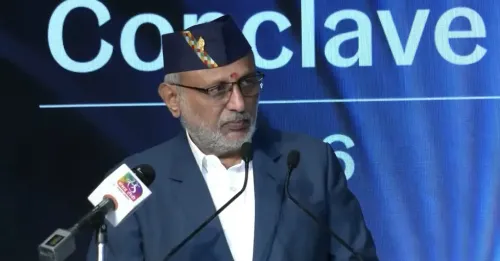
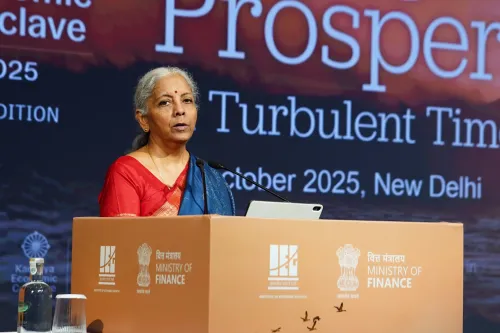
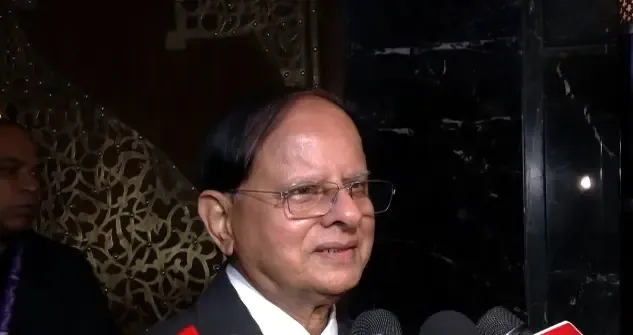
Mishra , Principal Secretary to the Prime Minister , spoke at the 5th Kautilya Economic Conclave in New Delhi on 3 October 2026 .
He said India has maintained a high level of growth amid global uncertainty, citing strong macroeconomic fundamentals .
India has diversified its supply chains, expanded free trade agreements (FTAs) , and scaled manufacturing in electronics , pharma , and semiconductors .
Mishra drew a distinction between risk (quantifiable) and uncertainty (not), warning that the globe faces both simultaneously.
He flagged the Strait of Hormuz crisis and weaponised tariffs as examples of how choke points and trade tools threaten economic stability.
India's goal, he said, is to remain open to the world while reducing vulnerability to shocks and concentration .
India has maintained a high level of economic growth despite mounting global uncertainty, thanks to strong macroeconomic fundamentals — and investing in resilience is not just a strategic choice but an economically rational one, P.K. Mishra, Principal Secretary to the Prime Minister, said on Saturday, 3 October 2026. Mishra made the remarks on the sidelines of the 5th Kautilya Economic Conclave in New Delhi, where he addressed the interplay between economic resilience, global risk, and India's growth trajectory.
India's Macroeconomic Strengths
Mishra underlined that India's primary competitive advantage lies in its robust macroeconomic fundamentals. He said the country has successfully navigated the COVID-19 pandemic and multiple global crises while preserving growth momentum — a feat he attributed to deliberate policy choices rather than circumstance.
'India has maintained a high level of growth and maintained macroeconomic fundamentals,' Mishra said, adding that resilience does carry a cost, but that cost is justified given the scale and frequency of global disruptions.
Diversification as a Strategic Lever
The Principal Secretary pointed to supply chain diversification and expanding trade relationships as cornerstones of India's economic strategy. 'We have been able to diversify our supply chain. We have also been able to have wider trade relationships, more FTAs, and more trade relationships,' he said. He noted that India is simultaneously scaling up its manufacturing capability while remaining open to global commerce — a dual objective of reducing vulnerability without retreating into protectionism.
Mishra cited India's electronics, pharmaceuticals, and semiconductors sectors as concrete examples of this approach bearing fruit. These sectors, he said, illustrate how strategic industrial policy can insulate an economy from external shocks while deepening its integration with global value chains.
Risk vs Uncertainty: A Sharper Distinction
Mishra drew a pointed distinction between risk — which can be quantified and managed — and uncertainty, which cannot. He noted that the global economy is now confronted with both simultaneously, complicating decision-making for policymakers and investors alike. 'Economic decisions are taken not fully knowing what the results will be. There's always an element of risk,' he said.
He referenced the Strait of Hormuz crisis as an illustration of how geographic choke points can quickly become strategic vulnerabilities. He also flagged the increasing use of tariffs as instruments of economic coercion and noted that energy transition costs are being repriced globally alongside other structural shifts.
Globalisation Is Not Over, But Must Evolve
Despite the headwinds, Mishra was clear that deglobalisation is not the answer. 'The question is not whether globalisation has ended, but how do we preserve the gains while making economies less vulnerable to shocks and concentration?' he said. His remarks reflect a broader consensus among Indian policymakers that the country's growth model must balance openness with strategic self-reliance.
This comes amid a period of significant geopolitical realignment, with major economies reassessing supply chain dependencies in the aftermath of the pandemic, the Russia-Ukraine conflict, and escalating US-China trade tensions. India's positioning — as a manufacturing alternative and a growing consumer market — has made it a focal point in this global reconfiguration.
What's Next
With the Kautilya Economic Conclave drawing senior policymakers, economists, and global thinkers, Mishra's address is expected to set a tone for India's articulation of its economic resilience doctrine in multilateral forums. Continued progress in free trade agreements, semiconductor self-sufficiency, and electronics manufacturing will be key metrics to watch in the months ahead.
Point of View
Not established pillars. The reference to the Strait of Hormuz is also telling: Indian policymakers are clearly stress-testing scenarios that most market commentary still treats as tail risks. Whether that foresight translates into concrete hedging strategy — or remains conference-hall wisdom — will define India's actual vulnerability in the next crisis.
NationPress
3 Oct 2026
Frequently Asked Questions
What did PK Mishra say about India's growth at the Kautilya Economic Conclave?
P.K. Mishra, Principal Secretary to the Prime Minister, said on 3 October 2026 that India has maintained a high level of growth amid global uncertainty, driven by strong macroeconomic fundamentals. He argued that investing in economic resilience carries a cost but is economically rational given the scale of global disruptions.
What is the Kautilya Economic Conclave?
The Kautilya Economic Conclave is a high-level economic policy forum that brings together senior Indian policymakers, global economists, and thought leaders. The 5th edition was held in New Delhi, with resilience and globalisation among its central themes.
How is India reducing economic vulnerability, according to PK Mishra?
Mishra highlighted supply chain diversification, expansion of free trade agreements, and scaling up manufacturing in electronics, pharmaceuticals, and semiconductors as India's primary tools for reducing vulnerability while remaining open to global trade.
What global risks did PK Mishra flag at the conclave?
Mishra flagged the Strait of Hormuz crisis as an example of geographic choke points becoming strategic vulnerabilities. He also pointed to the weaponisation of tariffs, the repricing of energy transition costs, and the broader distinction between manageable risk and unquantifiable uncertainty as key global challenges.
What is India's position on globalisation, according to Mishra?
Mishra said India does not believe globalisation has ended, but that its gains must be preserved while making economies less vulnerable to shocks and concentration. India's stated goal is to remain globally open while building strategic self-reliance in critical sectors.