RBI Governor: AI valuation correction may boost India capital inflows
Synopsis
RBI Governor Sanjay Malhotra offered a counterintuitive take at the Kautilya Economic Conclave 2026: a crash in AI-related valuations in the West could actually be good for India, potentially redirecting global capital flows eastward. With five major global financial risks identified — and cyber risk flagged as the most urgent — India's macro resilience is being positioned as a strategic advantage, not just a talking point.
Key Takeaways
RBI Governor Sanjay Malhotra spoke at the Kautilya Economic Conclave 2026 in New Delhi on 3 October 2026 .
A correction in AI-related valuations in advanced economies could redirect capital inflows to India, according to Malhotra.
He identified five global financial risks : AI valuation excesses, elevated global debt, non-bank leverage, private credit exposures, and cybersecurity threats.
Cyber risk was singled out as the most immediate concern for the global financial system.
India's equity markets have seen a correction from elevated levels, described by the Governor as orderly .
India's strong macro fundamentals and resilient bank and non-bank balance sheets were cited as key buffers against external shocks.
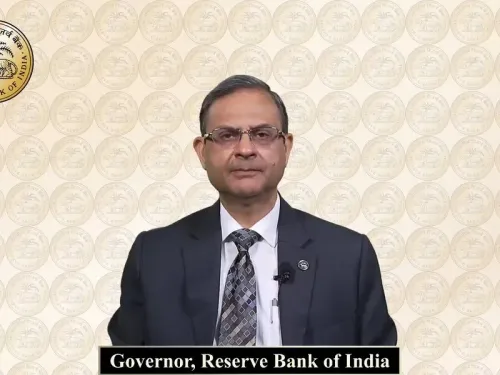
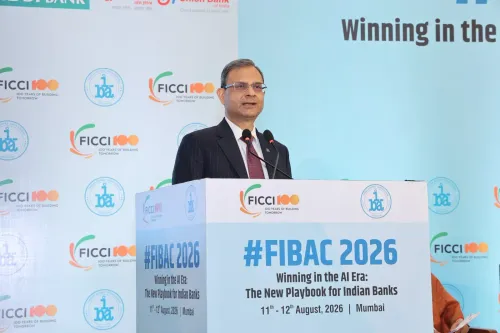
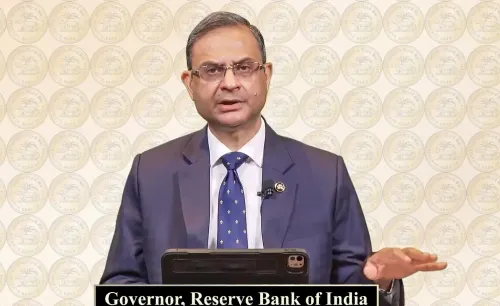
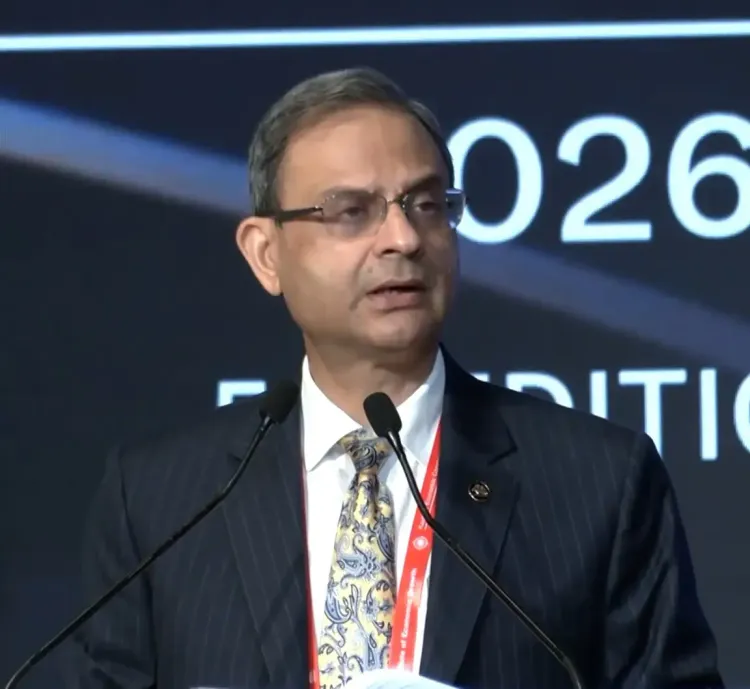
Reserve Bank of India (RBI) Governor Sanjay Malhotra on Saturday, 3 October 2026, said that a correction in inflated artificial intelligence (AI)-related valuations in advanced economies could redirect capital flows towards India, even as a broader global investment slowdown poses headwinds. He was speaking at the Kautilya Economic Conclave 2026 in New Delhi.
AI Boom and the Risk of a Correction
Malhotra acknowledged that the AI investment boom has been among the most significant drivers of global financial markets in recent years. However, he cautioned that any moderation in AI-related investment activity or earnings could trigger a substantial repricing of financial assets tied to the sector.
'If corrections in AI-related valuations were to happen in advanced countries, it may have a positive impact in terms of capital inflows,' Malhotra said, signalling that India's relatively less AI-exposed market structure could make it an attractive destination for reallocated global capital.
India's Equity Markets: An Orderly Adjustment
The RBI Governor noted that Indian equity markets had already undergone a correction from elevated valuations over recent months. Importantly, he characterised the adjustment as orderly — suggesting the domestic financial system absorbed the pressure without systemic disruption. This is consistent with the RBI's broader assessment that India's financial architecture remains robust.
Five Global Financial Risks on the RBI's Radar
Malhotra identified AI-related valuation excesses as one of five key vulnerabilities currently threatening the international financial system. The other four concerns he flagged were:
Elevated global debt levels, leverage in the non-bank financial sector, growing private credit exposures, and cybersecurity threats. Of these, he described cyber risk as the most immediate concern for financial institutions globally and in India.
'It is not that I see any imminent signs of stress, but we need to remain alert to these risks,' Malhotra said, striking a tone of watchful confidence rather than alarm.
India's Resilience: Macro Fundamentals and Balance Sheet Strength
Despite the challenging global backdrop, the Governor stressed that India is navigating this environment from a position of strength. He pointed to sound macroeconomic fundamentals and resilient balance sheets across both banks and non-bank financial institutions as the key buffers.
He acknowledged that India remains exposed to external shocks through commodity prices, global financial conditions, and capital flows, but was unequivocal that the domestic financial system continues to demonstrate resilience. 'Strong macroeconomic fundamentals and the resilience of the financial system provide confidence in our ability to withstand these lingering shocks,' he said.
What to Watch Next
The RBI's framing at the Kautilya Economic Conclave 2026 sets the stage for how policymakers will approach monetary and financial stability decisions in the near term. With global AI valuations still stretched and cybersecurity risks intensifying, markets and investors will watch whether India's capital inflow thesis materialises — and how swiftly the RBI moves to sterilise any surge in foreign capital if it does.
Point of View
But it glosses over the execution risk. Capital inflow surges can be as destabilising as outflows if the RBI lacks the tools to absorb them quickly — and the rupee's sensitivity to FII swings is well documented. More substantively, flagging cybersecurity as the most 'immediate' financial risk, while largely unremarked upon in mainstream coverage, deserves scrutiny: Indian banks and NBFCs have significantly expanded their digital footprints, often faster than their cyber defences. The reassurance that no imminent stress is visible is credible today; the question is whether the early-warning architecture is strong enough to keep it that way.
NationPress
3 Oct 2026
Frequently Asked Questions
What did RBI Governor Sanjay Malhotra say about AI valuations and India?
Malhotra said that if AI-related valuations correct sharply in advanced economies, it could have a positive impact on India by diverting capital inflows toward domestic markets. He made these remarks at the Kautilya Economic Conclave 2026 in New Delhi on 3 October 2026.
What are the five global financial risks identified by the RBI Governor?
The five risks flagged by Malhotra are AI-related valuation excesses, elevated global debt levels, leverage in the non-bank financial sector, growing private credit exposures, and cybersecurity threats. He described cyber risk as the most immediate of these concerns.
Is India at risk from a global AI market correction?
According to Malhotra, India is better positioned than many peers, supported by sound macroeconomic fundamentals and resilient bank and non-bank balance sheets. However, he acknowledged that India remains vulnerable to external shocks via commodity prices, global financial conditions, and capital flows.
How have Indian equity markets performed recently?
The RBI Governor noted that Indian equity markets had already corrected from elevated valuations in recent months, describing the adjustment as orderly. This suggests the domestic financial system absorbed the pressure without systemic stress.
What is the Kautilya Economic Conclave?
The Kautilya Economic Conclave is a high-level economic policy forum held in New Delhi. The 2026 edition brought together policymakers and economists to discuss global and domestic financial challenges, with RBI Governor Sanjay Malhotra among the key speakers.