RBI Governor: India's economy strong despite West Asia, monsoon risks
Synopsis
RBI Governor Sanjay Malhotra is threading a needle — defending India's macro fundamentals while openly flagging two risks that could undo them: a West Asia conflict driving oil above comfort levels and a monsoon that may underdeliver. With the MPC meeting on 3 August and FY27 inflation revised up to 5.1%, the central bank's 'wait and watch' stance is about to face its biggest test.
Key Takeaways
RBI Governor Sanjay Malhotra said India's economic fundamentals remain strong despite West Asia geopolitical tensions and monsoon uncertainty.
India's retail inflation stood at 4.38 per cent in June 2025 , within the RBI's 2–6 per cent tolerance band.
The RBI has kept the benchmark policy rate unchanged at 5.25 per cent in 2025 .
The RBI revised its FY27 CPI inflation forecast upward to 5.1 per cent from 4.6 per cent .
India imports approximately 88 per cent of its crude oil, making the Strait of Hormuz disruption a direct macro risk.
The Monetary Policy Committee meets 3–5 August to decide on interest rates.
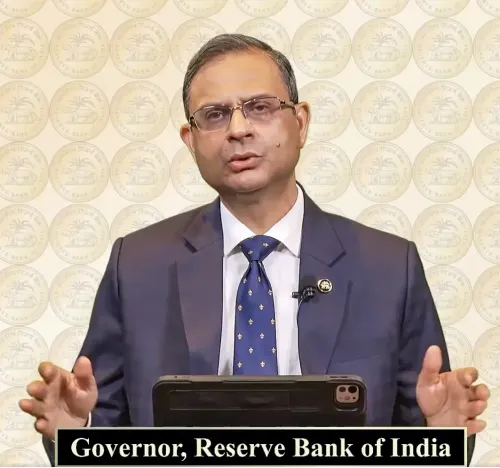
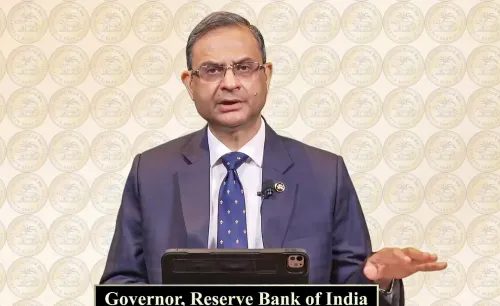
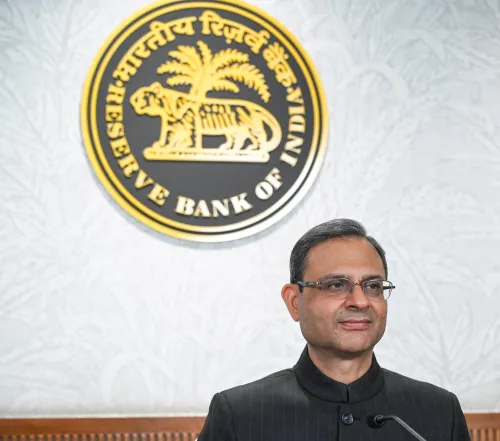
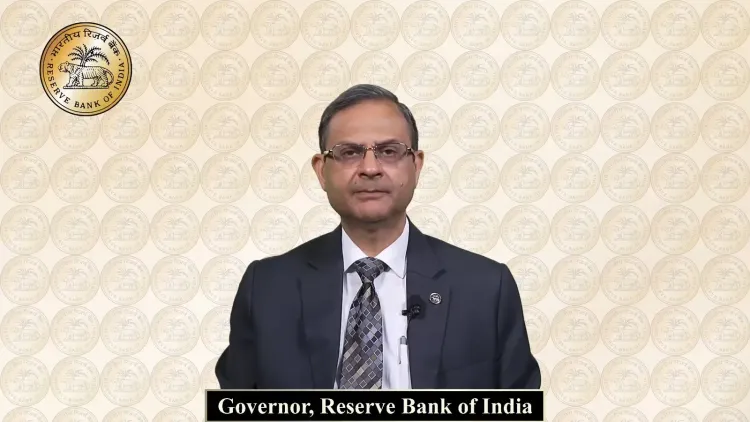
Reserve Bank of India (RBI) Governor Sanjay Malhotra said on Friday, 17 July that India's economic fundamentals remain robust, with growth continuing at a healthy pace even as geopolitical turbulence from the West Asia crisis and the prospect of a weak monsoon cast shadows over the near-term outlook. Speaking in an exclusive interview to Doordarshan, Malhotra acknowledged both the resilience and the vulnerabilities in the current macro environment.
Rupee Performance in Context
Malhotra defended the rupee's performance against a backdrop of a strengthening US dollar. 'After the war in West Asia, the dollar has become strong. The currencies of many countries have weakened. If we look at it from a global perspective, India's rupee situation can be considered normal,' he said. The observation comes as global currency markets remain unsettled, with several emerging-market currencies under significant pressure.
External Sector Resilience
The RBI Governor expressed confidence in India's external sector, pointing to strong services exports, robust remittance inflows, record foreign direct investment (FDI), and new trade agreements as structural buffers. He specifically cited the government's recent steps to ease foreign investment in government securities, the trade deal with the UK, and ongoing negotiations with the European Union and the United States as measures that would bolster the country's balance of payments.
Inflation and Policy Rates
On inflation, Malhotra noted that recent price pressures were 'largely driven by supply-side factors.' India's retail inflation stood at 4.38 per cent in June compared to the same month a year earlier, according to data from the Ministry of Statistics — within the RBI's tolerance band of 2 per cent to 6 per cent, with a midpoint target of 4 per cent. The RBI has kept its benchmark policy rate unchanged at 5.25 per cent this year, balancing growth support with price stability. However, the central bank has revised its FY27 headline CPI inflation projection upward to 5.1 per cent, from an earlier estimate of 4.6 per cent, reflecting heightened risks from global supply chain disruptions and volatile commodity prices.
Oil Prices and Key Risks Ahead
A significant pressure point is global crude oil. With the US and Iran resuming hostilities, oil prices have surged and ship movement through the Strait of Hormuz has come to a near-halt. India imports approximately 88 per cent of its crude oil requirement, making any sustained price escalation a direct threat to the current account deficit and domestic inflation. Malhotra cautioned that policymakers need to remain in a 'wait and watch mode' given these unresolved challenges. The RBI's six-member Monetary Policy Committee (MPC) is scheduled to meet from 3 to 5 August to review interest rates in light of the evolving economic landscape.
Point of View
And the Strait of Hormuz disruption is not a tail risk anymore. India's 88 per cent crude import dependency means an oil shock is simultaneously a fiscal shock, an inflation shock, and a current account shock. The rupee's 'normal' performance relative to peers is cold comfort if oil stays elevated into the monsoon season, which is itself under question. The August MPC meeting will reveal whether 'wait and watch' is a strategy or a delay.
NationPress
15 Oct 2026
Frequently Asked Questions
What did RBI Governor Sanjay Malhotra say about India's economy?
Malhotra said India's economic fundamentals remain strong, with growth continuing at a healthy pace. However, he flagged the West Asia crisis and a potentially weak monsoon as key risks, and urged policymakers to stay in a 'wait and watch mode.'
What is India's current inflation rate and the RBI's target?
India's retail inflation was recorded at 4.38 per cent in June 2025, within the RBI's tolerance band of 2 to 6 per cent. The RBI's midpoint target is 4 per cent, and it has revised its FY27 CPI inflation projection upward to 5.1 per cent from an earlier estimate of 4.6 per cent.
Why is the West Asia conflict a risk for India's economy?
India imports approximately 88 per cent of its crude oil, and the resumption of US-Iran hostilities has pushed global oil prices higher while nearly halting ship movement through the Strait of Hormuz. Sustained oil price escalation would widen India's current account deficit and fuel domestic inflation.
When will the RBI's Monetary Policy Committee next meet?
The RBI's six-member Monetary Policy Committee is scheduled to meet from 3 to 5 August to review the interest rate outlook in light of current economic conditions, including inflation and geopolitical risks.
Why has the RBI kept the repo rate unchanged at 5.25 per cent?
The RBI has maintained its benchmark policy rate at 5.25 per cent this year as it seeks to balance economic growth with price stability. Governor Malhotra indicated that recent inflation pressures are largely supply-driven, which limits the case for aggressive rate action.