RBI Governor Malhotra: India Economy Resilient Amid West Asia Crisis
Synopsis
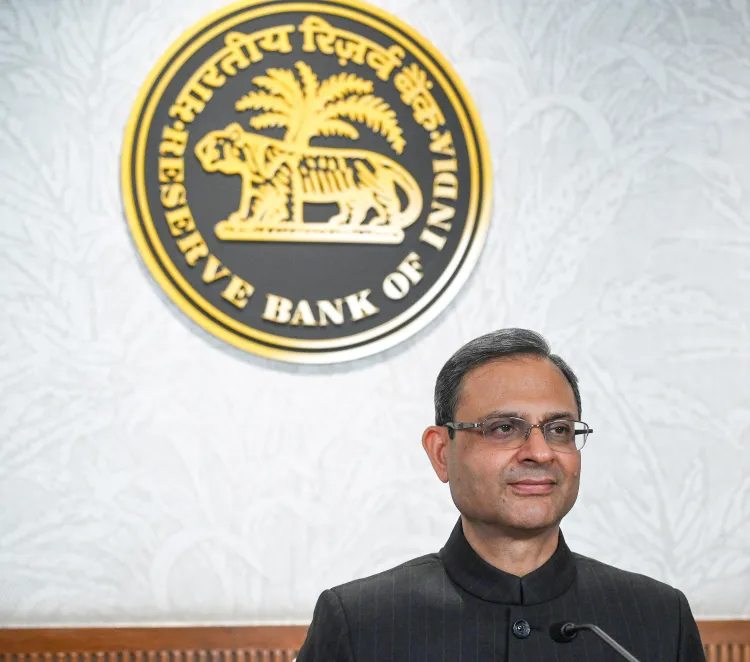
RBI Governor Sanjay Malhotra has warned that the West Asia conflict has darkened the global economic outlook and could shift from a supply shock to a demand shock if supply chains aren't restored quickly — but says India's fundamentals are stronger than in any previous crisis, offering greater resilience against external shocks.
Key Takeaways
RBI Governor Sanjay Malhotra stated in the first RBI Bulletin of FY2026-27 (released April 23, 2025 ) that the West Asia conflict has soured global economic conditions and the growth-inflation outlook.
India's trade deficit narrowed to a nine-month low in the latest reporting period, driven by slower imports and expanding exports.
Net FDI turned positive in February 2025 , signalling continued long-term investor confidence despite global volatility.
CPI inflation edged up marginally in March 2025 , driven by fuel and food prices, while money market and bond yields moderated after a temporary ceasefire in West Asia.
Malhotra warned the current supply shock could transform into a demand shock over the medium term if global supply chain restoration is delayed.
India's macroeconomic fundamentals are described as being on a stronger footing than in previous crisis episodes and relative to many other economies, providing greater resilience to absorb external shocks.
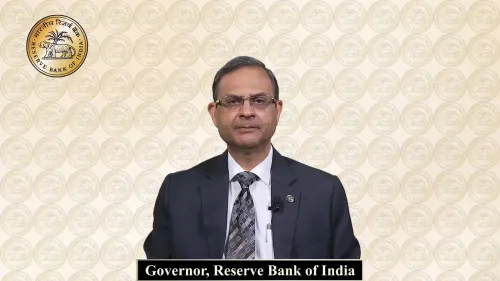
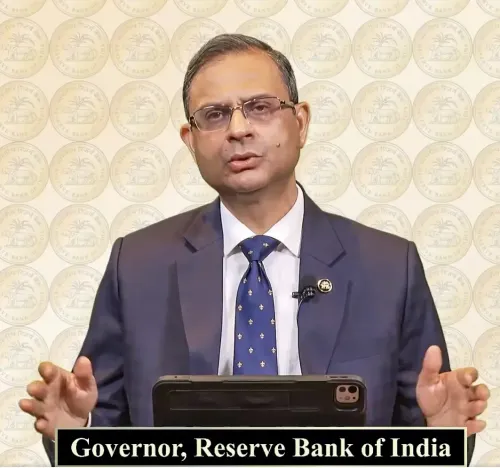
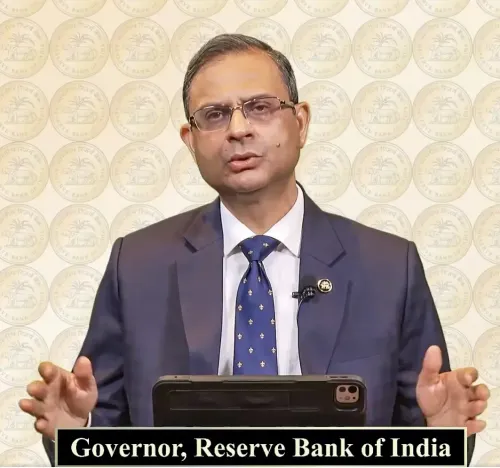
New Delhi, April 23: Reserve Bank of India (RBI) Governor Sanjay Malhotra has stated that the West Asia conflict has significantly deteriorated global economic conditions and sentiment, adversely affecting the growth-inflation outlook worldwide. Writing in the first RBI Bulletin of FY2026-27, Malhotra assured that the central bank would stay vigilant of the rapidly evolving geopolitical situation and frame policies that serve India's economic interests above all else.
West Asia Conflict Strains Global Supply Chains
The escalating West Asia conflict has tightened pressure on global supply chains through March 2025, with only a marginal easing observed in the first half of April. Prior to the outbreak of hostilities, India's macroeconomic fundamentals were on a firm footing, supported by buoyant growth momentum and contained inflation levels.
Governor Malhotra noted that conditions worsened sharply in March as the conflict zone widened and hostilities intensified. He emphasised that India's economic foundation is currently more robust than it was during previous global crisis episodes, and significantly stronger relative to many peer economies — giving the country greater capacity to absorb external shocks.
Global Growth Faces Mounting Downside Risks
The RBI Bulletin highlighted that global growth is confronting increasing downside risks, driven by a sharp surge in energy prices and critical input shortages across multiple industries. These disruptions have stoked inflation fears and elevated the geopolitical risk premium embedded in oil markets.
Malhotra wrote that heightened uncertainty stemming from the ongoing conflict is weighing heavily on the global outlook. Safe-haven capital flows have exerted depreciation pressure on currencies of major economies as the US dollar has strengthened considerably. While prices of commodities such as metals and gold have shown some moderation, financial markets globally have turned significantly more volatile.
Equity markets registered a broad-based correction across geographies. Sovereign bond yields, already elevated due to long-run fiscal sustainability concerns and inflation fears, have hardened further across major economies, adding to borrowing cost pressures worldwide.
India's Domestic Economy Shows Resilience
Despite global headwinds, domestic economic activity displayed resilience across many segments, even as a few others recorded some slowdown. CPI inflation, driven primarily by fuel and food prices, edged up marginally in March 2025.
Money market and bond yields in India moderated following the temporary ceasefire announced in West Asia. On the trade front, a slowdown in imports combined with an expansion in exports helped narrow the trade deficit to a nine-month low — a significant positive signal for the current account balance.
Foreign Portfolio Investment (FPI) flows remained volatile during this period, though net Foreign Direct Investment (FDI) turned positive in February 2025, reflecting sustained long-term investor confidence in the Indian economy.
Supply Shock Could Morph Into Demand Shock: RBI Warning
Governor Malhotra sounded a cautionary note, warning that the initial supply-side shock triggered by the West Asia conflict could potentially transform into a broader demand shock over the medium term if the restoration of disrupted supply chains is delayed significantly.
This is a critical distinction — a supply shock raises prices but leaves demand intact, whereas a demand shock contracts economic activity more deeply and is harder to reverse through conventional monetary policy tools. The RBI's concern signals that policymakers are already stress-testing scenarios beyond the immediate crisis.
Notably, this comes at a time when the RBI has been navigating a delicate balance between supporting growth and managing inflation. The central bank had already pivoted toward an accommodative stance in early 2025, and any escalation of the West Asia crisis could complicate that trajectory significantly.
What This Means for India's Economy Going Forward
India's relatively stronger macroeconomic position — characterised by improving fiscal consolidation, a narrowing current account deficit, and robust foreign exchange reserves — provides a meaningful buffer compared to many emerging market peers. However, prolonged conflict and sustained high crude oil prices remain the single biggest external risk for an import-dependent economy like India.
The RBI is expected to closely monitor incoming data on inflation, rupee movement, and capital flows in the coming weeks. Market participants will be watching the next Monetary Policy Committee (MPC) meeting for guidance on whether the central bank adjusts its policy stance in response to the evolving geopolitical and macroeconomic landscape.
Point of View
Not reactively. India's stronger fundamentals are real, but they are not a shield — they are a buffer with a finite capacity. The true test will come if crude oil sustains above $100 and the rupee comes under renewed pressure, squeezing the very inflation-growth balance the RBI has worked hard to restore.
NationPress
24 Sept 2026
Frequently Asked Questions
What did RBI Governor Sanjay Malhotra say about the West Asia conflict?
RBI Governor Sanjay Malhotra stated that the West Asia conflict has worsened global economic conditions and adversely impacted the growth-inflation outlook. He said the RBI will remain vigilant and implement policies that prioritise India's economic interests.
How is India's economy performing amid the West Asia crisis?
India's economy has shown resilience, with the trade deficit narrowing to a nine-month low and net FDI turning positive in February 2025. However, CPI inflation edged up marginally in March due to fuel and food price pressures.
What is the RBI's concern about a supply shock turning into a demand shock?
Governor Malhotra warned that if global supply chain disruptions caused by the West Asia conflict persist, the initial supply shock could evolve into a demand shock over the medium term. A demand shock is more damaging as it contracts overall economic activity and is harder to reverse.
How has the West Asia conflict affected global financial markets?
The conflict has triggered broad-based equity market corrections, hardened sovereign bond yields across major economies, and strengthened the US dollar through safe-haven flows. Energy prices have surged, stoking inflation fears and raising the geopolitical risk premium in oil markets.
What is the RBI Bulletin FY27 and when was it released?
The RBI Bulletin FY27 is the first monthly bulletin published by the Reserve Bank of India for the financial year 2026-27, released on April 23, 2025. It contains the Governor's assessment of domestic and global economic conditions.