CM Yogi: UP's First Integrated Private Textile Park to Come Up in Shamli
Synopsis
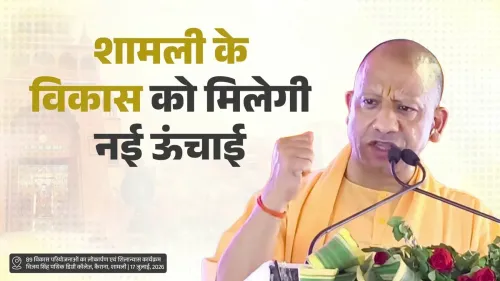
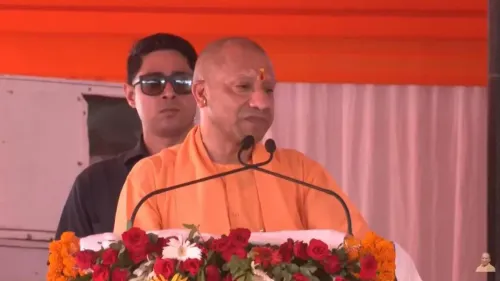
Uttar Pradesh's first integrated private textile park is set to come up in Shamli district, Chief Minister Yogi Adityanath announced on 17 July 2026, promising 8,000 direct jobs for young people and new employment opportunities in western UP.
Key Takeaways
Shamli district in western Uttar Pradesh will host the state's first integrated private textile park.
The park is projected to create 8,000 direct jobs for young people, with additional indirect employment expected.
The announcement was made by Chief Minister Yogi Adityanath via the official CMO Uttar Pradesh account on 17 July 2026 .
The project aligns with the Uttar Pradesh Textile Policy 2017 and the updated 2022 industrial investment policy offering single-window clearances.
The park is part of a broader state strategy to develop manufacturing clusters in smaller western UP districts beyond the NCR belt.
Land acquisition, environmental clearances, and developer investment commitments are the next key milestones to watch.
The Chief Minister's Office of Uttar Pradesh announced on Friday, 17 July 2026, that Shamli district will host the state's first integrated private textile park, a development Chief Minister Yogi Adityanath said will generate direct employment for 8,000 young people.
Context
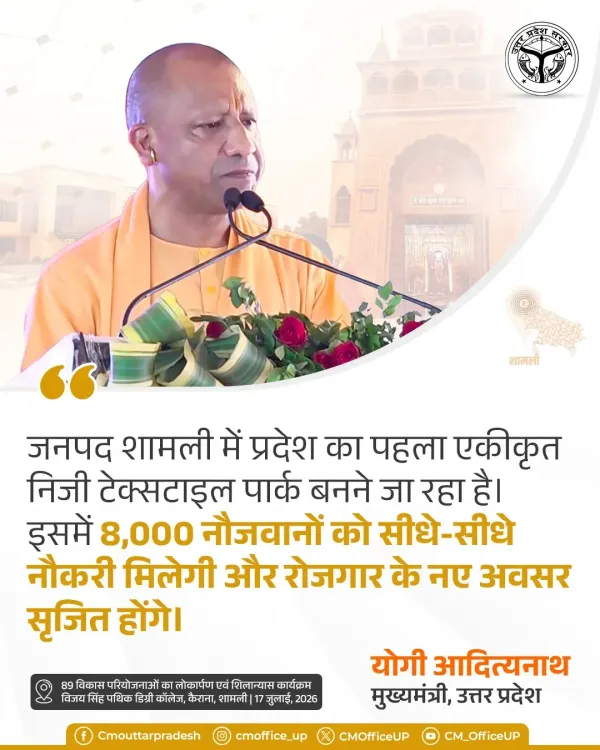
The post from the Chief Minister's Office quotes CM Yogi Adityanath directly: 'जनपद शामली में प्रदेश का पहला एकीकृत निजी टेक्सटाइल पार्क बनने जा रहा है' ('The state's first integrated private textile park is going to be built in Shamli district'). He added that it will provide direct jobs to 8,000 young people and create new employment opportunities beyond that.
Shamli is a district in western Uttar Pradesh, an area the state government has been targeting for manufacturing cluster development to spread industrial growth beyond the National Capital Region belt. The announcement marks a significant step in channelling private-sector investment into a district that has historically had limited large-scale industrial infrastructure.
Policy Backdrop
The textile park fits within a policy framework that Uttar Pradesh has been building since the Uttar Pradesh Textile Policy 2017, which laid out incentives for private textile parks and cluster development aimed at reviving the state's handloom and garment sectors. The state updated its industrial investment policy in 2022 with dedicated provisions for textile and apparel parks, including single-window clearances to attract private developers.
Textile facilities form one pillar of a broader manufacturing push by the Yogi Adityanath government that spans leather, electronics, and food-processing clusters announced across successive state budgets. The integrated model — combining spinning, weaving, processing, and garmenting under one roof — is designed to maximise value addition and employment density per unit of land.
Stakeholders and Impact
The most immediate beneficiaries are Shamli's working-age youth, with 8,000 direct jobs cited by the Chief Minister. Textile parks of this nature typically also generate indirect employment in logistics, raw-material supply, and ancillary services, multiplying the economic footprint for surrounding districts in western Uttar Pradesh.
Private textile entrepreneurs stand to gain from the integrated infrastructure, which reduces individual capital requirements for setting up end-to-end production lines. The state government, in turn, advances its goal of absorbing a large working-age population into formal, labour-intensive manufacturing employment.
What's Next
State government notifications on land acquisition, environmental clearances, and the private developer's investment commitments are expected in the months ahead. The pace of these regulatory steps will determine when groundbreaking and construction can begin in earnest.
If the Shamli park progresses as announced, it could serve as a template for similar integrated private textile facilities in other smaller districts of Uttar Pradesh, reinforcing the state's positioning as a major textile manufacturing destination in northern India.
Point of View
000 direct positions — the Chief Minister's Office is setting a measurable benchmark that will be scrutinised as the park moves from announcement to execution. The choice of western Uttar Pradesh is also politically significant, as the region has seen sustained government attention to demonstrate that development dividends are not confined to Lucknow or the NCR fringe. How quickly land and clearance hurdles are resolved will be the real test of whether this announcement translates into the employment outcomes being promised.
NationPress
17 Jul 2026
Frequently Asked Questions
Where will UP's first integrated private textile park be built?
The park will be built in Shamli district in western Uttar Pradesh, as announced by Chief Minister Yogi Adityanath on 17 July 2026.
How many jobs will the Shamli textile park create?
Chief Minister Yogi Adityanath stated the park will provide 8,000 direct jobs to young people, with additional indirect employment opportunities also expected.
What is an integrated private textile park?
An integrated textile park combines multiple stages of textile production — such as spinning, weaving, processing, and garmenting — under a single facility, reducing costs for entrepreneurs and increasing employment per unit of land.
What is the policy background behind the Shamli textile park?
The project draws on the Uttar Pradesh Textile Policy 2017 and a 2022 update to the state's industrial investment policy, both of which offer incentives and single-window clearances for private textile and apparel parks.
What are the next steps for the Shamli textile park project?
Key next steps include state government notifications on land acquisition , environmental clearances, and the private developer's investment commitments, all of which are expected in the coming months.