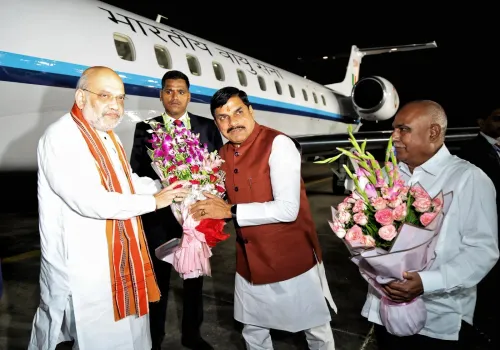
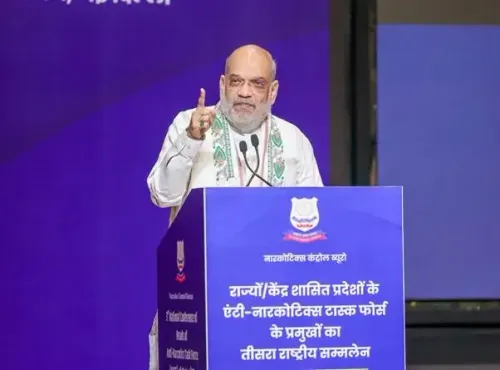
Amit Shah sets Dec 31, 2029 deadline to make Madhya Pradesh drug-free
Synopsis
Home Minister Amit Shah used a Bhopal conference to set a hard deadline — 31 December 2029 — for making Madhya Pradesh drug-free, pledging to personally oversee the action plan with CM Mohan Yadav. On the same day he inaugurated an exhibition on India's new criminal laws and promised convictions within three years of an FIR, right up to the Supreme Court.
Key Takeaways
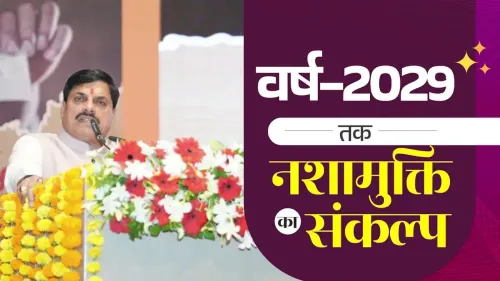
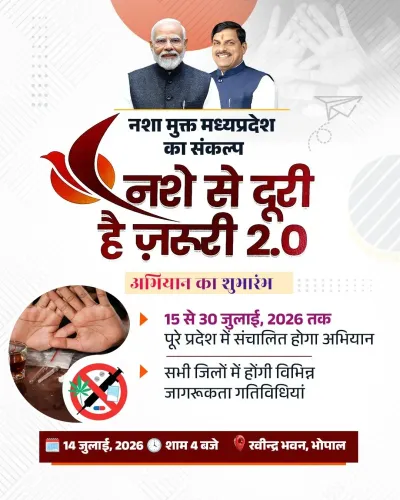
Home Minister Amit Shah set 31 December 2029 as the deadline to make Madhya Pradesh drug-free, announced in Bhopal on 3 October 2026 .
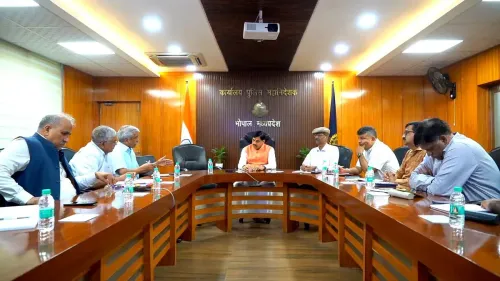
Shah will hold a dedicated meeting with Chief Minister Mohan Yadav and state Home Department officials to prepare a detailed anti-narcotics action plan.
He made a special appeal to mothers of Madhya Pradesh to remain vigilant about the impact of drugs on their children.
Shah inaugurated an exhibition on the Bharatiya Nyaya Sanhita and related laws, which replaced the colonial-era penal framework from 1 July 2024 .
He pledged that guilty persons would be convicted within three years of an FIR being lodged, up to the Supreme Court level, ending repeated adjournments.
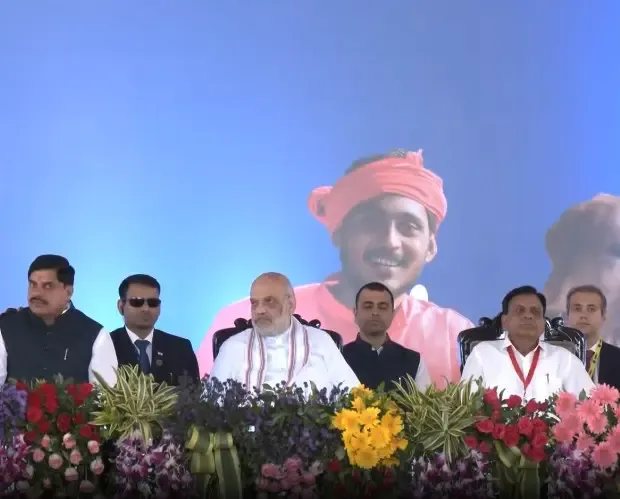
Union Home Minister Amit Shah on Saturday, 3 October 2026, set 31 December 2029 as the firm deadline to make Madhya Pradesh free of narcotics, announcing that he would work alongside Chief Minister Mohan Yadav and senior officials of the state Home Department to craft a detailed action plan. The announcement was made at a state-level conference of cattle rearers held in Bhopal.
Shah's Pledge to Mothers of Madhya Pradesh
Addressing the gathering, Shah made a pointed appeal to mothers, urging them to stay alert to the dangers drugs pose to their children. He said: 'We will make Madhya Pradesh drug-free. I have come here to assure every mother that after December 31, 2029, there will be no place for drugs in Madhya Pradesh for your sons and daughters. I have come here to put in place a detailed plan to achieve this.'
The Home Minister confirmed he would convene a dedicated meeting with Chief Minister Mohan Yadav and Home Department officials to finalise the measures required for the campaign. He also appealed to citizens at large to cooperate actively with the anti-narcotics drive.
Centre's Broader Anti-Drug Push
The announcement forms part of a wider intensification of the Centre's campaign against narcotics. The Union Home Ministry has been focused on dismantling drug trafficking networks while simultaneously strengthening prevention, treatment, and rehabilitation infrastructure across states. Notably, Madhya Pradesh has seen rising concern about drug abuse in semi-urban and rural belts in recent years, lending the deadline particular social and political weight.
New Criminal Laws and the 'Tarikh Pe Tarikh' Promise
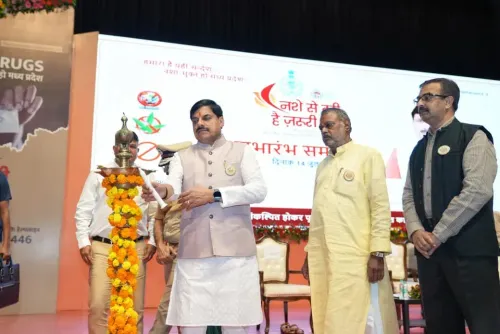
On the same occasion, Shah inaugurated an exhibition in Bhopal on India's new criminal laws — the Bharatiya Nyaya Sanhita, Bharatiya Nagarik Suraksha Sanhita, and Bharatiya Sakshya Adhiniyam — which replaced the Indian Penal Code, the Code of Criminal Procedure, and the Indian Evidence Act respectively from 1 July 2024.
Shah asserted that the new framework was designed to ensure criminal cases are resolved within a defined timeframe, ending what he described as a culture of endless adjournments. He said: 'I want to assure the people of Madhya Pradesh — whose justice system was once notorious for endless adjournments (tarikh pe tarikh) — that within a year or a year-and-a-half, the process will ensure that a guilty person is convicted within three years of the FIR being lodged, right up to the Supreme Court level.'
Break from Colonial Legal Framework
Shah argued that laws enacted during the British era were primarily designed to protect colonial governance rather than Indian citizens. 'The new laws are aimed at safeguarding the dignity, property, and physical safety of Indian citizens. Their core principle is justice, not merely punishment,' he said.
This comes amid broader scrutiny from legal scholars over whether the justice delivery infrastructure — courts, prosecutors, and forensic capacity — is sufficiently equipped to meet the ambitious three-year conviction timeline. The government has yet to release a detailed implementation roadmap or independent monitoring mechanism for either commitment.
What Comes Next
A formal meeting between Shah, Chief Minister Mohan Yadav, and Home Department officials is expected in the coming weeks to draw up the operational blueprint for the drug-free campaign. How the state plans to measure progress, handle rehabilitation, and coordinate with central agencies will determine whether the 2029 deadline translates into verifiable outcomes.
Point of View
No independent monitoring body, and no clarity on rehabilitation funding. India has seen similar state-level drug-free pledges fade without structural follow-through. The real test will be the action plan emerging from the promised meeting with Chief Minister Yadav: whether it ties targets to verifiable data or remains aspirational. The pairing of a drug deadline with new criminal law promotion in a single Bhopal visit also signals that the Centre is using Madhya Pradesh as a political showcase ahead of the governance narrative it wants to build into the 2029 cycle.
NationPress
3 Oct 2026
Frequently Asked Questions
What did Amit Shah announce about Madhya Pradesh and drugs?
Home Minister Amit Shah set 31 December 2029 as the deadline to make Madhya Pradesh completely drug-free, speaking at a state-level conference in Bhopal on 3 October 2026. He said he would work with Chief Minister Mohan Yadav and Home Department officials to prepare a detailed action plan.
Why did Shah make a special appeal to mothers?
Shah specifically urged mothers in Madhya Pradesh to stay vigilant about the influence of drugs on their children, framing the anti-narcotics campaign as both a social and law-enforcement issue. He assured them that after 31 December 2029, drugs would have no place in the state.
What are the new criminal laws Shah inaugurated an exhibition on?
The exhibition covered the Bharatiya Nyaya Sanhita, Bharatiya Nagarik Suraksha Sanhita, and Bharatiya Sakshya Adhiniyam, which replaced the Indian Penal Code, Code of Criminal Procedure, and Indian Evidence Act respectively from 1 July 2024. Shah described them as a shift from colonial-era laws toward a justice system centred on Indian citizens.
What did Shah promise about conviction timelines under the new criminal laws?
Shah said the new framework would ensure a guilty person is convicted within three years of an FIR being lodged, up to the Supreme Court level, within a year or a year-and-a-half. He said this would end the culture of prolonged litigation and repeated adjournments known as 'tarikh pe tarikh'.
What happens next after Shah's drug-free Madhya Pradesh announcement?
Shah is expected to convene a formal meeting with Chief Minister Mohan Yadav and senior Home Department officials in the coming weeks to finalise the operational blueprint for the anti-narcotics campaign. Details on progress measurement, rehabilitation funding, and coordination with central agencies are yet to be made public.