Rahul Gandhi launches 'Satyagraha' portal to unite fragmented protests
Synopsis
Rahul Gandhi on 3 October 2026 launched 'Satyagraha', a digital portal to map India's scattered protest movements — farmers, ASHA workers, students, Adivasis — onto a single national grid, arguing connected movements bend governments while fragmented ones get suppressed.
Key Takeaways
Congress leader Rahul Gandhi announced the 'Satyagraha' digital platform on 3 October 2026 via X.
The portal ( rahulgandhi.in/satyagraha ) allows protest groups across India to register their movements in two minutes without travelling to Delhi.
Four specific constituencies are named: students fighting paper leaks, farmers in land disputes, ASHA workers seeking unpaid honorariums, and Adivasi communities protecting forest land.
The platform maps registered movements so groups can discover others fighting identical battles elsewhere in the country.
Gandhi's core argument: 'Scattered movements get suppressed.
Connected movements bend governments.' The name Satyagraha invokes Mahatma Gandhi's term for non-violent resistance, tying the digital initiative to India's civil-disobedience tradition.
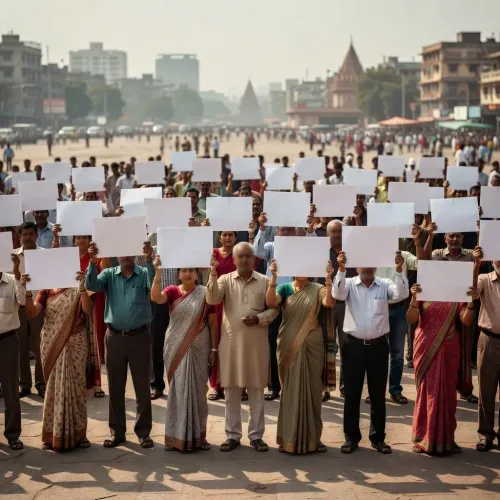
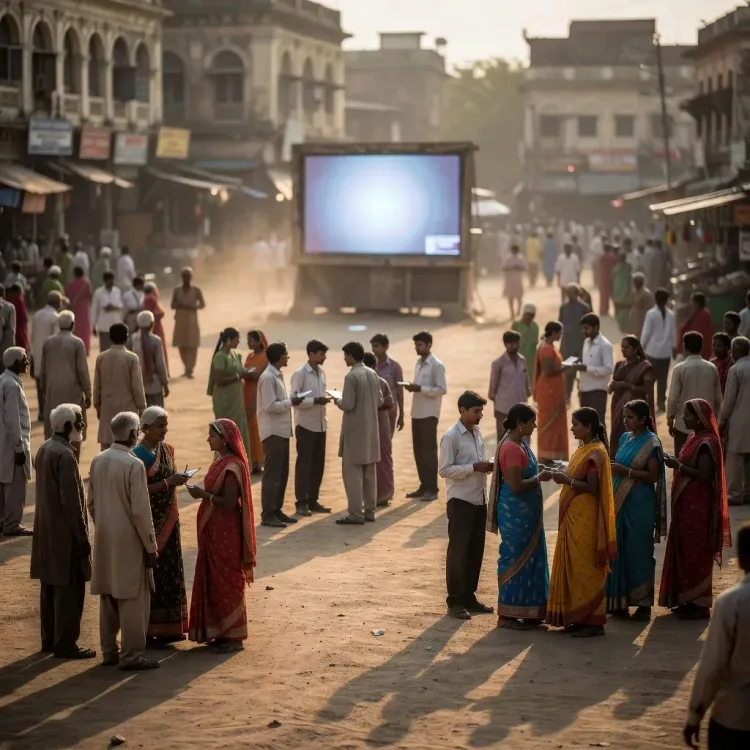
Students agitating against paper leaks. Farmers fighting for their land. ASHA workers demanding unpaid honorariums. Adivasis standing guard over their forests. Each struggle burning in isolation — and that isolation, Congress leader Rahul Gandhi argues, is precisely what keeps them losing. On Saturday, 3 October 2026, he announced a digital platform called 'Satyagraha' designed to map every active movement across India onto a single, visible grid.
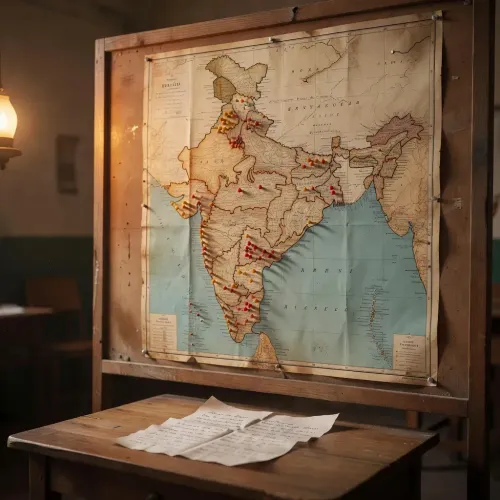
Posting in Hindi on X, Gandhi framed the core problem with blunt clarity: 'बिखरे हुए आंदोलन दबा दिए जाते हैं। जुड़े हुए आंदोलन सरकारें झुका देते हैं।' — 'Scattered movements get suppressed. Connected movements bend governments.' The platform, accessible at rahulgandhi.in/satyagraha, promises that any protest group can register its struggle in two minutes, without travelling to Delhi, and see it appear on a national map alongside similar fights.
Four struggles, one diagnosis
Gandhi's post deliberately names four distinct constituencies: students protesting exam paper leaks, farmers in land disputes, ASHA (Accredited Social Health Activist) workers seeking overdue honorariums, and Adivasi communities resisting displacement from forest land. The selection is not random — these are among the most persistent, and persistently ignored, grievances circulating in Indian public life. By listing them together, Gandhi is making an explicit argument: these are not separate problems but symptoms of the same governance gap.
The platform's premise is that each of these groups currently believes it is fighting alone. Satyagraha's stated function is to shatter that illusion — letting a farmer's cooperative in one state discover that workers in another are battling identical land-acquisition pressures, or that ASHA workers in multiple districts are withholding the same demand.
The 'two-minute, no-Delhi' pitch
The design philosophy of the portal is deliberately low-barrier. Gandhi's post stresses that participation takes 'two minutes' and requires no physical journey to the capital — a pointed contrast with the standard political calculus that demands agitators march to Jantar Mantar or Parliament Street before anyone pays attention. In effect, the platform is an attempt to digitise the megaphone: replace the protest march with a data point on a public map.
The name itself carries deliberate historical weight. Satyagraha — literally 'truth-force' or 'insistence on truth' — is the term Mahatma Gandhi coined for non-violent resistance during the Indian independence movement. Invoking it for a digital grievance platform connects a century-old tradition of organised civil disobedience to the infrastructure of a smartphone screen.
Opposition strategy in an era of fragmented dissent
For the Indian National Congress, the launch fits a broader pattern of Rahul Gandhi positioning himself as a conduit for grassroots voices rather than a conventional top-down party leader. The move also carries an implicit political bet: that aggregating visible, mapped discontent — even if each individual movement is small — creates a cumulative pressure that is harder for any administration to dismiss than a single rally.
Whether the portal translates into durable political organisation or remains a symbolic gesture will depend on uptake, follow-through, and whether Gandhi's office can respond meaningfully to the movements that register. The line in his post — 'your movement will come on the map' — is a promise. The credibility of that promise is now the story to watch.
Point of View
Which is harder to attack on partisan grounds. The low-barrier, digital-first design also acknowledges a key lesson from recent protest cycles — that large physical mobilisations are resource-intensive and easily disrupted. The critical question is whether the platform becomes a genuine two-way channel or simply a data-collection exercise; the answer will define whether this is movement-building or optics.
NationPress
3 Oct 2026
Frequently Asked Questions
What is Rahul Gandhi's Satyagraha portal?
Satyagraha is a digital platform launched by Congress leader Rahul Gandhi on 3 October 2026, available at rahulgandhi.in/satyagraha, where protest groups across India can register their movements in two minutes and appear on a national map of active agitations.
Who can use the Satyagraha platform?
Any protest group in India — including students fighting paper leaks, farmers in land disputes, ASHA workers demanding honorariums, or Adivasi communities protecting forest rights — can register their movement on the portal without travelling to Delhi.
Why did Rahul Gandhi name the portal Satyagraha?
Satyagraha is the term coined by Mahatma Gandhi for non-violent truth-force resistance during India's independence movement. Rahul Gandhi's use of the word connects the digital platform to that century-old tradition of organised civil disobedience.
What problem does the Satyagraha portal claim to solve?
Gandhi argues that fragmented protests are individually suppressed because each movement believes it is fighting alone. The portal aims to make every registered movement visible to others waging identical struggles, building solidarity across geography.
What is Rahul Gandhi's role in Indian politics in 2026?
Rahul Gandhi is the Leader of the Opposition in the Lok Sabha and an Indian National Congress Member of Parliament from Rae Bareli, making him the principal parliamentary face of the Opposition.