Siddaramaiah backs Rahul Gandhi's Satyagraha platform
Synopsis
Karnataka Chief Minister Siddaramaiah has endorsed Rahul Gandhi's 'Satyagraha' initiative, a Congress-led digital platform to document and connect citizen movements on land, women's rights, Dalit and OBC welfare, education, and examination issues across India.
Key Takeaways
Karnataka CM Siddaramaiah publicly endorsed Rahul Gandhi's Satyagraha initiative on October 3, 2026 .
The initiative aims to map and connect grassroots movements across India onto a single platform.
Key issues covered include land rights, women's rights, Dalit and OBC rights, education, and examination grievances .
The platform is hosted at rahulgandhi.in/satyagraha , signalling a digital-first outreach approach.
The Satyagraha framing invokes Gandhian nonviolent tradition to frame contemporary social struggles within a historic moral register.
Siddaramaiah's endorsement lends state-level institutional weight to what is otherwise a Congress opposition campaign.
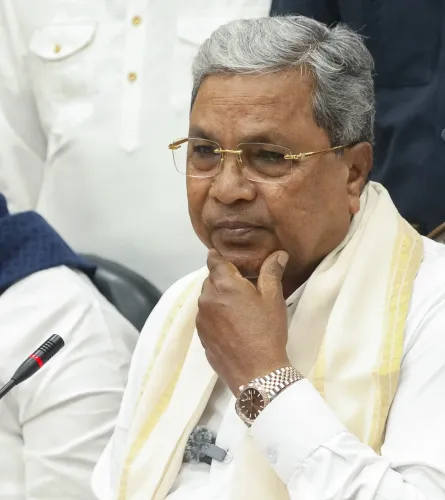
A new political mobilisation effort is taking shape across India — and Karnataka Chief Minister Siddaramaiah has thrown his weight behind it. On Saturday, October 3, 2026, Siddaramaiah announced his support for Rahul Gandhi's 'Satyagraha' initiative, a Congress-backed platform designed to document and amplify grassroots struggles on issues ranging from land rights to Dalit and OBC welfare.
What the Satyagraha initiative sets out to do
The initiative, according to Siddaramaiah's post, aims to bring disparate citizen movements under a single, coordinated umbrella. It is intended to 'map them across the country and connect with the people leading them' — essentially creating a live registry of on-the-ground struggles that might otherwise go unheard in national discourse. The issues cited are broad: land rights, women's rights, Dalit and OBC rights, education, and examination grievances.
The platform is accessible at rahulgandhi.in/satyagraha, signalling a digital-first outreach strategy. By anchoring the initiative to Rahul Gandhi's personal domain, the Congress party is framing this explicitly as a leadership-driven movement rather than a party-bureaucratic exercise.
Siddaramaiah's alignment and its political weight
Siddaramaiah's endorsement carries institutional heft. As the sitting Chief Minister of Karnataka — one of the few large states where the Indian National Congress holds power — his backing lends the initiative a governed-state legitimacy that a purely parliamentary opposition campaign would lack. Karnataka has been an active political laboratory for Congress, with the party having enacted welfare schemes targeting Dalit and OBC communities since returning to power.
The timing is pointed. The Satyagraha framing deliberately invokes the Gandhian tradition of nonviolent truth-force, casting contemporary social grievances as morally equivalent to historic freedom struggles. It is a rhetorical move designed to elevate local protests into a national narrative.
The issues being mapped — and why they matter nationally
The breadth of concerns listed — land acquisition disputes, gender justice, caste-based rights, and examination irregularities — reflects a Congress strategy of coalition-building across identity and interest groups simultaneously. Examination grievances in particular have been a potent mobilising issue in recent years, with competitive exam controversies drawing students and families into sustained public protest.
By documenting these movements rather than simply rallying for them, the Satyagraha platform positions itself as an accountability archive — a record that people's concerns were raised, registered, and heard, regardless of immediate policy outcomes.
Whether a digital mapping exercise can translate into durable political organisation is the question that will define this initiative's legacy. The archive is open; now the ground has to fill it.
Point of View
Caste, gender, education — into a unified opposition identity ahead of electoral cycles. By deploying documentation as strategy, the party is betting that a visible archive of grievances builds long-term accountability pressure on the ruling dispensation at the Centre. Siddaramaiah's endorsement is not incidental: Karnataka functions as a Congress policy showcase, and his backing gives the initiative a governed-state anchor that distinguishes it from purely parliamentary opposition theatre. The critical test is whether a digital registry translates into sustained, organised political momentum — or remains a well-catalogued gesture.
NationPress
3 Oct 2026
Frequently Asked Questions
What is Rahul Gandhi's Satyagraha initiative?
Rahul Gandhi's Satyagraha is a Congress-backed platform that aims to document, map, and amplify grassroots citizen movements across India on issues such as land rights, women's rights, Dalit and OBC welfare, education, and examination grievances. It is accessible at rahulgandhi.in/satyagraha.
Why did Siddaramaiah support the Satyagraha platform?
Karnataka Chief Minister Siddaramaiah expressed support for the initiative to highlight serious concerns being raised by citizens nationwide, framing it as a necessary effort to ensure people's struggles are documented and heard on a common national platform.
What issues does the Satyagraha initiative address?
The initiative covers a broad range of issues including land rights, women's rights, Dalit and OBC rights, education, and examination-related grievances raised by citizens across India.
Is Satyagraha a Congress party programme?
Yes, Satyagraha is linked to Congress leader Rahul Gandhi and is hosted on his personal domain. Senior Congress leaders, including Karnataka CM Siddaramaiah, have publicly endorsed and promoted the initiative.
What does the term 'Satyagraha' signify in this context?
'Satyagraha,' meaning truth-force or nonviolent resistance, is a term rooted in the Gandhian tradition of civil resistance. By using this name, the Congress initiative positions contemporary citizen struggles within India's historic moral and political legacy of peaceful protest.