Siddaramaiah exit shakes AHINDA base as BJP eyes Karnataka inroads
Synopsis
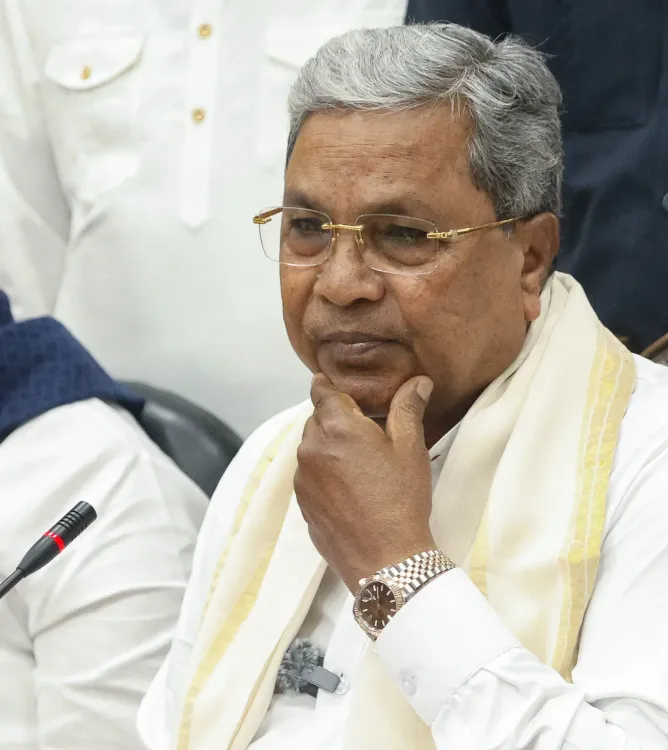
Siddaramaiah's exit isn't just a CM swap — it cracks open the AHINDA question Congress has avoided for a decade. With Shivakumar taking charge and names like Satish Jarkiholi, Priyank Kharge and Rizwan Arshad in play, the contest to inherit Karnataka's social justice vote bank is now wide open, and the BJP is watching closely.
Key Takeaways
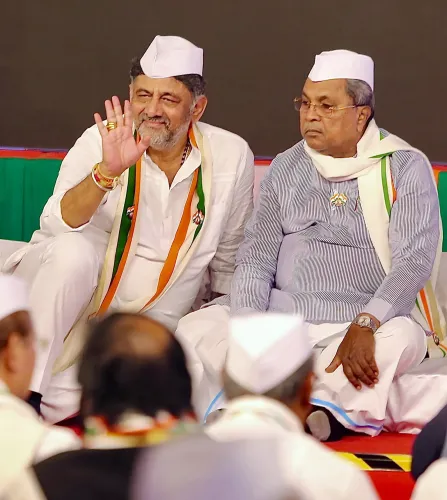
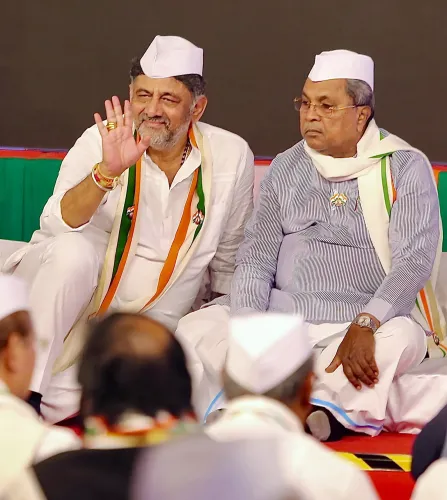
Shivakumar is set to take over as Karnataka Chief Minister , with Siddaramaiah stepping down on 2 June .
The transition has reopened the question of who will inherit the AHINDA social justice base.
Congress MLC Yathindra Siddaramaiah floated Satish Jarkiholi as a potential successor; Priyank Kharge , B.K.
Hariprasad , Tanveer Sait and Rizwan Arshad are also being discussed.
The BJP is targeting backward and Dalit voters and has threatened statewide protests over the Aland riot case withdrawals.
Congress leader Chaman Farzana maintained that Siddaramaiah will remain the face of AHINDA despite stepping down.
With D.K. Shivakumar set to take over as Karnataka Chief Minister and Siddaramaiah stepping down, political attention in Bengaluru has pivoted to the future of the AHINDA coalition — the minorities, backward classes and Dalits bloc that has long anchored the Indian National Congress in the state. The transition, unfolding on 2 June, has reopened a contest over who inherits the social justice plank Siddaramaiah built over decades.
Why the AHINDA question matters
AHINDA — an acronym for minorities (Alpasankhyataru), backward classes (Hindulidavaru) and Dalits — has been the Congress's core vote architecture in Karnataka, with Siddaramaiah emerging as its most visible political face. Siddaramaiah has clarified that he has relinquished the Chief Minister's post but not retired from politics, yet sections of the coalition are reportedly uneasy about the leadership churn.
The succession debate inside Congress
The discussion gathered pace after Congress MLC Yathindra Siddaramaiah floated former minister Satish Jarkiholi — a senior North Karnataka leader from a Scheduled Caste community — as a potential successor to carry forward his father's legacy. Jarkiholi is widely seen as a mass leader with reach among backward and marginalised communities.
Other names in circulation include Priyank Kharge, former minister and son of AICC President Mallikarjun Kharge; veteran MLC B.K. Hariprasad; six-time MLA Tanveer Sait, who survived a stabbing attack allegedly by an SDPI worker; and Shivajinagar MLA Rizwan Arshad. Analysts argue, however, that matching Siddaramaiah's statewide stature will be a formidable task.
What the BJP is calculating
The Bharatiya Janata Party (BJP) sees the transition as an opening to expand its footprint among backward classes and Dalits. Recent flashpoints — including the state government's stand on dress code regulations in educational institutions and the debate over withdrawal of cases linked to the Aland riot incident — have given the BJP fresh ammunition. The party has accused the Congress of appeasement politics and threatened statewide protests if the Aland cases are not reopened.
Karnataka BJP Vice President (ST Morcha) Anil Kumar R Nayaka said Siddaramaiah's exit could trigger discontent within the AHINDA base. He argued that if a section of voters perceives the move as sidelining their interests, it could open political space for the BJP to absorb groups that have traditionally backed the Congress.
The Congress counter
Congress leaders maintain that AHINDA's loyalty is anchored in the party's welfare record and not in any single personality. Chaman Farzana, former secretary of the All India Mahila Congress and General Secretary of the KPCC Social Justice Committee, said Siddaramaiah would continue to remain the face of AHINDA despite stepping down. She said he is a mass leader who fulfilled his guarantees and welfare promises, and credited both Siddaramaiah and Shivakumar with bringing the Congress to power in the state.
Farzana dismissed concerns that the AHINDA vote could drift away, saying the party's commitment to social justice continues to draw these communities and that Siddaramaiah's continued presence in the organisation will keep the bloc intact.
What to watch next
As Karnataka enters a new political phase under Shivakumar, the contest to define the next custodian of AHINDA politics is likely to become a defining theme of the state's electoral landscape in the years ahead.
Point of View
Priyank Kharge has ideological edge, Sait and Arshad bring minority anchor, but none yet command the cross-segment pull Siddaramaiah did. The BJP's bet that AHINDA dissatisfaction will translate into BJP votes is overstated — the more likely risk for Congress is internal fragmentation, not defection. The party that figures out succession before 2028 wins Karnataka; the one that delays loses it.
NationPress
16 Sept 2026
Frequently Asked Questions
What is the AHINDA coalition in Karnataka politics?
AHINDA is an acronym for minorities, backward classes and Dalits, and has served as the Indian National Congress's core support base in Karnataka. Siddaramaiah is widely regarded as its most prominent political face.
Why is Siddaramaiah stepping down as Karnataka Chief Minister?
Siddaramaiah is relinquishing the Chief Minister's post as D.K. Shivakumar prepares to take charge. Siddaramaiah has clarified that he is stepping down from the post but is not retiring from active politics.
Who could succeed Siddaramaiah as the face of AHINDA?
Former minister Satish Jarkiholi has been floated by Congress MLC Yathindra Siddaramaiah as a potential successor. Other names in the discussion include Priyank Kharge, B.K. Hariprasad, Tanveer Sait and Rizwan Arshad.
How does the BJP plan to benefit from this transition?
The BJP is attempting to expand its support among backward classes, Dalits and minorities, betting that sections of the AHINDA base may feel sidelined by the leadership change. The party is also leveraging issues such as the Aland riot case withdrawals to sharpen its attack on the Congress government.
Will the AHINDA vote bank shift away from the Congress?
Congress leaders insist it will not, arguing that the bloc's loyalty is rooted in the party's welfare record and social justice agenda rather than in any single leader. KPCC Social Justice Committee General Secretary Chaman Farzana said Siddaramaiah's continued presence in the party will keep the AHINDA constituency intact.