Karnataka CM change: D.K. Shivakumar set to replace Siddaramaiah as Congress acts

Synopsis
Karnataka's Congress government is on the cusp of its most consequential internal shift since 2023 — the high command has moved to replace Chief Minister Siddaramaiah with Deputy CM D.K. Shivakumar, reportedly after Rahul Gandhi personally closed the door on further negotiations. The Dalit CM counter-demand from the Siddaramaiah camp was neutralised before it could gain traction, but the real test begins the morning after the handover.
Key Takeaways
The Congress high command is set to elevate D.K.
Shivakumar as Karnataka Chief Minister , replacing Siddaramaiah .
Siddaramaiah is expected to resign after a breakfast meeting on Thursday morning and submit his resignation to the Governor .
Rahul Gandhi reportedly asked Siddaramaiah directly to facilitate a smooth transition, ending further negotiation.
Dalit community leaders including K.H.
Parameshwara publicly backed the high command's decision, defusing the Dalit CM demand.
The Congress plans Deputy CMs from Lingayat , AHINDA , and minority communities for broader representation.
The change is framed as part of Congress's strategy for the 2028 Karnataka Assembly elections .
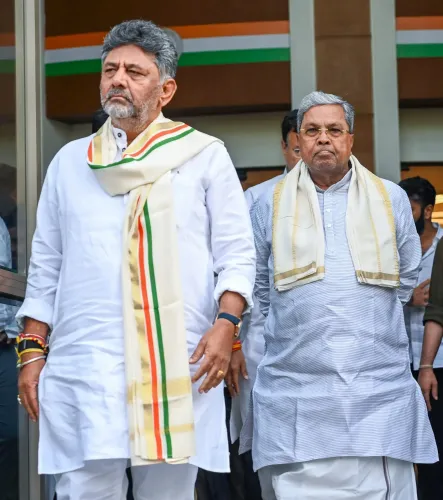
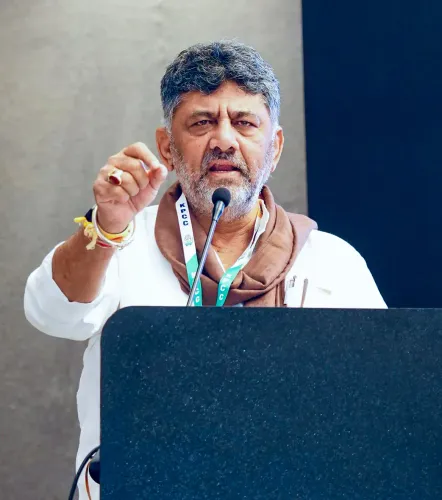
A long-simmering leadership battle within the Karnataka Congress is moving toward resolution, with the party's high command preparing to elevate Deputy Chief Minister and Karnataka Pradesh Congress Committee (KPCC) President D.K. Shivakumar to the post of Chief Minister. The transition, reportedly set in motion on 27 May, would bring down the curtain on Chief Minister Siddaramaiah's tenure — a process the Congress has navigated with unusual caution given Siddaramaiah's standing as the face of the party's AHINDA vote bank, comprising minorities, backward classes, and Dalits.
How the Decision Was Reached
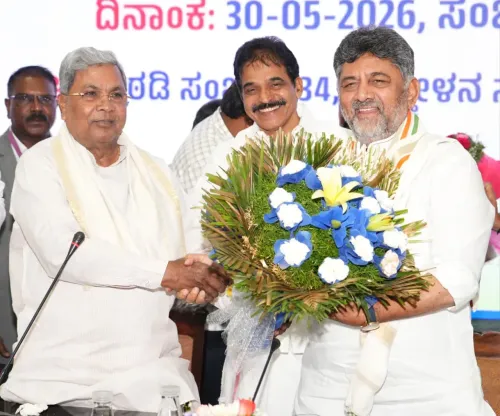
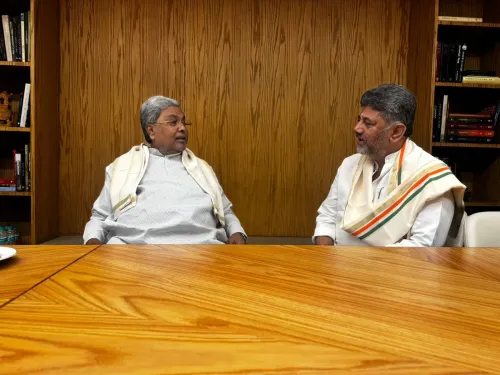
According to Congress insiders, Siddaramaiah had travelled to Delhi with a counter-proposal — a Cabinet reshuffle and a new KPCC president in place of Shivakumar — in an apparent bid to retain his position. However, sources said that Leader of the Opposition in the Lok Sabha Rahul Gandhi directly asked Siddaramaiah to facilitate a smooth handover, leaving little room for further negotiation.
All India Congress Committee (AICC) General Secretaries Randeep Singh Surjewala and K.C. Venugopal are also said to have reinforced the message, reminding Siddaramaiah that Gandhi had backed him for two terms as Chief Minister and that honouring the party's decision was now expected of him. The high command reportedly ensured that Siddaramaiah and Shivakumar met jointly and addressed the media together after their discussion at Indira Bhavan in Delhi.
Siddaramaiah Camp's Dalit CM Demand Defused
A key pressure tactic from the Siddaramaiah camp — floating the demand for a Dalit Chief Minister in the event of a leadership change — appears to have been effectively neutralised. Senior ministers Home Minister G. Parameshwara, PWD Minister Satish Jarkiholi, and Food Minister K.H. Muniyappa, all leaders from the Dalit community, publicly stated they would abide by the Congress high command's decision.
Muniyappa, a seven-time Lok Sabha MP and former Union Minister, specifically clarified that he would not press for a Dalit Chief Minister if the transition proceeded. Senior Congress leader and nine-time MLA R.V. Deshpande further fuelled speculation by stating that Siddaramaiah had already decided to resign and honour his commitment to the high command.
What Happens Next
Sources indicated that Siddaramaiah is likely to step down after a breakfast meeting scheduled for Thursday morning, following which he is expected to submit his resignation to the Governor and address the media. Celebrations had reportedly already begun at Shivakumar's residence in Bengaluru, with supporters bursting crackers and several loyalist MLAs openly claiming he is the next Chief Minister.
The Congress leadership is also believed to be planning broader social representation in the new Cabinet, with Deputy Chief Ministers reportedly to be drawn from the Lingayat, AHINDA, and minority communities — a structural arrangement designed to hold together the party's coalition of support groups.
The Strategic Calculus Behind the Change
Party insiders cited multiple factors behind the decision to move on from Siddaramaiah. While he is widely regarded as a strong administrator and a mass leader capable of drawing votes through powerful speeches, concerns about his age, reported hearing difficulties, and a perceived inability to manage booth-level organisational work across the state reportedly weighed against him.
The Congress is also said to be worried about the consolidation of Lingayat and Vokkaliga votes under the Bharatiya Janata Party (BJP)–JD(S) alliance. By projecting Shivakumar — himself a Vokkaliga — as the party's new face, the Congress hopes to counter anti-incumbency, protect its AHINDA base, and simultaneously peel away a significant share of Vokkaliga votes. Party insiders framed the change as part of a broader strategy to position Congress for the 2028 Karnataka Assembly elections.
Opposition Reaction and Risk Ahead
The BJP has mocked the Congress over the developments, claiming that Karnataka could be headed towards early Assembly elections. Political observers, however, caution that the government's stability will depend heavily on how Siddaramaiah — who reportedly wanted to complete a full five-year term — conducts himself after the transition. Analysts warn that the rivalry between the two camps may not dissolve simply because the leadership question has been formally settled.
Point of View
Only suppressed. Shivakumar's Vokkaliga identity is a calculated electoral bet against the BJP–JD(S) alliance, but it risks alienating the AHINDA base that Siddaramaiah spent decades building. The 2028 strategy is coherent on paper; whether it holds depends on whether Siddaramaiah becomes a cooperative elder statesman or a restive power centre within his own government.
NationPress
10 Oct 2026
Frequently Asked Questions
Why is Siddaramaiah being replaced as Karnataka Chief Minister?
According to Congress insiders, the high command decided to replace Siddaramaiah due to concerns about his age, reported hearing difficulties, and his perceived inability to manage booth-level organisational work ahead of the 2028 Karnataka Assembly elections. The party also sought to counter the BJP–JD(S) alliance's consolidation of Lingayat and Vokkaliga votes by projecting D.K. Shivakumar, a Vokkaliga leader, as Chief Minister.
When will D.K. Shivakumar take over as Karnataka Chief Minister?
Siddaramaiah is expected to step down after a breakfast meeting on Thursday morning and submit his resignation to the Governor. Celebrations at Shivakumar's Bengaluru residence had reportedly already begun, with loyalist MLAs openly claiming he is the next Chief Minister.
What was the Dalit CM demand and how was it handled?
The Siddaramaiah camp reportedly floated the demand for a Dalit Chief Minister as a pressure tactic in the event of a leadership change. Senior Dalit leaders including Home Minister G. Parameshwara, PWD Minister Satish Jarkiholi, and Food Minister K.H. Muniyappa publicly stated they would abide by the high command's decision, effectively neutralising the demand before it could escalate.
What role did Rahul Gandhi play in the Karnataka leadership change?
Sources said Rahul Gandhi directly asked Siddaramaiah to facilitate a smooth transfer of power during discussions in Delhi, closing the door on further negotiations. AICC General Secretaries Randeep Singh Surjewala and K.C. Venugopal also reportedly reminded Siddaramaiah that Gandhi had backed him for two terms as Chief Minister.
How does this change affect Congress's prospects in the 2028 Karnataka elections?
Party insiders have framed the leadership change as a deliberate electoral strategy for 2028. By installing Shivakumar — a Vokkaliga — the Congress aims to counter anti-incumbency, retain its AHINDA support base, and attract Vokkaliga votes currently consolidating under the BJP–JD(S) alliance. The plan also includes appointing Deputy Chief Ministers from Lingayat, AHINDA, and minority communities for broader representation.