UPI MDR unlikely to raise fees, says World Bank's Neelkanth Mishra
Synopsis
A senior World Bank official has pushed back against fears that reinstating MDR on UPI will spike fees — arguing competition alone will keep pricing in check. But his bigger warning was global: rapidly rising interest rates are the single largest threat to financial markets, and India, while better placed than heavily indebted peers, cannot afford to ignore external shocks.
Key Takeaways
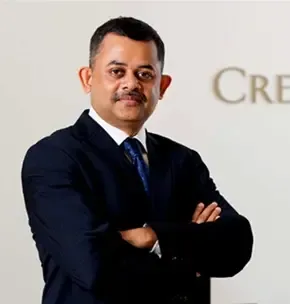
Neelkanth Mishra , Executive Director at the World Bank Group , said UPI MDR would be an enabling provision unlikely to cause large-scale fee increases.
He cited intense competition among banks, payment aggregators, and fintech firms as the key check on pricing.
Mishra identified rapidly rising global interest rates as the single biggest risk to financial markets worldwide.
Higher risk-free rates, he warned, could depress asset values and unwind leveraged and collateralised lending positions.
On India, Mishra said the country faces significant macro risks from elevated oil prices , bond yields , and geopolitical uncertainty , but is relatively less vulnerable than heavily indebted economies.
He called for vigilance on external shocks , noting stability hinges on yields easing or growth risks forcing a market reassessment.
Neelkanth Mishra, Executive Director at the World Bank Group, said on Saturday that allowing a Merchant Discount Rate (MDR) on Unified Payments Interface (UPI) transactions would function as an enabling provision and is unlikely to trigger any significant rise in consumer or merchant charges, given the intensity of competition across India's payments ecosystem. Mishra made the remarks on the sidelines of the 5th Kautilya Economic Conclave in New Delhi.
Why MDR Fears May Be Overstated
Mishra argued that the competitive structure of India's digital payments market acts as a natural ceiling on fees. 'It is an enabling provision. Look, this is a free market. Unless someone is afraid that financial firms, banks or payment aggregators will start colluding and raising charges at the same time, there are different ways to handle that,' he said.
He further noted that the payments sector had already demonstrated resilience without MDR revenue. 'I don't see this leading to a large-scale increase in fees because it is a free and competitive market. There were firms that remained viable and survived even when they could not charge MDR,' Mishra added. Critics who fear a fee surge, he implied, may be underestimating how competitive pressure disciplines pricing in an open market.
Rising Global Interest Rates: The Biggest Risk
Shifting to the global economic outlook, Mishra identified sharply rising interest rates as the single most consequential risk facing financial markets worldwide. 'I would say that the biggest risk for global markets is the rapidly rising interest rates because financial markets are all about the cost of capital,' he said.
According to Mishra, elevated risk-free rates tend to compress asset valuations and can expose fragilities in leveraged and collateral-backed lending structures. 'If your yields, the risk-free rate, are going to rise, asset values will come down, and that means that many forms of collateralised loans and many types of leverage that were taken then become unviable or have to be unwound,' he noted. Financial markets, he observed, are already beginning to reflect this unease.
India's Position Amid Global Stress
On whether India is vulnerable to the confluence of elevated oil prices, higher bond yields, and geopolitical uncertainties, Mishra acknowledged the risks are material but said India is relatively better placed than several heavily indebted economies. 'These are very significant macroeconomic risks. I think these are also market risks, so financial markets are starting to get a bit jittery,' he said.
He added that a resolution would require either a retreat in bond yields or a growth slowdown that forces markets to reassess. 'The only way that this can settle is for either yields to fall or for some risks to emerge on the growth side. There are also countries with very high levels of debt-to-GDP that are far more vulnerable than perhaps India is,' Mishra said, urging vigilance on external shocks.
What This Means for UPI Policy
The MDR debate has been a long-running tension in India's fintech policy landscape. The government had waived MDR on UPI and RuPay transactions in 2020, citing financial inclusion goals, while reimbursing banks through a subsidy scheme. Any move to reinstate MDR — even as an optional, market-determined charge — would mark a significant policy shift. Mishra's comments suggest that, from a market-structure standpoint, the transition need not be disruptive. How regulators and payment aggregators respond will be closely watched by merchants and consumers alike.
Point of View
Particularly small ones. If even a fraction of payment aggregators introduce charges, the burden will fall disproportionately on low-margin kirana stores and street vendors who have no negotiating power. The more significant signal from Mishra's remarks is the global one: if rising interest rates begin unwinding leveraged positions in emerging markets, India's external account — already under pressure from oil — could face a sharper test than the relatively sanguine 'less vulnerable than peers' framing suggests.
NationPress
3 Oct 2026
Frequently Asked Questions
What is MDR on UPI and why does it matter?
Merchant Discount Rate (MDR) is a fee charged to merchants for processing digital payments. The government waived MDR on UPI and RuPay transactions in 2020 to boost adoption; reinstating it — even as a market-determined charge — would be a significant policy shift affecting millions of merchants and consumers.
Why does Neelkanth Mishra think UPI MDR won't lead to major fee hikes?
Mishra argued that intense competition among banks, payment aggregators, and fintech firms will naturally cap any fees. He noted that many firms remained viable even when MDR was not permitted, suggesting the market can self-regulate pricing without regulatory intervention.
What did Mishra identify as the biggest global financial risk?
He said rapidly rising interest rates are the single biggest risk, because higher risk-free rates compress asset valuations and can force the unwinding of leveraged and collateral-backed lending positions, creating stress across financial markets.
How vulnerable is India to current global economic pressures?
Mishra acknowledged that elevated oil prices, rising bond yields, and geopolitical uncertainties pose significant macroeconomic risks to India. However, he said India is relatively better positioned than many heavily indebted economies, while cautioning that external shocks still warrant close monitoring.
Where did Neelkanth Mishra make these remarks?
Mishra made these comments on the sidelines of the 5th Kautilya Economic Conclave in New Delhi on Saturday, 3 October.