Rahul Gandhi Calls Youth to Kota Rally on June 17

Synopsis
Congress leader Rahul Gandhi has called India's youth to a mass rally in Kota, Rajasthan on June 17, branding recurring paper leaks and exam cancellations as an assault on student dreams and framing the event as the start of a nationwide student movement.
Key Takeaways
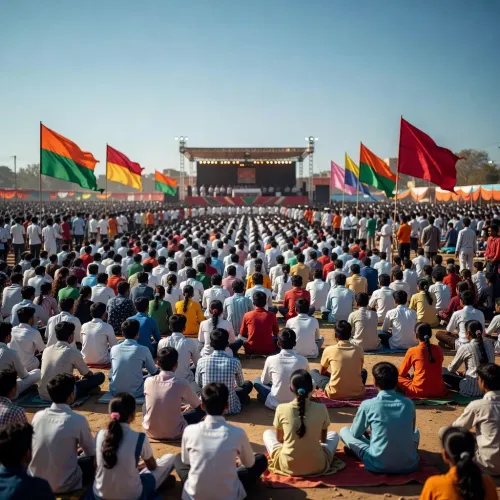
Rahul Gandhi announced the Chhatron Ki Goonj (Students' Roar) rally in Kota, Rajasthan for June 17, 2026 .
Gandhi said hard work goes unrewarded in India today and that dreaming is 'punished,' addressing the country's competitive exam aspirants directly.
He cited paper leaks, cancelled examinations, and incomplete recruitments as 'an assault on the dreams of lakhs of people.' Kota was chosen as the venue given its status as India's coaching capital and a repeated site of student unrest.
The NEET paper leak controversy of 2024 and multiple state exam cancellations form the immediate policy backdrop for the rally.
Gandhi described Kota as only the starting point, signalling plans to extend the movement across the country.
Congress leader Rahul Gandhi, Leader of the Opposition in Lok Sabha, on Monday, June 15, 2026, issued a direct appeal to India's youth, announcing a mass rally in Kota, Rajasthan on June 17 under the banner Chhatron Ki Goonj (Students' Roar), calling it a fight for their futures against a system he says has repeatedly failed them.
In a pinned post on X, Gandhi wrote — translated from Hindi — 'To every young person in this country, I have one thing to say: today in this country, hard work is not rewarded, dreaming is punished.' He added that every paper leak, every cancelled examination, and every incomplete recruitment drive is 'not merely a system failure, but an assault on the dreams of lakhs of people.'
Context
Gandhi's post is addressed squarely at India's vast population of competitive exam aspirants — students preparing for entrance tests, government jobs, and defence recruitment. His message acknowledges their exhaustion and anger directly: 'Mujhe pata hai aap thak chuke hain. Gusse mein hain.' ('I know you are tired. You are angry.') He frames the rally not as a political event but as a platform for youth to make their voices impossible to ignore.
The choice of Kota is deliberate. The city in Rajasthan is India's coaching capital, home to hundreds of institutes preparing students for JEE and NEET examinations. It has also been a recurring site of student distress, protests, and agitations linked to exam pressure and systemic failures.
Policy Backdrop
2024 saw a cascade of examination controversies that shook public confidence in India's centralised testing infrastructure. The National Eligibility cum Entrance Test (NEET) for medical admissions faced multiple paper leak allegations, prompting Supreme Court petitions and widespread student protests. Several state-level recruitment examinations were also cancelled mid-process, leaving lakhs of aspirants in limbo.
Opposition parties, including the Indian National Congress, have consistently framed these incidents as evidence of governance failure rather than isolated administrative lapses. The recurring pattern has intensified debates over whether centralised national testing bodies can be trusted, and whether oversight needs to shift or be strengthened at the federal level.
Stakeholders and Impact
The primary stakeholders are India's millions of competitive exam aspirants — students spending years and significant family resources on coaching, often in cities like Kota. Coaching centres, which form a multi-thousand-crore industry, are also deeply affected when examinations are cancelled or delayed, as their business model depends on the credibility of the tests they prepare students for.
Gandhi's post signals that the Congress intends to position youth unemployment and examination integrity as central political issues. He closed his message with a promise: 'Ye aapke bhavishya ki ladai hai. Aur main aapke saath hoon.' ('This is the fight for your future. And I am with you.')
What's Next
The June 17 Kota Maharally — styled as Chhatron Ki Goonj — will be a key test of whether Gandhi's outreach to student communities translates into ground-level mobilisation. He has indicated that Kota is only the starting point, with the movement intended to spread 'to every corner of the country.'
Whether the rally draws significant crowds, and whether it prompts a parliamentary or judicial response on examination reform, will determine the political and policy weight of this initiative. With competitive exam credibility remaining a live grievance for millions of young Indians, the event could set the tone for how youth issues are contested in the months ahead.
Point of View
The Congress is planting its flag in a geography that viscerally represents both student aspiration and systemic failure, making the symbolism hard to contest. The framing of exam failures as deliberate 'punishment' rather than administrative incompetence is pointed, designed to channel diffuse youth anger into organised opposition. If the rally draws large numbers, it could establish examination integrity as a durable electoral issue rather than a periodic news cycle.
NationPress
19 Sept 2026
Frequently Asked Questions
What is the Chhatron Ki Goonj rally in Kota?
Chhatron Ki Goonj, meaning Students' Roar, is a mass rally announced by Congress leader Rahul Gandhi to be held in Kota, Rajasthan on June 17, 2026, focused on issues of paper leaks, exam cancellations, and the failures of India's competitive examination system.
Why did Rahul Gandhi choose Kota for the student rally?
Kota is India's premier coaching hub for JEE and NEET aspirants and has been a repeated site of student protests and distress, making it a symbolically powerful location to highlight examination system failures.
What exam controversies is Rahul Gandhi referring to?
Gandhi's post references a pattern of paper leaks, cancelled examinations, and stalled recruitments. The NEET paper leak controversy of 2024 and multiple state-level exam cancellations are the most prominent examples cited in this context.
What is the Congress party's position on NEET and paper leaks?
The Indian National Congress has consistently framed recurring paper leaks and exam cancellations as governance failures affecting millions of youth, and has called for accountability and systemic reform in centralised testing bodies.
What happens after the Kota rally on June 17?
Rahul Gandhi has indicated that Kota is only the starting point, with the Chhatron Ki Goonj movement intended to spread to every corner of the country, though specific follow-up events have not yet been announced.