CM Himanta Lists Assam's Women Welfare Wins in Punchy Post
Synopsis
Assam CM Himanta Biswa Sarma used a punchy X post on 3 October 2026 to spotlight four women-centric deliverables — Orunodoi, Mahila Udyamita, free ration, and safer streets — framing them as a 'Nari Shakti' scorecard already ticked off by his government.
Key Takeaways
Orunodoi direct-benefit cash transfer to economically vulnerable women is highlighted as a key delivered scheme.
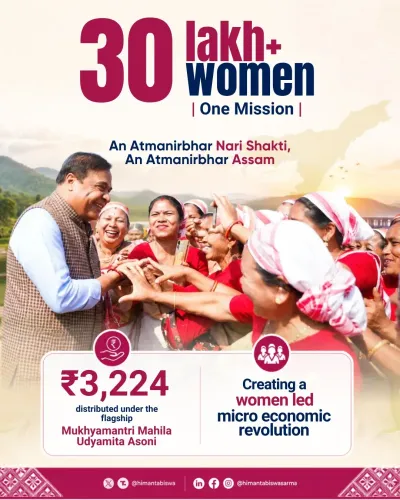
Mahila Udyamita entrepreneurship programme is cited as a pillar of the Assam government's pro-women economic push.
Free ration provisioning and improved law and order are listed alongside financial schemes as measurable wins.
CM Sarma used the 'Nari Shakti' framing, echoing national BJP messaging on women's empowerment.
The post was published on 3 October 2026 in a conversational, social-media-native format designed for participatory engagement.
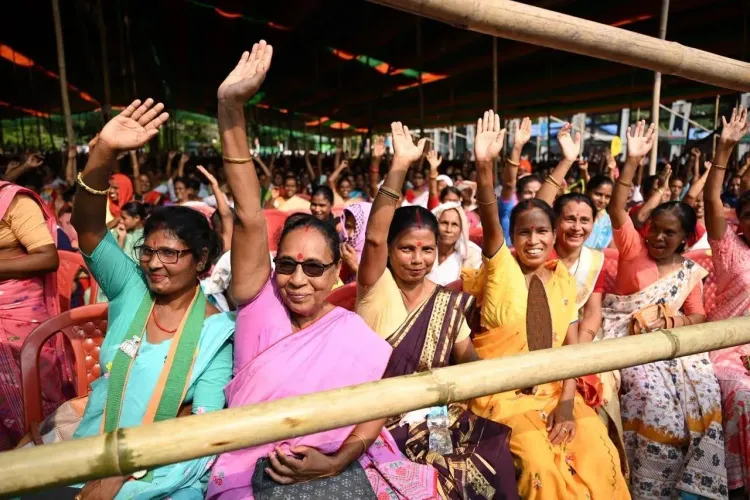
Four schemes, one rhetorical roll call — and Assam Chief Minister Himanta Biswa Sarma is confident every woman in the state has her hand raised. In a playful but pointed X post on Saturday, 3 October 2026, the Chief Minister ticked off a quartet of flagship deliverables aimed squarely at Assam's women and asked the state's 'Nari Shakti' to count their gains.
The four-point checklist CM Sarma is putting to Assam's women
The post frames four distinct benefits as a show-of-hands quiz: the Orunodoi direct-benefit transfer scheme, the Mahila Udyamita entrepreneurship programme, free ration provisioning, and improved law and order on Assam's streets. Each item is presented as already delivered — a scorecard, not a promise.
Orunodoi is the state government's flagship cash-transfer initiative for economically vulnerable women, credited with reaching millions of households across Assam. Mahila Udyamita is the government's women-entrepreneurship push, offering financial and skilling support to women seeking to start or grow small businesses. Together, they form the twin pillars of the BJP-led Assam government's pro-women economic pitch.
Why the 'Nari Shakti' frame matters ahead of electoral cycles
The phrase 'Nari Shakti' — women's power — is a deliberate echo of national BJP messaging that has been central to the party's outreach since the passage of the Women's Reservation Act. By deploying it in a light, social-media-native format, CM Sarma signals that welfare delivery is the government's primary campaign currency with women voters.
The cheerful, emoji-driven tone is also calibrated for virality — turning a policy checklist into a participatory moment, inviting women to 'raise their hands' rather than simply consume a press release. It is governance communication dressed as conversation.
With Assam's political landscape remaining competitive, the Chief Minister's framing of law-and-order alongside economic entitlements is notable: it bundles safety — a concern that consistently ranks high among women voters — with direct-benefit schemes, making the pitch simultaneously material and emotional. The message is clear: Assam's women are not waiting for welfare; they are, in the government's telling, already collecting it.
Point of View
Addressing both material and safety anxieties that drive women's voting behaviour. In Assam's competitive political terrain, this kind of real-time, participatory social-media framing is increasingly the primary battlefield for public sentiment.
NationPress
3 Oct 2026
Frequently Asked Questions
What is the Orunodoi scheme in Assam?
Orunodoi is the Assam government's flagship direct-benefit transfer programme that deposits cash into the bank accounts of economically vulnerable women in the state, aiming to provide a basic income floor to households across Assam.
What is Mahila Udyamita in Assam?
Mahila Udyamita is the Assam government's women-entrepreneurship initiative, offering financial assistance and skill-development support to women who want to start or scale small businesses in the state.
Why did CM Himanta Biswa Sarma post about women's welfare schemes?
CM Sarma used a conversational X post on 3 October 2026 to highlight four women-centric deliverables — Orunodoi, Mahila Udyamita, free ration, and safer streets — framing them as a scorecard of governance achievements for Assam's 'Nari Shakti'.
What is Nari Shakti and why does BJP use the term?
'Nari Shakti' translates to 'women's power' and is a recurring phrase in BJP political messaging, used to frame the party's outreach and welfare delivery as a broader empowerment movement for Indian women.
Does Assam provide free ration to women?
The Assam government has highlighted free ration provisioning as one of its key welfare deliverables for women, alongside the Orunodoi cash-transfer and Mahila Udyamita entrepreneurship programmes.