Asian Games 2026: India draw a taekwondo blank, drought extends to 24 years
Synopsis
India's taekwondo team left Aichi-Nagoya 2026 without a single medal, stretching the country's Asian Games drought in the discipline to 24 years. The last — and only — Indian podium finish in taekwondo at the Games was Surendra Bhandari's bronze at Busan in 2002, and another four-year wait now begins.
Key Takeaways
India's three-woman taekwondo team — Kashish Malik , Jyoti Yadav , and Rupa Bayor — returned empty-handed from Aichi-Nagoya 2026 .
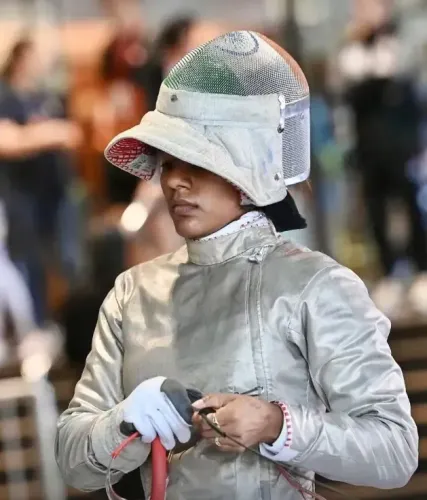
Kashish Malik reached the quarterfinals of the mixed individual virtual taekwondo event, India's deepest run of the Games.
Kashish lost 2-1 to Kazakhstan's Rita Bakisheva , who went on to win bronze.
India's only Asian Games taekwondo medal remains Surendra Bhandari 's bronze from Busan 2002 — a drought now spanning 24 years .
Taekwondo has appeared at every Asian Games since Seoul 1986 , bar the 1990 Beijing edition.
India's Aichi-Nagoya 2026 taekwondo campaign ended without a single medal on Saturday at the Toyohashi Gymnasium in Japan, extending the country's Asian Games taekwondo drought to 24 years. The three-woman contingent — Kashish Malik, Jyoti Yadav, and Rupa Bayor — competed across four medal events but none could advance deep enough to reach a podium.
India's Deepest Run: Kashish Malik's Quarterfinal Exit
Kashish Malik provided India's best showing of the competition, reaching the quarterfinals of the mixed individual virtual taekwondo event — a discipline making its Asian Games debut at Aichi-Nagoya. She opened her campaign with a 2-0 victory over Hong Kong China's Siu Wai Lam, taking the two rounds 800-500 and 400-0.
Her run ended against Kazakhstan's Rita Bakisheva, who went on to claim bronze. Kashish took the opening round 320-0, but Bakisheva recovered to win the next two rounds 460-0 and 340-0, sealing a 2-1 victory. Earlier in the women's -57kg draw, Kashish had faced a formidable opponent in Paris 2024 Olympic champion Kim Yu-jin of the Republic of Korea, who defeated her 2-0 with scores of 18-3 and 17-2.
Jyoti and Bayor Also Exit Early
Jyoti Yadav was eliminated at the round-of-16 stage, losing 2-0 to Thailand's Kannaluck Chuenchooklin by scores of 15-4 and 14-2. Rupa Bayor, competing in the women's individual event, finished fifth in her eight-athlete semifinal group with a score of 7.6100, falling short of the top four required to advance. Vietnam's Ngoc Tuyet Sang Chau took the final qualifying berth with a score of 7.9500.
A 24-Year Medal Drought and Its Weight
India's solitary Asian Games taekwondo medal remains Surendra Bhandari's bronze from Busan 2002. Taekwondo has featured at every Asian Games since Seoul 1986, barring the 1990 Beijing edition, yet across nearly four decades of participation, India has managed just one podium finish. This comes amid broader growth in Indian combat sports — with boxing and wrestling showing consistent returns — making taekwondo's persistent underperformance a stark contrast.
What This Means Going Forward
The conclusion of the Aichi-Nagoya 2026 campaign leaves Indian taekwondo staring at another four-year wait until the next Asian Games. With the sport's Olympic qualification pathways also highly competitive, the absence of a structured elite-athlete programme could prove a critical gap. Whether the Sports Authority of India and the national federation will take stock of the structural deficits remains to be seen.
Point of View
Taekwondo has remained a peripheral priority, producing a thin pipeline of elite athletes. The debut of virtual taekwondo at Aichi-Nagoya offered a fresh entry point, but India could not capitalise even there. Without targeted funding, high-performance coaching, and a credible international exposure calendar, the next four years will likely produce the same result.
NationPress
3 Oct 2026
Frequently Asked Questions
How did India perform in taekwondo at Asian Games 2026?
India drew a blank in taekwondo at the Aichi-Nagoya 2026 Asian Games, with all three athletes — Kashish Malik, Jyoti Yadav, and Rupa Bayor — failing to win a medal. The best Indian result was Kashish Malik's quarterfinal appearance in the mixed individual virtual taekwondo event.
When did India last win an Asian Games taekwondo medal?
India's only Asian Games taekwondo medal was won by Surendra Bhandari, who claimed bronze at the Busan 2002 Games. The country has not won a taekwondo medal at the Asian Games in the 24 years since.
Who was India's best performer in taekwondo at Aichi-Nagoya 2026?
Kashish Malik was India's standout athlete, reaching the quarterfinals of the mixed individual virtual taekwondo event — a new discipline at this edition. She also faced Paris 2024 Olympic champion Kim Yu-jin of the Republic of Korea in the women's -57kg draw.
What is the mixed individual virtual taekwondo event?
The mixed individual virtual taekwondo event made its Asian Games debut at Aichi-Nagoya 2026. It is a technology-assisted format where athletes compete using electronic scoring systems. Kashish Malik represented India in this event, reaching the quarterfinals before losing to Kazakhstan's Rita Bakisheva.
When is the next opportunity for India to win an Asian Games taekwondo medal?
The next Asian Games is scheduled for 2030, meaning India faces a four-year wait for another opportunity to end its taekwondo medal drought at the continental games.