Challenges Ahead for BNP Government in Restoring Judicial Trust in Bangladesh
Synopsis
As the BNP government takes office, restoring public faith in the judiciary emerges as a critical priority. Legal experts emphasize the need for transparency and accountability to rebuild trust in Bangladesh's justice system.
Key Takeaways
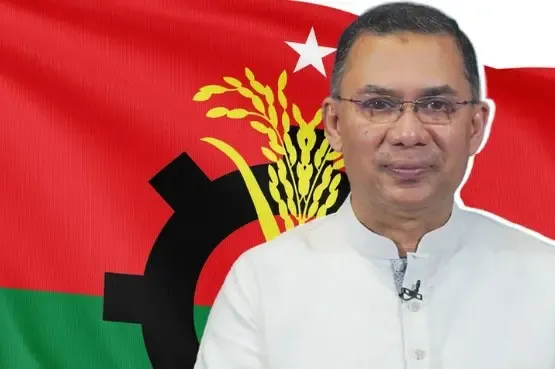
The BNP government, led by Tarique Rahman, holds a two-thirds majority.
Restoring trust in the judiciary is a major challenge for the new administration.
Legal reforms are essential to prevent abuse of power.
Judicial independence must be genuinely upheld.
Public confidence can only be rebuilt through consistent application of the law.
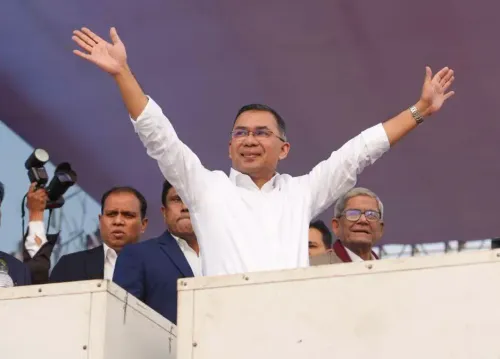
Dhaka, Feb 28 (NationPress) With a commanding two-thirds majority in parliament, the newly formed government of the Bangladesh Nationalist Party (BNP), led by Tarique Rahman, is stepping into office with significant public anticipation. Among its foremost challenges is the urgent need to rebuild confidence in the nation’s judiciary.
A recent report highlights that the justice system has increasingly fostered public anxiety instead of assurance, placing the responsibility on the new administration to ensure transparency, accountability, and substantial reform.
In an article for Bangladesh’s prominent publication, The Daily Star, Md. Arifujjaman, Deputy Solicitor at the Ministry of Law, Justice and Parliamentary Affairs, noted that the BNP government inherits both systemic hurdles and a history of mistrust. He emphasized that restoring faith will necessitate a candid confrontation with past errors.
“Legislation that has led to mass detentions and extensive prosecutorial discretion, often under the pretext of national security or digital governance, needs thorough examination and modification to avert misuse. Appointments within the judiciary and disciplinary protocols should be safeguarded from political bias,” Arifujjaman remarked.
“Cases that are widely viewed as politically driven may warrant a fair reassessment to guarantee justice. Importantly, political figures must exercise discretion: public commentary on ongoing legal matters or pressure on investigators can undermine public trust. While institutional culture changes slowly, leadership that honors boundaries can expedite effective reform,” he continued.
According to the legal expert, although Bangladesh has a history of turbulent politics, the rise in mass arrests, contentious trials, and the entanglement of political strife with judicial processes have gradually eroded public trust.
Arifujjaman asserted that restoring faith is not a matter of rhetoric or legislative maneuvers, but will unfold gradually as citizens observe consistent application of the law, regardless of political ties. He further emphasized that judicial independence needs to be genuinely practiced, not just verbally acknowledged.
“A two-thirds majority in parliament can easily enact or amend laws, but it cannot manufacture credibility. Trust must be cultivated through visible equity, procedural integrity, and a clear departure from the trends that have made many in Bangladesh question whether justice is impartial or merely swayed by circumstances,” he stated.
Arifujjaman highlighted that if the new administration can maintain the law's impartiality, it will achieve more than mere institutional reform.
It will reaffirm the fundamental principle of Bangladesh: that power is subordinate to principle, and that courts exist not to protect the powerful, but to uphold the rights of all citizens.
“For a nation long nurturing democratic ambitions, the forthcoming chapter will rely on the steady, unspectacular effort of restoring confidence in justice. Whether these courtrooms can regain public trust may become the ultimate test of Bangladesh’s democratic resilience,” Arifujjaman concluded.
Frequently Asked Questions
What are the main challenges faced by the BNP government?
The BNP government must focus on restoring public trust in the judiciary, ensuring transparency, accountability, and meaningful reforms.
How has public perception of the justice system changed?
Recent years have seen an increase in public unease regarding the justice system, highlighting the need for significant reforms.